American homes are getting smarter at a rate that was hard to imagin only a few years ago. According to one Nielson study, nearly a quarter of the United States population today owns at least one smart device.
So, while consumers are arming their homes with the latest in smart security systems, smart thermostats and even smart appliances like refrigerators, lake homeowners can now add similar technology to their boats and docks, too.
Dock IQ
Designed with asset protection and personal safety in mind, Dock IQ is a remote management and monitoring system for your dock.
Changing water levels can wreak havoc on these structures, often resulting in costly damages. Dock IQ helps provide dock owners peace of mind by tracking lake levels and alerting them via the system’s mobile dashboard when levels get too deep or too shallow for the structure’s stability.
The system, which runs on its own private wireless service, also features a high-resolution camera, a motion security sensor, geo-fencing technology and a dock GPS locator sensor.
If there is movement outside the geo-fenced perimeter, or should an unwelcome guest trip the motion sensor, DockIQ immediately sounds an alarm.
The system automatically activates exterior lighting and its camera begins rapidly capturing images of the area. Dock owner’s instantly receive these images through their IQ dashboard so they can alert the police and their neighbors.
Shock IQ, DockIQ’s companion system, offers a more aggressive response its Shock IQ detection sensor, dock frame and in-water electric current sensors.
If electricity is detected in the water surrounding the dock, Shock IQ automatically trips the structure’s power breaker.
Using it’s 10-hour battery back up, ShockIQ then sounds an alarm and notifies the dock owners and neighbors of the threat through the IQ mobile app.
Dock IQ also offers bonus features like boat and jet ski tracking devices and solar power capability that can also be added to the DockIQ system.
For more information on this must-have lake technology, please visit www.dockiq.com, or click here to watch the company’s informational video.
ProNav Angler and Motion
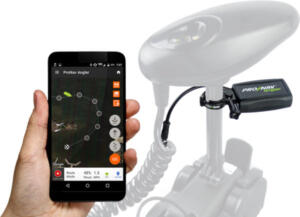
Kiss manual boat control goodbye with ProNav Angler, ProNav Marine’s GPS autopilot system.
Photo Courtesy of ProNav Marine
Connected though Bluetooth, ProNav Angler allows you to pre-set trolling routes, lock in your headings and anchor at your favorite fishing hole, all from the convenience of your phone or tablet.
The company also offers point-and-go navigation and hand-held automatic positioning devices, which connect and run through the ProNav Angler app.
The company’s ProNav Motion devices, PointDrive and PointJog, are controlled using a small device similar to a video game controller.
The PointDrive device allows anglers to essentially steer their boats’ trolling motors by simply toggling in the direction they want to go.
Using PointJog, boaters can point their devices at a specific area of the water, and the ProNav system will reposition their bow-mounted trolling motors to take them there.
Other benefits of this smart boat technology include speed control and the ability to mark and store favorite locations.
ProNav Angler and Motion can even be used while phones are in airplane mode or without cell coverage.
Learn more of ProNav’s innovative navigation systems by checking out their website here.
The lake life is all about relaxation, leisure and enjoyment. So — start living smarter, not harder, with these lake-focused smart technologies.
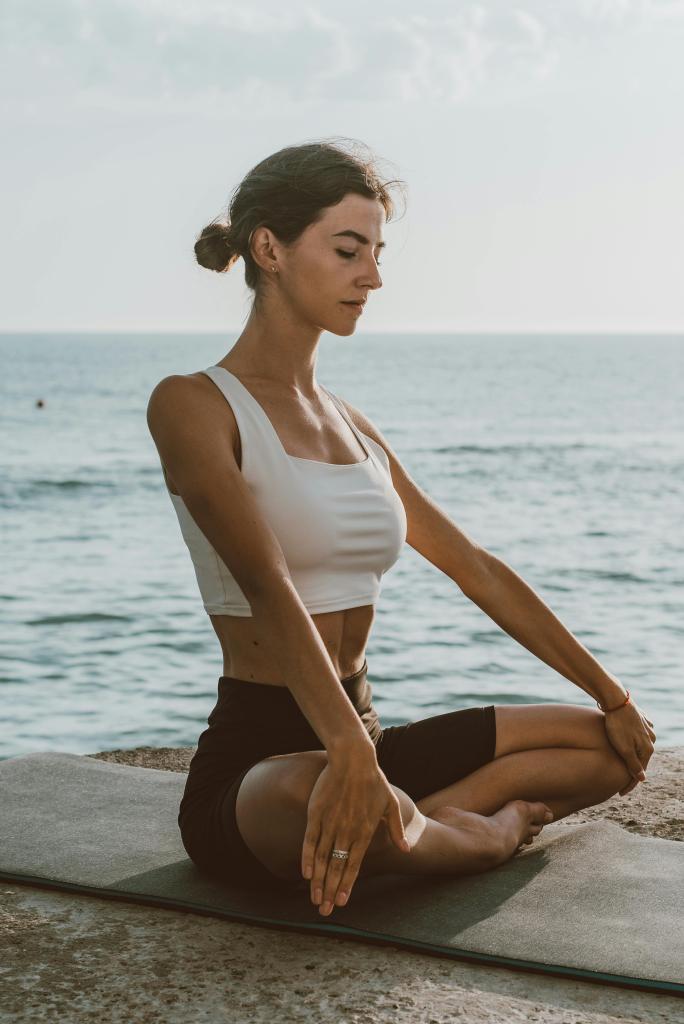
Yoga’s origins date back to more than 5,000 years ago in Northern India. Derived from the internalization of ritual sacrifice, yoga teaches practitioners to sacrifice not their bodies, but their egos through wisdom, action and self-knowledge.
Today, modern yoga provides a path to enlightenment, helping those who practice it to cleanse their minds and bodies of negative energy and to disconnect from their physical existence.
Few places provide more opportunity for such enlightenment than the lake, with its natural beauty, picturesque sunsets and hum of wildlife activity.
So take a look at these 5 beginner yoga poses and start enjoying the peace and rejuvenation of this age-old practice.
We start our beginner yoga poses with Sukhasana, also known as the easy pose, which requires practitioners to take a seated position with their legs crossed and folded in front of them.
In this pose, the pelvis should be in a neutral position, in line with the spine.
Palms can be positioned on top of one another in your lap, in a praying position at your chest, or resting on your knees, palms up.
Still seated, find your breath by taking several long, deep breaths in and exhaling them slowly.
After a few moments, you can also start to stretch the neck by slowly bringing chin to chest and as far back as you can comfortably go. Stretch the sides of your neck by bringing your ear to your shoulder, calmly alternating between your left and right sides.
Sukhasana is a good position with which to begin your practice as it helps you find your breath, relaxes the mind, softly stretches your muscles and strengthens your back.
2. Cat/Cow
From the Sukhasana pose, come to all fours with your head hanging loosely and your back in a tabletop position, with your hands in line with your shoulders and your knees in line with your hips.
Next, you will alternately transition in and out of cat/cow, which stretches your torso and neck and brings awareness to your spinal movements.
Cat pose requires practitioners to take a deep breath in, rounding your spine up towards the sky and bringing your chin to your chests. Be mindful that your knees and arms stay firmly in place as your execute your move.
Transition into cow pose by slowly exhaling while pressing your stomach towards the earth and stretching your your chest towards the sky. Direct your gaze forward, so that your head is in line with your shoulders.
Slide in and out of these positions for several deep breaths before coming back to neutral spine.
3. Child’s Pose
Balasana, or child’s pose as it is most-commonly called, is a resting pose that stretches the hips and thighs and helps in relieving fatigue and stress.
To go into child’s pose from cat/cow, bring your big toes together so that your knees press out from your hips. Rock back with your arms extended out in front of you until your bottom rests on the heels of your feet.
Press your chest into the ground so that it rests between your legs. Keep your arms extended, applying slight pressure to your palms.
Take deep, consciousbreaths in and out, paying close attention to breathing fully into your chest, stretching your upper spine skyward.
Rest here for as long as you would like, but be sure you are not putting too much strain on your knees or ankles.
4. Downward-Facing Dog
This beginner yoga pose is known by many names: downward dog, downward-facing dog, and (less commonly) Adho Mukha Svanasana.
Downward-facing dog helps improve digestion, relieve mild depression, energizes the body and helps stretch the hands, calves, hamstrings and arches.
To take this position from child’s pose, walk your hands forward, and roll your feet under you. Press into your feet, and extend your legs as you continue walking your hands out until your body creates a triangle with the earth.
Keep your feet hip-width apart and your hands slightly past your shoulders with your fingers spread out to distribute energy evenly between both hands.
In downward dog, you can alternate lifting your heels, press back into your calves, or rock forward gently onto your palms and then back.
5. Mountain Pose
Tadasana, or mountain pose improves posture, strengthens your legs and feet and helps to firm your core and bottom. You can use this pose as a starting or ending position during your practice as it a good resting position for refocusing your breathing.
From downward dog, walk your feet slowly toward your hands until they are directly under your hips. Slowly roll to standing position, paying careful attention to each vertebrae.
When you are fully upright, bring your feet together with your heels slightly apart, softly shifting your weight from foot to foot to gain your balance.
Tighten your core and legs and elongate your spine, keeping sure to align the crown of your head and spine. Bring your awareness to your chest, back and shoulders, so that your energy radiates from the earth through the length of your body.
Open your chest and shoulders bringing your hands, palms facing out, slightly from your sides while pushing your shoulder blades down. Your facial muscles and jaw should be relaxed.
To take your mountain pose to the next level, try closing your eyes.
Hold here while you take deep breaths in and out for about a minute before concluding your practice.
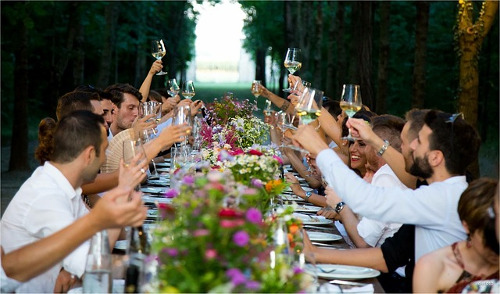
In Part I of this series, we walked you through the first steps to planning a dinner party: creating a budget, determining a guest list and sending out invitations. Once all of those ducks are in a row, however, there is still more work that needs to be done. The next step to planning the perfect dinner party is all about setting the mood and planning the food.
For this part of the process, attention to detail is imperative! The atmosphere and cuisine should be well thought out and showcase who you are and what you want your guests to experience.
The Mood
What’s your aesthetic? Focus on indulging in what you love rather than stressing over what’s proper.
You’re already on the lake, so the odds of ambiance are in your favor. Play on your surroundings and host the party somewhere unexpected.
For a more formal evening, a candlelit dinner by the water would certainly make a lasting impression. If you have a large enough boat, dinner on the water would be even better.
Maybe a casual, intimate setting is what you’re going for. Opt for a nighttime picnic, complete with fairy lights, and throw down plenty of blankets and pillows. If you have a giant screen and projector readily available, you could even end the night with a movie under the stars.
When it comes to the tablescape, it’s best to start with a good table cloth and work your way up. Candles add warmth and movement, and soft illumination is the easiest (and cheapest) way to transform your space.
A nice floral arrangement can also contribute some colorful character to the table, but this doesn’t have to be a pricey feature. A bouquet of wildflowers from the yard or garden works just fine.
To compliment the flowers, break out the nice china and cloth napkins. You can save the paper plates for every other night, but a dinner party is just as much about style as it is about cooking.
Don’t forget to create a playlist! Music is an important part of any get-together and paramount in setting the tone.
In certain settings, it can be good to feature a mix of genres that everyone can enjoy, but remember to stay mindful of what’s appropriate. Maybe a formal business dinner with associates isn’t the best time to show off your knowledge of 90’s hip hop.
Also, remember not to turn the tunes up too loud. It can discourage conversation when guests have to constantly shout over Coltrane.
The Food
While it can be easy to come back from a poorly selected playlist, it’s a lot harder to recover from failed food. When arranging the perfect menu, there are a few do’s and don’ts to be aware of.
DON’T experiment with new dishes. When it comes to cooking for large groups of people, it’s best to stick with what you know in order to avoid potential chaos…and embarrassment.
DO make sure water, salt and pepper are on the table at all times.
DON’T wait until the day of the party to make the grocery list and start cooking.
DO take your guests’ dietary restrictions into consideration by having vegetarian or low-carb options so everyone can enjoy themselves.
Use the lake to your advantage and add some fresh seafood to the menu. Not to mention, the story of how you caught a 25-pound bass the afternoon before would make for a great topic of conversation.
When choosing what drinks to offer, consider your company. Wine may be a staple at most dinner parties, but in a room full of beer lovers, a full-bodied Cabernet might not fare so well. At the same time, be knowledgeable of what drinks would compliment the flavors you serve.
Pairing food and drinks comes down to determining what the basic taste of the food is—sweet, salty, sour or bitter—and choosing a beverage that either matches or contrasts it properly.
Dark, bold wines pair well with rich, red meats, while crisp white wines go well with seafood and pastas. When it comes to beer, just about any ale goes great with beef dishes, while pilsners and lagers work well with pork and poultry. Light or wheat beers match best with seafood.
The atmosphere and menu are big components of the night. However, there are still a few more boxes to check before we reach the end of our lengthy to-do list. In Part Three of this series, we’ll talk about the final stages of preparation in the days leading up to the dinner party, as well as what is expected of a great host.
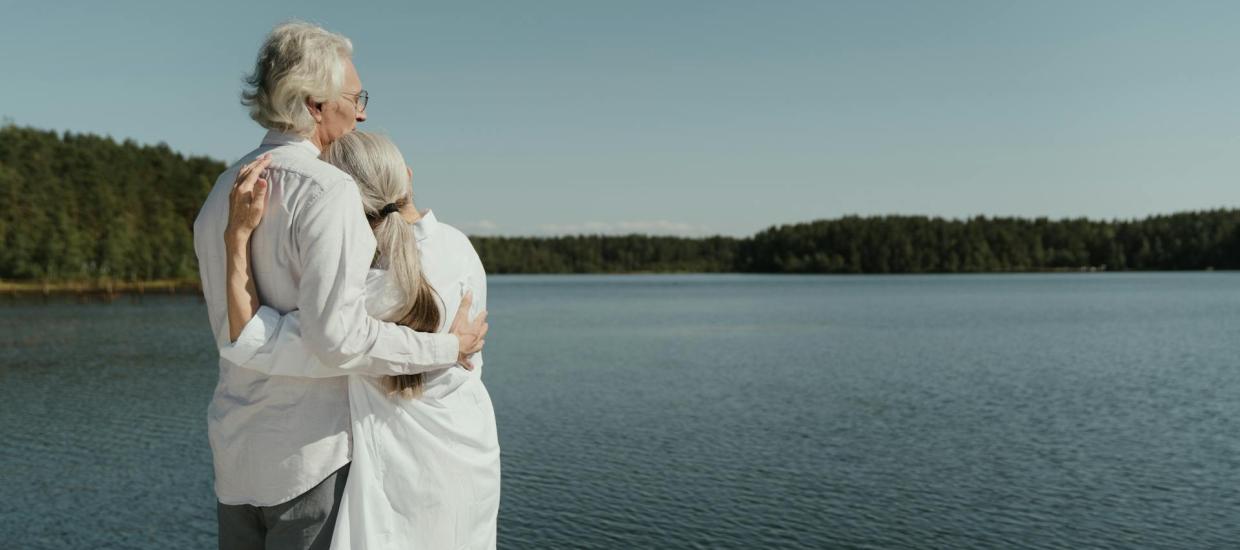
Work a job you love for about 40 years, cash in on a healthy 401K and retire. It’s the final step of the American dream.
Social security, budgeting, health insurance: there’s a lot that goes into it. Ultimately, though, the goal is to comfortably spend one’s golden years in pure, labor-less bliss.
That means relaxation and peace, so what better place to spend it than at the lake?
We’ve come up with five solid reasons to consider making a lake home your permanent residence for life after retirement.
It’s the reason so many people think of their lake home as an “escape” from normal life. The blue mind effect is responsible for the almost immediate feeling of zen people experience when near the lake or ocean.
Marine biologist Wallace J. Nichols describes it as “a mildly meditative, relaxed state that we find ourselves in when we are in, on or under water.”
Physiologically, our brains and bodies undergo a shift when we step away from high-stress, fast-paced environments and step into nature.
The blue mind effect is known to lower blood pressure and reduce anxiety.
Not only does it help us relax, but the very quality of our thoughts changes, producing more “introspective and self-referential” thought processes.
Stress is one of the biggest enemies to any immune system. However, being surrounded by nature such as the lake greatly reduces the chances you’ll fall victim to any number of the health problems stress causes.
Entertainment for the Whole Family
For many, the grandparents’ house is the go-to place for family gatherings. Put that house on a lake, and the kids and grandkids have just one more reason to come visit.
Whether it be for some summertime fun in the sun, or sipping warm drinks around the fireplace at Christmas, entertainment opportunities are endless.
The lake house is great for hosting bonfires, birthday parties and cookouts. And don’t forget fishing, swimming, sailing, kayaking and water skiing.
The Great Outdoors
Retirement is a great time to discover a new hobby. Consider trying your hand at hiking, canoeing or golfing.
If you’re an angler at heart, there’s more than enough game to go around. Bass, crappie and perch thrive in freshwater environments all around the country.
Many lake communities are surrounded by breathtaking wilderness like mountains, waterfalls and a variety of wildlife. So if you’d rather hold a camera than a fishing pole, photography is a great choice.
Take advantage of those scenic views, and your portfolio and Facebook wall will be filled in no time.
In a Land Far, Far Away
Privacy. Seclusion. Sanity.
Whatever you want to call it, being far enough away from the chaos of the outside world can serve you in more ways than one.
Unlike living within city limits, you don’t have to worry about falling asleep to the sound of car horns, and five o’clock traffic is non-existent.
There’s nothing more relaxing than waking up to the sound of birds chirping in the morning, or watching the sun set over the water. Rest easy under a night sky full of stars and feel confident that you’re a good distance away from big city mayhem.
Last but not least, the final reason to retire at the lake is simple: you just…can.
The thousands of hours you’ve clocked, the kids you’ve raised, the bosses you’ve endured and the millions of times you’ve been stuck in traffic all say you’ve earned it.
Now is a great time to kick your feet up and just enjoy life.
Lake living is easy.
Its calming effect is priceless, there’s tons to do, and the privacy of it all is too good an opportunity to pass up.
At the end of the day, the number one reason to retire at the lake is you simply owe it to yourself to enjoy this part of your life.
School’s out, the lake is buzzing with activity, and the smell of barbecue is in the air–it’s summertime.
There are things to do and people to see. However, every once in a while, you’ll find real value in what the Italians call “la dolce far niente,” or the sweetness of doing nothing.
Grab a cold drink and put your phone on “Do Not Disturb.”
We’ve found six of the best books for you to get lost in this summer.
This warmhearted, witty novel tells the story of an eccentric single mom raising her daughter in the lap of privilege in the New York City of the 1980s and 90s.
Native to the Upper East Side of Manhattan, Laura was born into all the benefits and comfort that old money could afford. After a reckless weekend with a relative stranger, Laura finds out she’s pregnant. This is when we’re introduced to Emma.
Laura’s easy-going, liberal nature doesn’t stop her from raising Emma in the same gold-plated, blue-blooded world she came to know as a child. Unlike her mother, however, Emma begins to question it all–the costly private schools, designer clothes and homes in the Hamptons.
In a flurry of society friends, quirky characters and mini-adventures, Laura and Emma tells the story of a woman on a mission to find herself, her daughter’s place in it all, and the ever shifting environment of the Upper East Side.
Vivacious and entertaining, this book matches perfectly with warm weather and sunscreen.
This poetic journey of self-discovery will keep you on the edge of your seat from start to finish.
The protagonist, Astrid, narrates every dark, tantalizing detail of her early life with a rare beauty and strength not often seen in characters so young.
Harrowing circumstances thrust 12-year-old Astrid into the foster care system after her mother—the cold-hearted, distant and fascinating Ingrid—goes to prison for murder.
For the next eight years, Astrid will endure manic, riveting and life-changing episodes in each home she visits. Fitch expertly draws readers in as they witness Astrid’s rocky growth from an innocent, observant little girl to an artistic, brazen young woman.
This book paints a captivating picture: the dynamics of the ever-complicated mother-daughter relationship; the pitfalls of the foster care system; and the ways in which loneliness can sometimes lead us down the road less traveled.
Elegant and bold, White Oleander is an unforgettable rabbit hole of an adventure that’s sure to make the hours fly by all summer long.
Journalist Madeleine Blais uses her award-winning storytelling skills in this wistful, decades-long nonfiction.
To the New Owners chronicles the time her family spent at their humble vacation home on Martha’s Vineyard from the 1970s to 2014, when they chose to sell the house.
Years of summers with no air conditioning, endless hours at the beach and priceless moments with dear friends — all of these experiences grew to be associated with the quirky cottage.
The author’s loving account of her time spent on the island creates vivid imagery that almost feels like the reader’s own memory:
“The world was in layers—the blue gray of the pond, the beige lip of sand in the distance, the different blue of the ocean, and yet another blue for the sky—an orgy of horizons, interrupted now and then by white birds, white foam, and white clouds.”
With a good mix of reminiscence and admiration, Blais gently educates the new owners of this special place on the value of the well-loved “shack.”
To the New Owners is a memoir about that symbolic home on Tisbury Great Pond, to the Vineyard itself and to the memories made there over time.
This one-of-a-kind novel has all the charming nostalgia necessary for a light-hearted summer read.
The Distance Home takes place in the desolate, rolling plains of South Dakota in the years following World War II. It’s a story that embodies all the harsh paradoxes of life: acceptance and rejection, success and failure, family and separation.
Two siblings, René and Leon, share the same home and the same passion, but meet strikingly different fates in life.
René is naturally bold, effortlessly successful and basks in the adoration of her father. She exists in stark contrast to Leon, a tender soul who can never seem to gain his father’s approval.
Consequently, the two siblings, once close in childhood, grow apart as they grow older. Over the years, they embark on lifelong quests for love, self-discovery and understanding.
Saunders tells the story of a broken family who struggles to connect the dots throughout life. She somehow invokes enough empathy for the reader to feel compassion toward every character involved.
After a long day on the move, a peaceful summer night isn’t complete without an enchanting coming-of-age novel to keep you captivated. The Distance Home is a wonderful tale of the complexities of losing, and then finding, yourself over and over again.
An imaginative romantic comedy is just what the doctor ordered for a perfect lakeside read.
Haig tells the story of a seemingly middle-aged man who holds a dangerous secret. Due to a rare condition, Tom Hazard has been alive for centuries.
After living hundreds of extraordinary years through some of history’s most famous corridors, Hazard craves nothing more than a normal existence.
However, while living yet another life in his former home of London, he makes a dire mistake. Tom falls in love.
As a result, he attracts the attention of the Albatross Society.
This secretive group protects people like Tom and specifically prohibits love under all circumstances. Painful memories of past lives and the unpredictable behavior of the Society throw the protagonist into a series of misadventures.
How to Stop Time shows how, sometimes, it can take a few lifetimes to really learn how to live.
A supermodel’s suicide, a downtrodden private investigator and a cohort of sparkling multimillionaires.
The Cuckoo’s Calling, written by J.K. Rowling under her pseudonym Robert Galbraith, has all the fixings of a juicy summertime mystery novel.
Detective Cormoran Strike is going through a bit of a rough patch in life.
The bills are past due and his clientele is dwindling. He’s recently ended things with his long-time girlfriend and is now forced to live out of his office. By a sudden stroke of fate, a case for the ages lands in his lap, spurring his life into action.
After a swift investigation, authorities rule legendary supermodel Cuckoo’s death a suicide after she takes a fatal plunge from a high-rise building.
Through desperation and determination, Detective Strike sets out to prove that the lethal fall was anything but self-inflicted.
These are the best books to curl up with on those lazy summer days. This list features a variety of page-turners that’ll linger in your memory long after you’re done reading.
There’s a lot that goes into purchasing a lake home, and the process can be stressful at times. However, there’s more to it than just business. One of the most exciting aspects is knowing you get to start off with a clean slate, explore your style and re-create your living space.
Home decor can be as simple or complex as you want it to be. From minimalist to opulent, free-flowing to sophisticated, the way you choose to decorate says a lot about you.
Personal style is about as subjective as it comes, and we’ve looked at a few ways to add some unique charm to lake living in a way that won’t impede on your own personality stamp.
Nautical
Appropriately, the first lake home decor style we’ll explore is inspired by the water.
Light and breezy, this particular mode of interior design incorporates navy, white and grey hues.
When it comes to this coastal theme, think rustic meets aquatic. It’s important to make sure you include lots of natural light to the look, considering the whole point is to bring the outside in.
Vintage Accents
Wine isn’t the only thing that gets better with time.
There’s nothing wrong with a little wear and tear when it comes to home accessories, and some aged items like old ship helms, distressed wood or even framed vintage swimsuits add a subtle flair of nostalgia.
Incorporate some old family photos, particularly those that took place at the lake, around these items for a personal touch.
Aquatic Life
What’s more nautical than actual fish?
A fish tank or bowl is one of the most underrated decorative pieces. If positioned strategically, this eye-catching statement piece can be a great focal point in any room.
Color Coordination
Decoration involves so much more than just wall hangs and picture frames.
The color scheme you choose is just as important as art and knick-knacks. As stated before, the nautical theme uses specific hues to invite an airy, beachy vibe into your home.
Sheer curtains help with this breezy illusion. Opt for grey, navy and white to serve as base colors, with accents of light blue and gold to bring some depth to those neutral tones.
Classic, Country Cottage
Country chic, sometimes known as shabby or vintage chic, has humble beginnings in the world of interior design.
Remember the days of slamming screen doors and tire swings in the front yard?
A style that exudes warmth and comfort, country chic brings us back to a simpler time before stainless steel and granite counter tops were essential for modern living.
It’s a smart move for a lake home since they’re often the place where memories are made, traditions are started and familial history abounds.
This style includes vintage furnishings, wood paneling, and mixes of patterns and plaid. Here are some ways to hit a home run and create your very own cottage.
Farmhouse Decor
Any respectable country kitchen is a place where home-cooked meals are born and families come together. It should be a space filled with comfort and familiarity.
Try a gingham table cloth to bring the farmhouse aesthetic into your home.
Add a vase of fresh flowers to the center of the table and some matching kitchen caddies on the counter for a truly timeless appeal.
Mason jars are impressively versatile and can be used for almost anything: drinking glasses, utensil holders or just decorative accessories. Inexpensive and easy to get, these pay homage to the times when homemade jams were still a common feature of everyday life.
Warm, Natural Lighting
When you walk into a cottage, it should feel friendly and welcoming.
The use of candles, and a lot of them, is a guaranteed way to turn a house into a snug little home.
Play off the candlelight by incorporating hues of sunny yellow, burnt rust and forest green into your furnishings.
To compliment the warm glow, use wide, open windows to let in as much natural light as possible.
Repurposed Accessories
Distressed wood, old lake signs and thrift store finds.
The best part about this lake home decor is that it doesn’t have to be expensive. In fact, much of what’s used can be found in the attic or garage. The trick is to find weathered, well-loved items and reuse them in unique, unexpected ways.
For instance, grandma’s old couch might be hideous, but it’s got a sturdy build. Try reupholstering it or throwing on a slipcover.
Repaint an old dresser or convert a vintage suitcase into a coffee table. Nothing really needs to match, because you’re going for informal, not perfect.
Bohemian Chic
Lake living is known to be laid back and casual, so it’s only right to have a home that matches that free-flowing nature.
Popularized in the 1960s and 1970s, this is the true style of the flower child. Bohemian chic channels a laissez-faire, carefree attitude by being part indie, part gypsy and all charm.
When it comes to interior design, there are no actual rules other than you must love it. Some staples of this theme include fairy lights, globally-inspired art pieces and souvenirs, and a good mix of vintage furniture and contemporary statements. Use of color is imperative.
Live Plants
To emphasize the natural aspect of Bohemian living, spring for live plants. Fresh and organic, greenery is a simple step to breathe some life into your home.
The presence of flowers, ferns and succulents adds a grounded, earthy vibe by bringing nature inside. They also improve air quality, so in this case, more is more.
Throw Pillows
Use a vivid mix of tones and patterns by infusing these tastefully placed pops of color to create an inviting, bold look to any room.
Throw pillows are great for forging an eclectic, “lived-in” appearance.
Add some eye-catching tapestries and blankets of varying textures (tweed, wool, velvet), and you’ve got yourself a mellowed out retreat brimming with culture.
Wall Gallery
A wall gallery is a charmingly cluttered way to show off your unique personality.
This is an unconventional design element that gives you artistic license to be fun, spontaneous and totally unique.
It could be a variety of different picture frames, or perhaps a couple of mirrors and some graphic art. Feel free to throw in some dream catchers or handmade accessories because this is all about personal expression.
Decorating your lake home can be a ton of fun, but it helps to know which direction you want to go in.
Lake home decor is a signature of personality. What do you want your space to say? How do you want your guests to feel? Most importantly, what does lake living in style mean to you?
Note: It’s important to use a thick, puncture-proof, tarp like product to prevent injury or malfunction
Tent pegs
Dish soap
A water sprinkler or water hose
Directions:
First, roll out the tarp/boat wrap to its maximum size. Slip n’ Slides can be fun anywhere, but for maximum excitement, we suggest setting up on a hill!
Once you have your tarp or wrap laid out, secure the corners and edges of your slide with tent pegs. Think about pulling the material tightly to ensure a smooth surface.
After that, take your dish soap and cover your base material with it. One helpful trick is to remember the heavier or thicker the soap, the more extreme the slip!
All that’s left from there is to turn on the water and get sliding!
Rainbow Fish Cupcakes
Once you’ve had your fill of the slip n’ slide, bring the fun indoors with this delicious recipe by Two Sisters!
These lake-themed sweet treats are sure to go over swimmingly.
Ingredients:
Cake mix
Be sure to check the box’s list of ingredients for additional supplies.
Buttercream frosting
For your frosting, you can either buy pre-made icing at your local grocery store, or make your own with the recipe found here.
Food coloring
M&Ms
Tiny marshmallows or candy eyes
Directions:
First, bake a batch of your favorite flavor cupcakes. This will take between 10 and 20 minutes.
While your cupcakes bake, prepare your frosting. If you have chosen to make your own, you can expect the process to only take a few minutes. Next, use the food coloring to make batches of yellow, blue, green and pink frosting.
Once your cupcakes have finished baking, set them aside to cool.
As they cool, take your M&Ms and separate them by color. You’ll need approximately 15 candies for each fish’s scales and two red candies for each fish’s lips.
Once cooled and frosted, it’s time to add “scales” to your rainbow fish cupcakes!
Start with one row of scales in the center of the cupcake and continue adding rows until half the cupcake is filled with M&M scales.
Next add your candy eyes or tiny marshmallows, and finish off your treat with two red M&M lips!
Backyard Bowling
You know those sodas you enjoyed by the water earlier? Well don’t throw away those old 2-liter bottles just yet! It’s super easy to re-purpose them for some healthy family competition.
Materials:
10 plastic, 2-liter bottles with the labels removed for bowling pins
A bag of pebbles or sand
A kickball
Directions:
To start, just add a few ounces of pebbles or sand to the bottom of each bottle for weight.
Then just set them up and play ball. Be sure to pick your teams wisely!
For an even more unique experience, you could add some glow sticks to each bottle for a little bowling after dark.
Memories of long days spent at the lake are some of our most cherished. These simple ideas offer just a few ways to keep those memories coming for many years into the future.
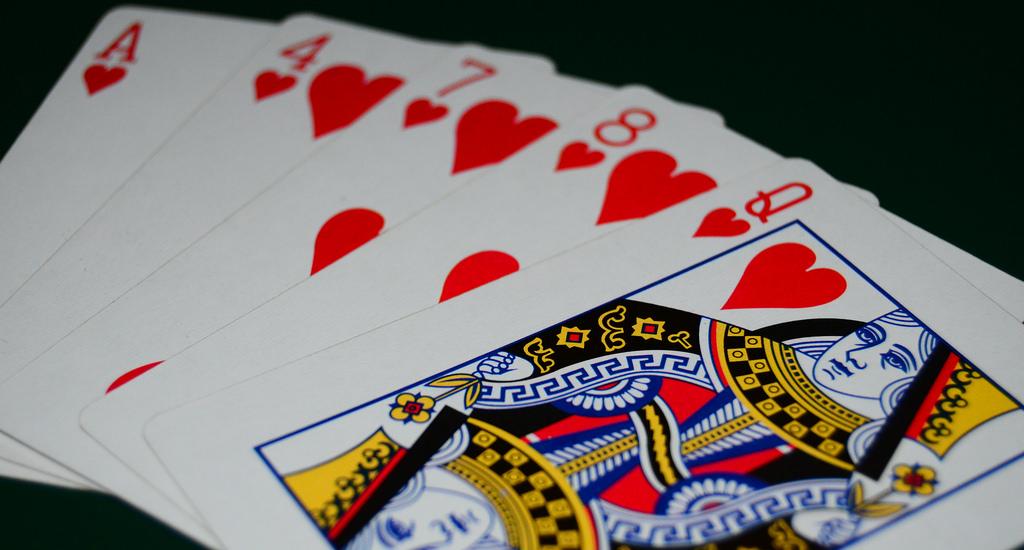
If you’re looking for a unique way to spend your weekend at the lake, try your hand at one of the nation’s many powerboat poker runs. These family-friendly events not only provide lake lovers a chance to win some great prizes, but proceeds are often donated to local charities and lake organizations.
Lake Lanier, Georgia
For the last decade, the Pirates of Lanier Charity Poker Run has raised millions of dollars in support of North Georgia’s children’s charities.
Since 2008, the event has contributed to those with serious illnesses and mental and physical disabilities through Camp Sunshine and Camp Twin Lakes, as well as supported the members of the Boys and Girls Club of Hall County.
Held in July, the three-day Poker Run kicks off with a pre-run meet and on greet Thursday night, followed by a beach bash, captains’ meeting and auction on Friday.
The run itself takes place on Saturday and consists of five checkpoints at which each boat receives a card for their poker hand. Unlike some poker runs, each card must remained sealed until the full hand has been collected.
Full hands are then taken to the “casino” where they can be evaluated and scored.
Following the day’s main event, participants can enjoy food and entertainment at the after party and awards ceremony where the winning hand is announced and trophies are awarded to best dressed pirates.
The weekend concludes with a festive fireworks display Saturday evening.
Tickets go on sale in March for $50 per person. Participants should note this entry fee does not cover the cost of a boat slip for the weekend’s festivities; however, a discount code will be provided for use at the Sunset Cover Marina on Lake Lanier Islands.
For more information, FAQ or to register online, visit the Pirates of Lanier website here.
Lake Erie, Pennsylvania
The fourth annual Erie Poker Run, hosted by the performance boating events company Elite Poker Runs, will take place in June at the Wolverine Park Marina.
A portion of the proceeds from this event will go towards The Bradley H. Faolk Children’s Advocacy Center of Erie County. Last year, more than $10,000 was donated to the organization, which works to support children of abuse.
Festivities begin Friday night with a welcome dinner for captains and crew members. The Run commences the following morning and will consist of several stops along 110 miles of Lake Erie‘s coastline.
Lunch will be provided to participants along the course as well as dinner at the evening’s award ceremony.
Registration for the Erie Poker Run closes on June 10, and space is limited to 60 boats. To participate, boaters must provide proof of at least $300,000 in liability insurance coverage.
Captain and vessel registration costs $300 to $500 and crew members’ tickets are $120 to $150 per person.
Prices include Friday night dinner, an event tee shirt, Saturday morning coffee before the run, one poker hand and Saturday lunch and dinner.
Extra poker hands can be purchased for $50 per hand. One hundred percent of the proceeds generated by extra hand sales goes to benefit the Advocacy Center.
Additional details and a list of other Elite Poker Runs events can be found at elitepokerruns.com.
Smith Mountain Lake, Virginia
The Smith Mountain Lake Boating Association has hosted their annual “unofficial start to summer” poker run each May for 21 years.
Participants start at Mariners Landing and make seven stops along the run’s course, where they will receive seven cards from which to choose their best hand of five.
Players compete for thousands of dollars in cash prizes, including $5,000 for the first person with four aces.
The best hand wins $1,500 with additional winnings awarded to the second and third best hands. Prizes are also awarded for best appearing crew and for the most players on a boat.
To take part in the Smith Mountain Lake Poker Run, participants can purchase tickets and register their boats online for $175per person and $350 per vessel.
This event does have a 75-boat limit, and teams must consist of at least two players.
Guest tickets are also available for $90 for lake lovers who wish to participate in the rest of the weekend’s activities apart from the run itself.
Festivities will conclude at Mariners Landing Saturday afternoon where players will be treated to dinner, a beer garden and music.
Proceeds from this event benefit various organizations around Smith Mountain Lake, including the SML Marine Volunteer Fire Department.
Bull Shoals, Arkansas
To help fund their annual Fourth of July fireworks show, the Bull Shoals Lake Boat Dock and Marina has hosted a “barefoot open, boat poker run” for eight years running.
The one-day event in May kicks off at 11 a.m. with last minute registration for players.
At noon, boaters depart from the marina on a five-stop-minimum run, depending on the type of hand they want to play. At each stop, players’ “hand cards” will be stamped. Additional stops will also provide players with tickets for bonus drawings to be given away at the awards ceremony.
After at least five stamps are received, players may return to the marina where they may redeem their cards for their actual poker hands. No hand cards will be dealt after the 5:15 p.m. cut-off time.
Poker Run participants compete for a number of prizes and giveaways including a $1,000 cash prize for the winning hand. Other past prizes have included free passes to Bull Shoals Caverns, restaurant gift cards and free canoe rentals.
The registration fee is $50 per boat. This price includes one poker hand and two free Bull Shoals Poker Run tee-shirts, while supplies last.
Additional shirts can be purchased for $10. Extra hands can be purchased for $15 each, and there is no limit to the number of hands a boat can play.
Contact and registration information can be found on the Bull Shoals Poker Run website.