



The meeting of stone and water creates a unique, ethereal beauty. Throughout history, the water’s edge drew architects and kings who sought more than the visual poetry of a fortress reflecting in a still surface. They also recognized the practical advantages of survival. Lakeside placement offered a dual-purpose strategy: the water served as a natural, impassable moat for defense and as a vital highway for trade and communication. This journey explores some of the world’s most preserved lakeside castles, where the shoreline serves as both a protector and a mirror.
Chillon Castle (Lake Geneva, Switzerland)
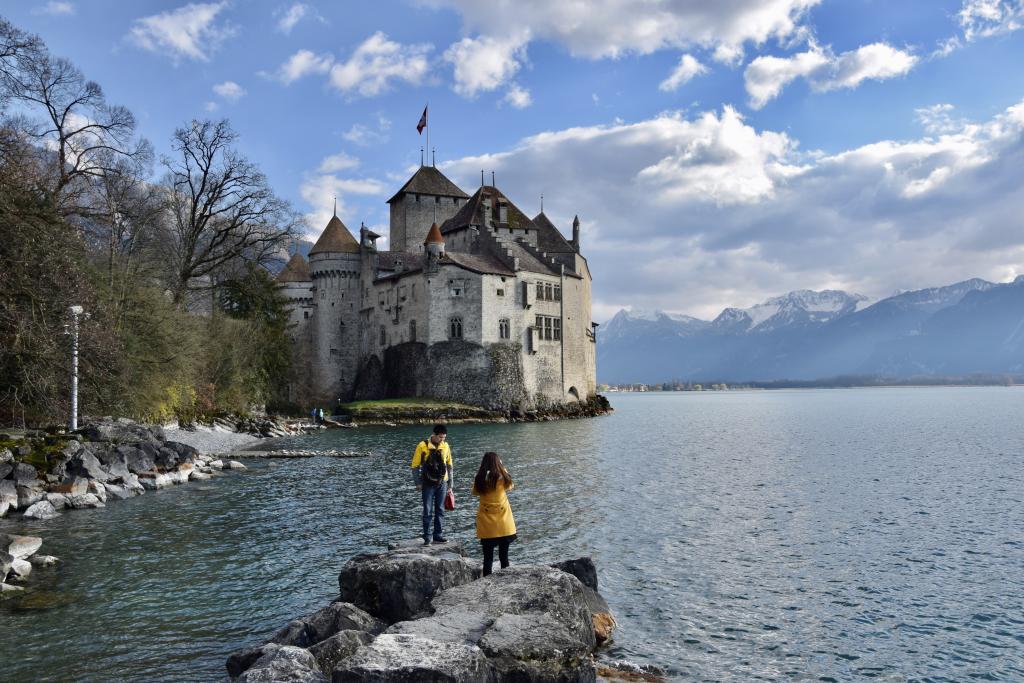

Built directly upon a limestone outcrop in Lake Geneva, Chillon Castle is an architectural marvel dating back to the 12th century. Its lakeside location was primarily a matter of commerce and control. The castle sits on a narrow passage between the steep mountains and the lake, creating a natural bottleneck. As a result, the Counts of Savoy were able to control the primary trade route from Germany and France to Italy. This location served as a lucrative toll station for alpine trade.
Chillon’s legacy is as much literary as it is architectural, having been immortalized by Lord Byron in his poem The Prisoner of Chillon. Visitors today experience a striking contrast between the castle’s dual natures: the dark, subterranean dungeons carved into the very rock of the island, and the opulent grand halls above, which offer sweeping views of the Swiss Alps across the shimmering lake.
Trakai Island Castle (Lake Galvė, Lithuania)


Trakai Island Castle holds the unique distinction of being the only island castle in Eastern Europe. Constructed in the 14th century, this formidable red-brick fortress was built specifically for strategic isolation. By placing the seat of the Grand Duchy of Lithuania in the center of Lake Galvė, the rulers utilized the deep waters as a massive natural defense against the Teutonic Knights. This defensive feature made it easy to monitor and difficult for heavy siege engines to cross.
While the castle fell into ruin over the centuries, it was painstakingly restored in the 20th century. Today, it serves as a cultural hub, with the calm lake providing a serene backdrop for medieval festivals. The castle is at its most beautiful during sunset, when the red walls appear to glow against the water.
Schwerin Castle (Lake Schwerin, Germany)

Often referred to as the “Neuschwanstein of the North,” Schwerin Castle is the epitome of the fairytale aesthetic. Situated on an island in Lake Schwerin, the palace features over 600 rooms and a forest of golden spires. The castle was built here to emphasize the divine right and status of the Dukes of Mecklenburg. The island location provided a safe, secluded retreat that separated the royals from the common city. Meanwhile, the reflective lake served as a giant pedestal to amplify the castle’s grandeur.
Beyond its royal architecture, the castle is famous for its expansive lakeside gardens and the local legend of Petermännchen, a small ghost said to patrol the halls. The castle’s unique island position allows for a 360-degree view of the lake. As a result, it seamlessly blends nature with 19th-century luxury.
Kylemore Abbey (Pollacapall Lough, Ireland)


Nestled against the rugged backdrop of the Garraun, a summit that is part of the Twelve Bens/Garraun Complex in Connemara, Kylemore Abbey began its life as a private castle in the 1800s. Unlike its medieval predecessors, Kylemore was built on the lough for aesthetic harmony and romantic sentiment. Mitchell Henry chose this specific watery edge because the granite peaks and the peat dark water created a sanctuary. This sanctuary felt worlds away from the industrial smoke of London.
The estate is a monument to Victorian romance, built as a grand gift for Henry’s wife. A walk along the lakeshore leads visitors to a delicate neo-Gothic Chapel. This walk reveals how the entire estate was designed to harmonize with the wild, watery landscape of western Ireland.
Eilean Donan (Loch Duich, Scotland)
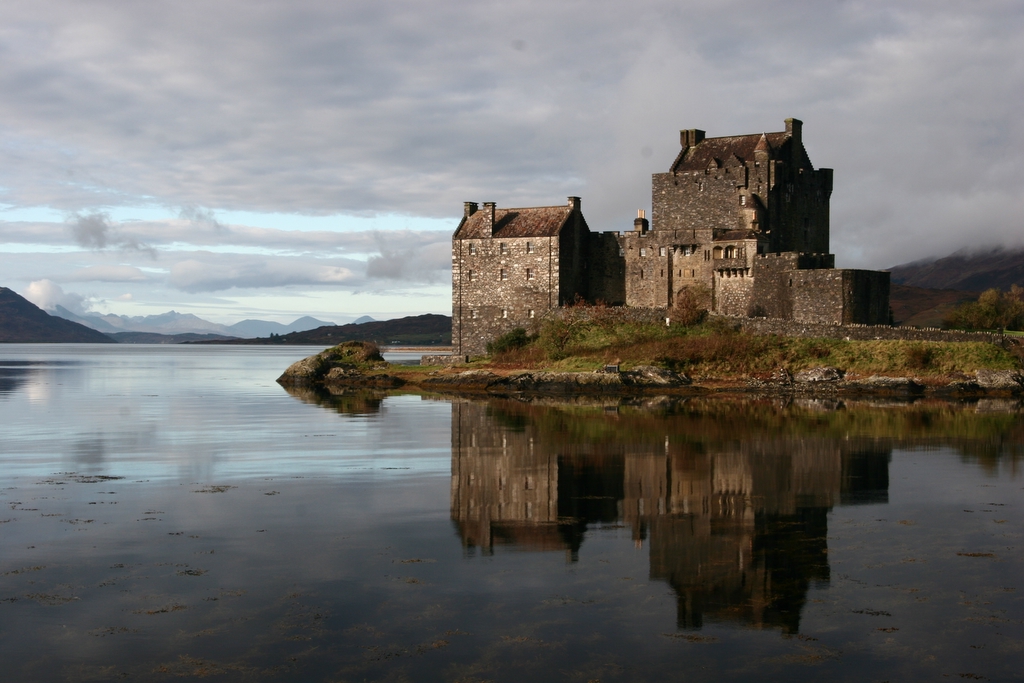

Eilean Donan is the quintessential Scottish icon. Located where three great sea lochs meet—Loch Duich, Loch Long, and Loch Alsh—it sits on a tiny island connected to the mainland by a stone bridge. Its lakeside placement was purely defensive. The island offered a 360-degree view of the surrounding waterways. Therefore, the inhabitants could spot Viking longships or rival clans long before they reached the shore.
Though it lay in ruins for 200 years after the Jacobite uprisings, the castle was triumphantly rebuilt in the early 20th century. Its relationship with the lochs’ rising and falling tides has made it a favorite filming location. As a result, it embodies the spirit of Scottish resilience.
Sizergh Castle (Lake District, UK)

Located at the gateway to England’s famed Lake District, Sizergh Castle has housed the Strickland family for over 800 years. The family built the castle near the region’s water bodies to support a self-sustaining estate. While the 14th-century solar tower defended against Scottish border raids, the proximity to the lake provided a constant water source. This water supplied the estate’s famous limestone rock gardens and formal ponds.
The castle’s relationship with water is defined by tranquility. A large, lily-covered lake sits at the foot of the fortress, reflecting the ancient stone walls. In this way, the aquatic setting creates a peaceful sanctuary. This stands in soft contrast to the castle’s rugged, defensive origins.
These lakeside fortresses have outlasted the kings and architects who first envisioned them, proving that the marriage of stone and water creates a sense of permanence. Whether kings commissioned them for defense, romance, or pure aesthetic delight, these structures continue to fascinate modern travelers. They stand as silent sentinels on the shoreline. The surrounding water doubles their beauty.
Want more lake trivia? Visit Lake Homes Lifestyles.