

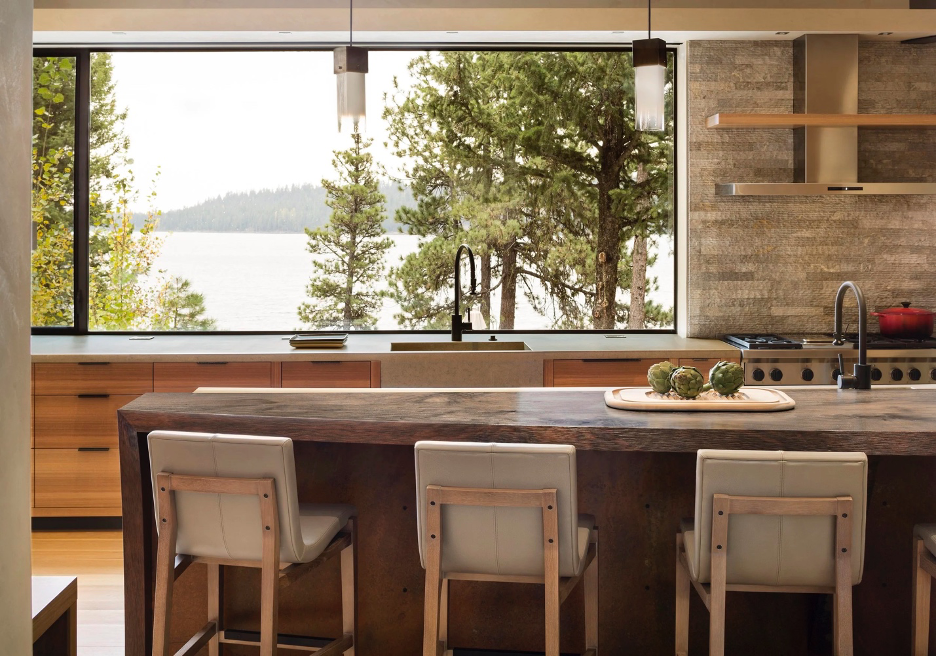
A kitchen sink is one of the hardest-working fixtures in any lake home. It handles everything from post-grilling cleanup and rinsing fresh produce to washing oversized stockpots after a lakeside gathering. In modern lake properties, the sink is also a visual anchor, often positioned beneath expansive windows overlooking the water. That means the right sink must balance utility, durability, maintenance, and design continuity with the home’s architecture.
Today’s lake-home kitchens are increasingly open-concept, blending entertaining, cooking, and gathering spaces into one connected environment. Sink selection, therefore, becomes more nuanced than simply choosing stainless steel versus fireclay. Installation style affects countertop maintenance and visual flow, while configuration influences how efficiently the kitchen functions during daily use or large weekends with guests. Climate and regional design traditions also matter. A rustic lodge-style kitchen in the Northern Great Lakes region may benefit from a deep apron-front sink with traditional detailing, while a streamlined California lake retreat may favor an understated flush-mount workstation sink integrated into minimalist cabinetry.
The best kitchen sink choices reflect how the home is actually used. Some lake homeowners prioritize entertaining and cleanup capacity. Others want low-maintenance options for seasonal properties or durable materials that withstand fluctuating humidity and heavy traffic. Understanding installation types and sink configurations helps narrow those choices thoughtfully while ensuring the kitchen feels cohesive with both the home’s architecture and the surrounding lake landscape.
Top-Mount or Drop-In Sinks
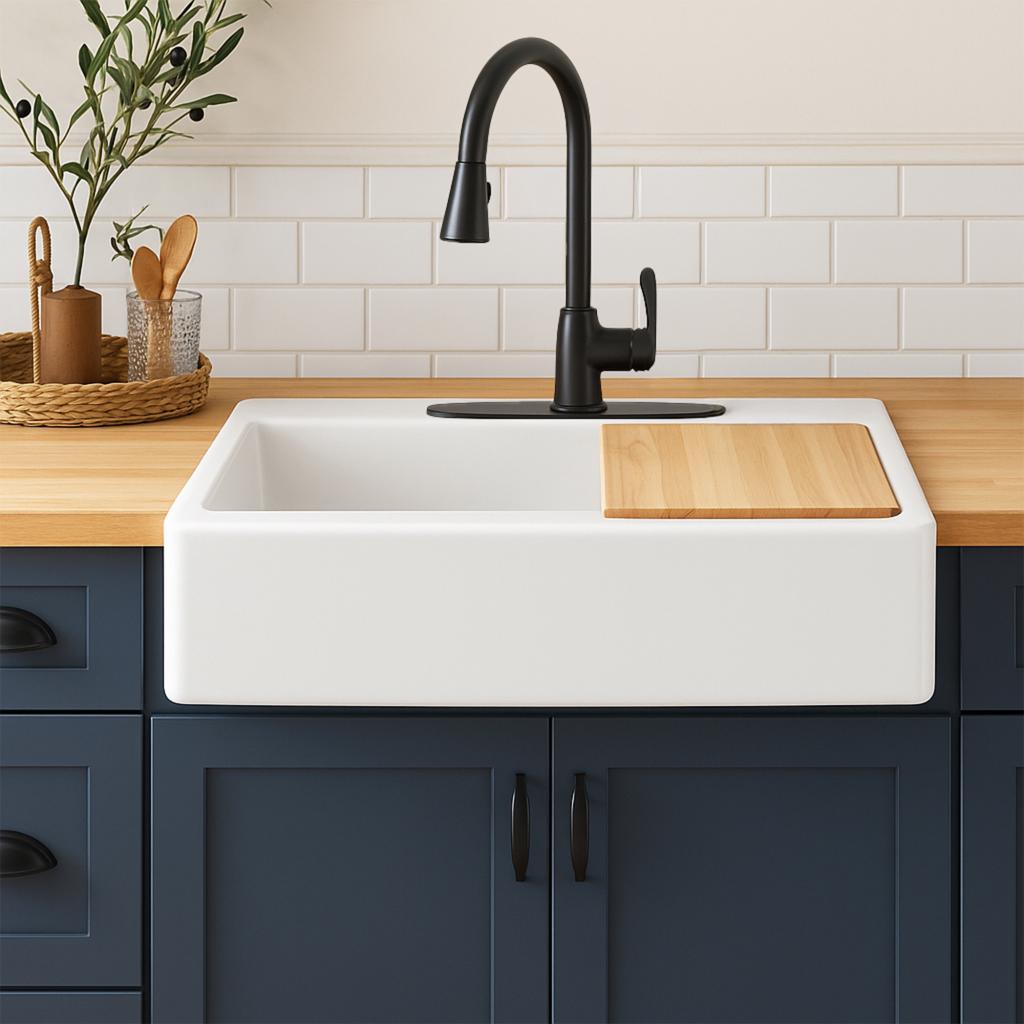
Top-mount sinks, often called drop-in sinks, are installed from above the countertop, with a visible rim resting on the surface. They remain one of the most practical options for lake homes because they are relatively easy to install and compatible with nearly every countertop material.
For seasonal homes in the Upper East and Mid-Atlantic lake regions, top-mount sinks are especially useful during renovations because they can often replace an older sink without major countertop modifications. In the Southeast and Texas lake regions, where humidity and expansion can affect cabinetry over time, top-mount designs also provide forgiving installation tolerances.
Pros:
- Lower installation cost
- Easier replacement and repairs
- Works with laminate, butcher block, quartz, or stone counters
- Good choice for casual lake cabins or secondary kitchens
Cons:
- The exposed rim can trap moisture and debris
- Less streamlined visually than undermount or flush-mount styles
- Countertop cleanup requires wiping around the lip
For traditional lake cottages or homes with rustic finishes, top-mount sinks still feel appropriate and practical. Stainless steel versions pair well with durable, family-oriented kitchens that see heavy summer traffic.
Undermount Sinks
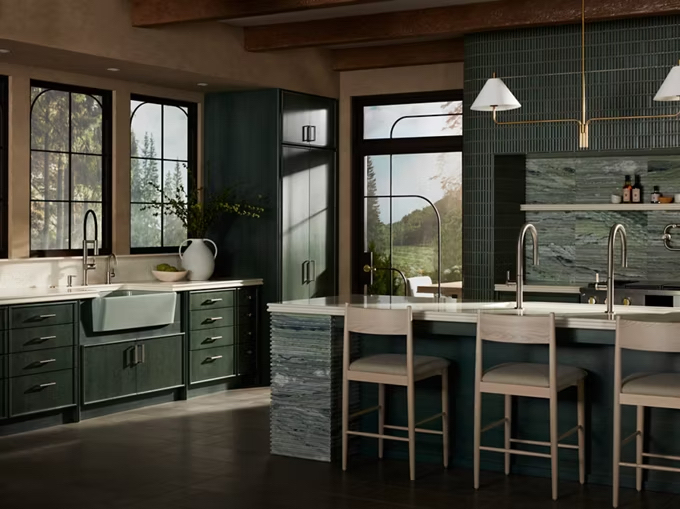
Undermount sinks sit beneath the countertop, creating a seamless transition from the counter to the basin. This installation type has become the dominant choice in modern lake homes because it delivers cleaner lines and easier countertop maintenance.
In California lake homes and the Pacific Northwest, undermount sinks complement contemporary architecture that emphasizes uninterrupted surfaces, natural light, and minimal visual clutter. They also work exceptionally well in Northern Great Lakes homes that incorporate soapstone or quartz countertops.
Pros:
- Sleek, modern appearance
- Easier countertop cleanup with no raised rim
- Enhances premium countertop materials
- Creates a more spacious visual effect
Cons:
- Higher installation cost
- Requires solid-surface countertops
- Repairs can be more involved if the mounting hardware loosens
Undermount sinks are especially effective in open-concept kitchens where the sink is visible from the living and dining spaces. A large single-bowl undermount sink allows oversized cookware, fish-cleaning trays, or entertaining platters to fit comfortably without awkward maneuvering.
Flush-Mount Sinks
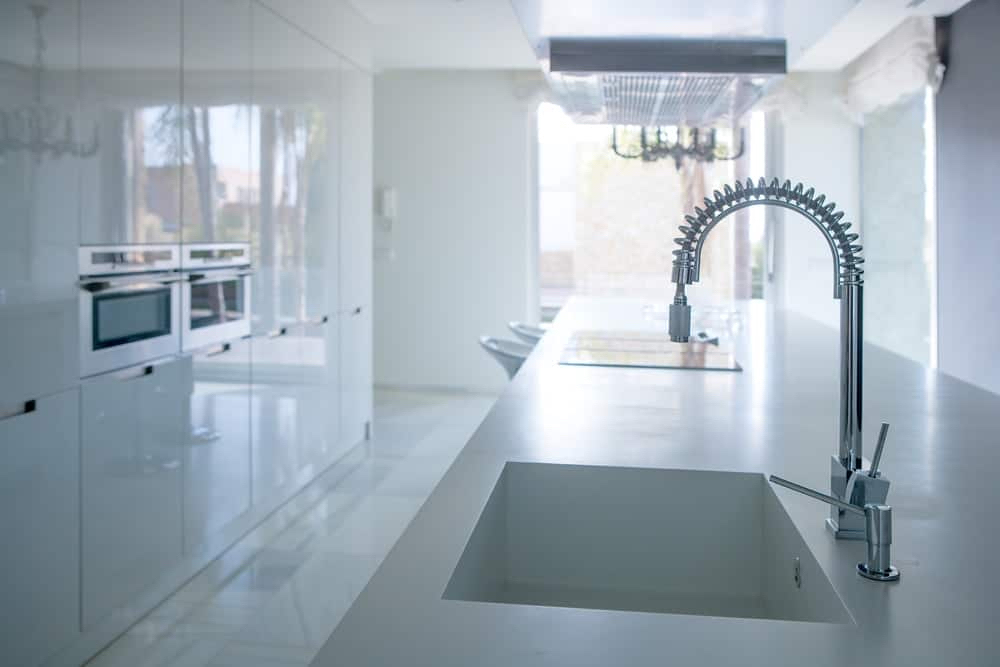
Flush-mount sinks sit level with the countertop surface, creating an integrated appearance with almost no visible transition between sink and counter. They are increasingly popular in architect-designed lake homes that emphasize modern detailing and high-performance functionality.
This style works particularly well in contemporary California lake regions and upscale Pacific Northwest properties where Scandinavian and minimalist influences are common. Flush-mount workstation sinks with integrated cutting boards and drying racks are also gaining traction in compact lake kitchens where efficiency matters.
Pros:
- Extremely streamlined appearance
- Simplifies wiping crumbs and water directly into the sink
- Contemporary architectural appeal
- Works well with workstation accessories
Cons:
- Most expensive installation option
- Requires precision fabrication
- Repairs or replacement can be complicated
Flush-mount installations are best suited to homeowners pursuing a refined, modern aesthetic with custom cabinetry and premium surfaces.
Sink Configurations: Choosing the Right Layout
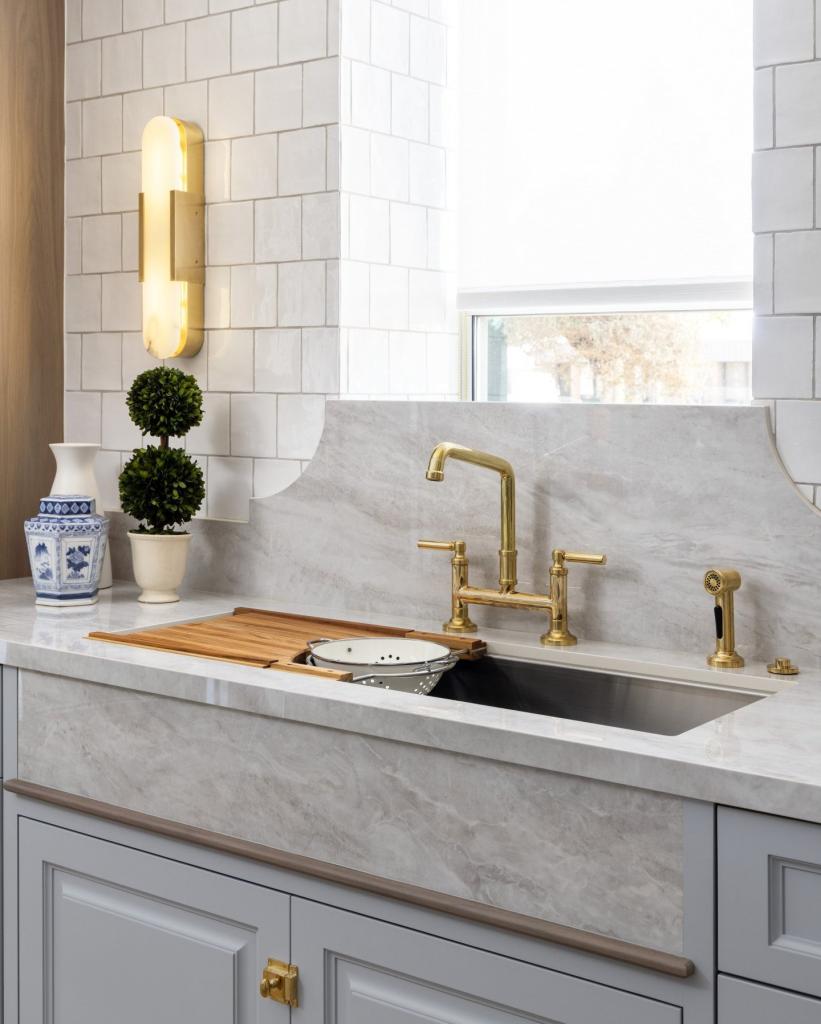
Single Bowl/Workstation, Photo courtesy of Kallista
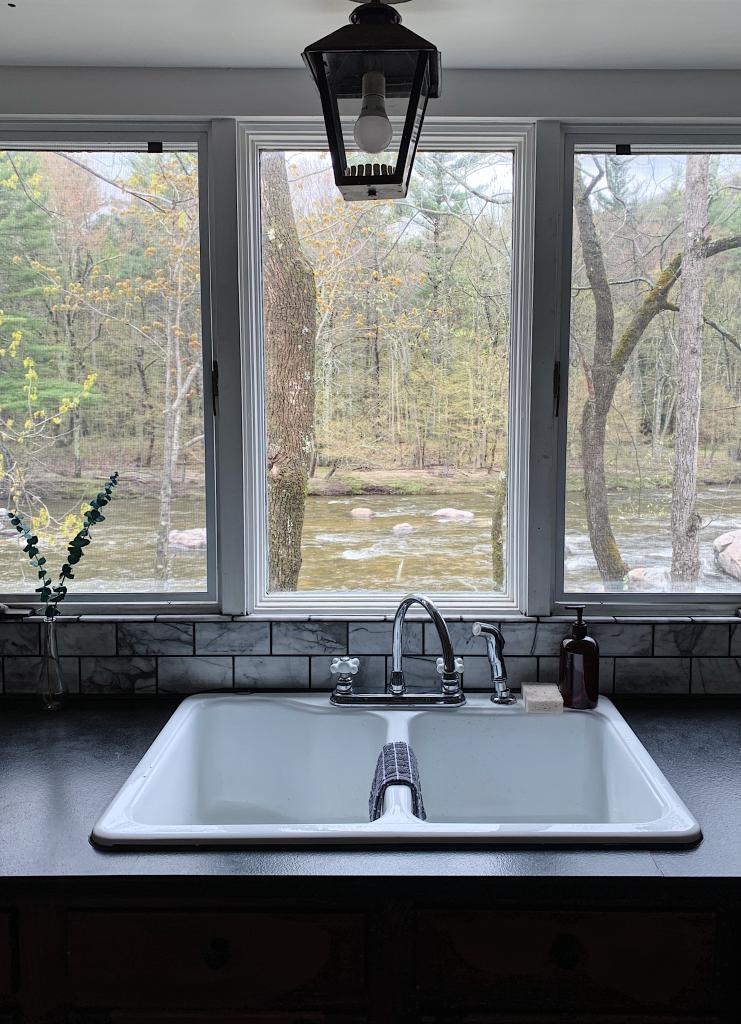
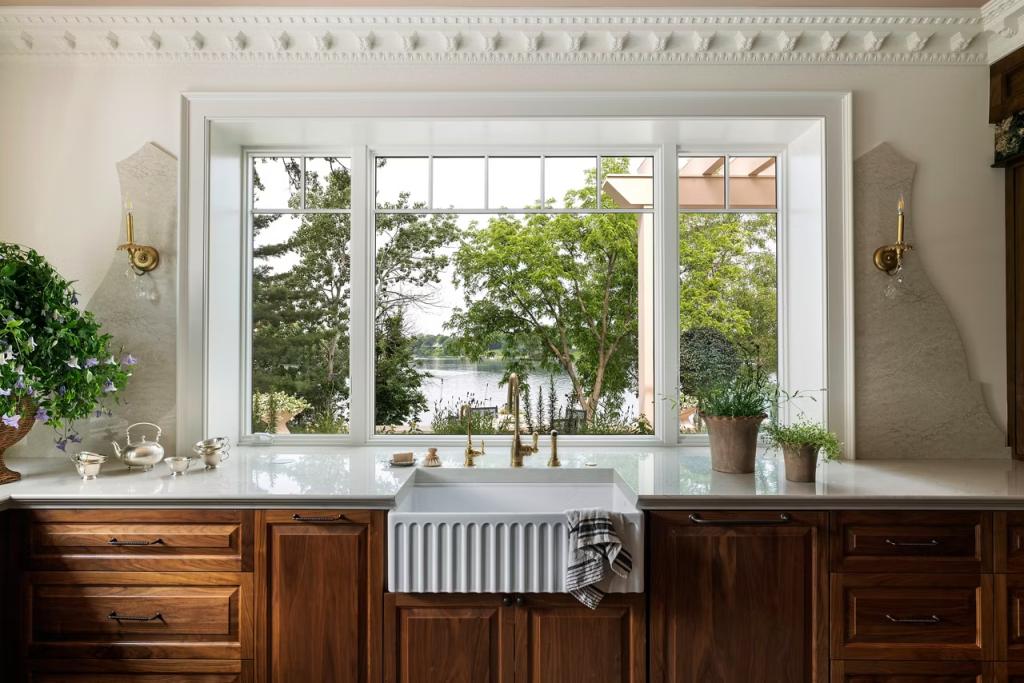
Beyond installation type, sink configuration dramatically affects usability. Single-bowl sinks are increasingly favored in lake homes because they accommodate large cookware and simplify cleanup after entertaining. Deep farmhouse and apron-front styles remain popular in the Upper East, Southeast, and Great Lakes regions for their durability and substantial appearance.
Double-bowl sinks still appeal to homeowners who prefer separating prep and cleanup zones. They work particularly well in traditional Mid-Atlantic and Southern lake homes where kitchens lean more classic than minimalist.
Workstation sinks integrate accessories like cutting boards, drying racks, and colanders directly into the sink ledge. These configurations suit compact lake homes in California and the Pacific Northwest, where maximizing efficiency is essential.
Faucet-hole configuration also matters. Minimalist kitchens often favor a single-hole setup with a pull-down faucet, while more traditional lake homes may include separate sprayers or bridge faucets for architectural character.
Selecting the right kitchen sink for a lake home ultimately comes down to balancing aesthetics with the realities of how the property is used. A weekend cabin with frequent guests may require a forgiving, oversized single-bowl sink designed for heavy cleanup, while a contemporary lakeside retreat may prioritize seamless integration and understated detailing. Regional architecture, climate, entertaining habits, and maintenance expectations all shape the best choice. The most successful lake-home kitchens are designed with longevity in mind — not simply trend appeal — allowing the sink to function as both a practical workspace and a durable centerpiece that complements the pace of lakeside living year after year. For more design tips to enhance your lake life, visit Lake Homes Lifestyles.