When you are buying or selling, there may be terms thrown around, such as ” Highest” or “Best” when referring to offers. In reality, it’s not an auction. It’s actually the furthest thing from it. Lake Homes Realty’s CEO, Glenn Phillips, breaks down the different meaning meanings behind these terms.
Not An Auction!
Highest $ May Not Win: The highest is strictly just a number. This does not ensure whoever offers the highest amount will be the one purchasing the property. The seller is the one who decides who they want to do a transaction with.
Seller Selects Their Buyer: When it comes down to the transaction, it is fully up to the seller to decide how and if they want to proceed.
Look To “De-risk The Deal”– Remove the probability the seller might become uncomfortable with the offer.
Cash Versus Mortgage: Over half of the transactions done at Lake Homes Realty are made in cash. That doesn’t mean mortgages don’t happen. In the instances when a mortgage is in play, there is always the chance it won’t go through. There could even be an appraisal gap. Using cash is one less risk.
Timeframe Might Be Important: A seller could want to move very quickly or they might not have a time constraint. Utilizing the time frame and the nuances that come with it can help to make your offer the best.
Size Of Earnest Money: As a seller, seeing someone with a bigger size of earnest money can lead the seller to think they have more intent on wanting to purchase the home.
Fewer Contingencies: It’s not just the mortgage aspect. There could be home inspections, HOA fees, and a whole list of other things. If you are able to eliminate any of those extra contingencies, that can remove the possibility that the seller is uncomfortable.
Simplicity: If things become too complex, it can lead to the seller becoming confused, which, in turn, leads to the seller saying no.
When it really comes down to it, the “Highest and Best” offer can be great but can also hold a lot more nuance than people might realize. If you still have questions regarding which ways to navigate offers, talk with an agent at https://www.lakehomes.com/. They would be more than happy to help you along your real estate journey.
For lakefront property owners, maintaining a beautiful landscape often means battling excessive water consumption, frequent mowing, and constant upkeep. But what if you could have a lush, thriving outdoor space that enhances biodiversity, conserves water, and requires minimal maintenance? Wild landscaping, often called native or meadow landscaping, is an eco-friendly alternative that replaces traditional grass lawns with native plants, wildflowers, and ground covers suited to the local environment. Whether you swap small lawn patches for pollinator-friendly flowers or fully convert your property into a natural oasis, wild landscaping provides a sustainable way to enjoy a scenic and thriving lakeside retreat. Here are six regionally tailored landscaping alternatives to consider for your lakefront property.
A wildflower meadow offers a vibrant, low-maintenance solution for property owners in the Eastern lake regions, such as the Finger Lakes or Adirondacks. Native flowers like black-eyed Susans, purple coneflowers, and milkweed attract bees and butterflies while thriving in the region’s moderate rainfall. When establishing a meadow, planting a mix of seeds in the fall or early spring is best to ensure they receive full sun and well-drained soil. Once the plants establish strong roots, minimal watering is needed, making this option water-efficient and visually stunning.
Photo courtesy of James Scott – The Garden Company via Homes & Gardens
Woodland Ground Covers
Lake properties in the Mid-Atlantic, including Deep Creek Lake and Smith Mountain Lake, often feature partially wooded areas ideal for native ground covers. Instead of maintaining grass in shady spots, consider planting ferns, wild ginger, and foamflower, which flourish with minimal care. These plants reduce soil erosion, suppress weeds, and provide a lush, green understory. To establish a ground cover, plant in early spring and use natural mulch to retain moisture while reducing the need for irrigation.
Southeastern lakes like those in Georgia and the Carolinas experience hot summers, making drought-resistant landscaping essential. Native prairie grasses like switchgrass, little bluestem, and muhly grass offer a hardy, ornamental alternative to traditional lawns. Once established, these grasses require little to no watering and add movement and texture to the landscape. For best results, plant in late spring and trim back in early winter to encourage new growth.
The Northern Great Lakes region, encompassing areas like Michigan’s Upper Peninsula and Minnesota’s Boundary Waters, is home to a cooler climate with naturally occurring boreal forests. Native ferns, blueberry bushes, and wild columbine thrive here with minimal intervention. These plants provide seasonal interest, from spring blooms to fall foliage, while supporting local wildlife. To create a boreal-inspired landscape, plant in early summer and allow natural leaf litter to act as mulch, reducing watering needs and enhancing soil health.
A rain garden is a practical and aesthetically pleasing solution for lakefront homes in the Pacific Northwest, such as those near Washington’s Lake Chelan or Oregon’s Crater Lake. Rain gardens use native plants like sedges, Pacific bleeding heart, and Douglas aster to absorb excess water and prevent runoff. Planted in a shallow depression, these gardens filter pollutants and enhance local biodiversity. To establish one, choose a location where water naturally collects, amend the soil for good drainage, and plant in early fall for strong root development before winter rains.
Lakefront properties in Texas, including those around Lake Travis and Possum Kingdom Lake, face intense heat and drought conditions. Xeriscaping—landscaping that relies on drought-tolerant plants—provides a resilient alternative. Native succulents like agave and yucca and hardy shrubs such as Texas sage and mountain laurel create a stunning, low-water landscape. To maximize efficiency, use gravel or decomposed granite as mulch and group plants with similar water needs. Watering should be minimal to occasional deep soaking during prolonged dry periods.
By embracing wild landscaping tailored to your lake region, you can create a low-maintenance, water-conscious outdoor space that enhances the natural beauty of your property. Whether incorporating a wildflower meadow in the East, a rain garden in the Pacific Northwest, or drought-resistant xeriscaping in Texas, each approach fosters biodiversity while reducing environmental impact. Making the shift away from traditional lawns conserves water and encourages a thriving, self-sustaining ecosystem that enhances your lakefront retreat for years to come. For more gardening and landscaping inspiration, visit Lake Home Lifestyles.
Sailing is one of the classic joys of lake living. On a day with a gentle wind, there’s nothing better than hoisting the mainsail and enjoying a quiet afternoon. Whether for recreation or transportation, sailing has permeated cultures worldwide since ancient times. Because of these early roots, unlike motorized boats, operating a sailboat requires a specific skill set and knowledge of terminology.
In addition to understanding the lingo of sailboats, it’s also important to know the different types. In general, sailboats can be categorized in various ways based on their primary hull design, the keel, and the mast. For those new to the lexicon, a hull refers to the body of the boat, a keel is the main structural backbone, and a mast is a towering pole that holds sails in place. Today, we’ll be using the hull-based categorization system. For an introductory crash course, check out these three basic types of sailboats!
Monohulls are the most common type of sailboats. This classic structure is defined by a single body with a large beam, usually sporting a classic, clean look. Part of their popularity is their ability to provide both storage and stability simultaneously. However, monohull sailboats have decreased in popularity recently for those who engage in sailing competitions since the extra storage space isn’t conducive for higher speeds. If you’re curious about the keel categorization, traditional monohulls tend to have full keels, cutaway keels, or fin keels.
One of the most common designs in the monohull family is a dinghy, a short sailboat for one or two people that’s easy to maneuver. Although the name implies shabby characteristics, dinghies are useful little boats to have at a lake house. Other varieties of monohulls include cutters (a medium-sized sailboat with three sails), sloops (a single mast with one mainsail and one headsail), ketches (two main masts with one around midship), and schooners (more than two sails which are supported on masts). A sloop is probably the one that comes to mind when thinking of a modern sailboat.
Often nicknamed cats, catamarans are defined by their double hulls. More specifically, catamarans have twin-hulled structures attached together by specialized members. Appropriately, the word means “tied pieces of wood” in Tamil, a South Indian language. The twin hulls provide stability for these boats, which are popular for their expansive interior room and increased deck space. Although these boats have a higher speed than monohulls, they tend to sail more off-course because their keels are not as heavy.
A few specific types include beach catamarans (popular for day sailing and among those with little sailing experience) and charter catamarans (much larger boats that usually feature both sails and a motor). Outside of the sailing world, motorized cats are gaining popularity among lake homeowners. Boats like pontoons and other “power cats” are well-regarded among anglers and cruisers alike.
Multi-hull sailboats feature anywhere between three and five hulls, although a three-hull variation is most common. These three-hull types, also known as trimarans, typically have a main hull and two side hulls for stability. On some of these boats, the side hulls can fold inward to make the boat more narrow. Due to their large beam and low center of gravity, these sailboats are very stable. As such, they make popular sailboats which only require small engines for propelling forward. Beyond the trimaran, four and five-hulled sailboats are rarely used commercially or by lake homeowners.
We hope this brief introduction serves as a helpful foray into sailboat types! If you’re looking to learn more, stay up-to-date by subscribing to Lake Homes Lifestyles for more insights on all things sailing.
Many of us aspire to live the lake life. For most, a lake home embodies a serene and picturesque lifestyle, often reflecting a harmonious blend of nature and modern comfort. The kitchen—the heart of the home— plays a crucial role in fostering this balance. In 2025, kitchen design trends are embracing sustainability, natural aesthetics, and smart functionality. These trends cater to homeowners looking to create stylish yet practical spaces that enhance their lakeside living experience. From the integration of natural materials to cutting-edge technology, each trend emphasizes a seamless connection between the home and its scenic surroundings.
Whether you are renovating an existing space or designing a new one, these trends will help you create a kitchen that is both visually stunning and highly functional. Below, we explore the top kitchen design trends that are making waves in 2025 and how you can effortlessly incorporate them into your own lake home interior.
Illustration: In 2025, the multi-purpose island is having an especially hot moment in the spotlight—kitchen islands with built-in storage, additional seating, integrated sinks, and other innovative add-ons.
Why It’s Popular: As the hub of the kitchen, an island provides extra workspace, storage, and socializing opportunities, making it an essential feature in modern homes.
How to Incorporate: Customize your island with hidden drawers, built-in charging stations, or a beverage fridge. This trend works well in large kitchens but can also be adapted for compact spaces with extendable surfaces.
Illustration: Think reclaimed woods, bamboo cabinets, and biodegradable countertops.
Why It’s Popular: Sustainability remains a top priority for homeowners and eco-friendly materials provide both aesthetic appeal and environmental benefits. Natural textures create a warm, inviting atmosphere that aligns with the tranquil setting of a lake home.
How to Incorporate: Opt for salvaged wood for cabinetry, invest in sustainable flooring options like cork or bamboo, and use recycled glass backsplashes for a unique touch. This trend works well in kitchens but can also extend to dining areas and outdoor cooking spaces.
Illustration: Shades of moss green, deep blues, and warm neutrals like sand and taupe.
Why It’s Popular: Homeowners are moving away from stark white kitchens, embracing color palettes inspired by nature to evoke calmness and serenity.
How to Incorporate: Paint cabinetry in muted green tones, add terracotta tiles for warmth, or introduce natural fiber rugs and linens. This trend is especially effective in open-concept kitchens that flow into living or dining spaces.
Illustration: Touchless faucets, smart refrigerators, and voice-activated lighting and appliances.
Why It’s Popular: Convenience is key, and smart technology enhances both efficiency and comfort. Automated features make cooking and entertaining easier while maintaining a sleek, clutter-free aesthetic.
How to Incorporate: Install motion-sensor lighting, use smart thermostats for energy efficiency, and upgrade to Wi-Fi-enabled appliances. These additions can extend beyond the kitchen to pantries and outdoor cooking areas for a fully connected experience.
Why It’s Popular: Lake homes thrive on a seamless connection between indoor and outdoor spaces. This trend maximizes natural light and promotes an open, airy ambiance.
How to Incorporate: Consider retractable doors leading to a deck, incorporate outdoor dining spaces with built-in grills, and use weather-resistant materials to maintain continuity. This design works well in kitchens adjacent to patios or waterfront views.
Illustration: Over-sized woven lights, different-sized glass globe pendants, and sculptural LED fixtures.
Why It’s Popular: Lighting serves as both a functional and decorative element, adding character and ambiance to the kitchen.
How to Incorporate: Choose fixtures that reflect your home’s aesthetic, such as rustic wooden chandeliers for a cozy lodge feel or sleek geometric pendants for a modern touch. This trend extends to dining areas and even kitchen islands.
Illustration: Zellige tiles, compelling pattern/color combinations, and dramatic stone surfaces.
Why It’s Popular: Unique backsplashes add personality and dimension to kitchen designs, moving beyond the standard subway tile look.
How to Incorporate: Choose tiles that reflect your style—stark color contrasts for a moody feel or earthy terracotta for a rustic charm. This trend is ideal for kitchens but can also enhance wet bars and butler’s pantries.
In 2025, lake home kitchens are embracing a blend of nature, technology, and artistry to create spaces that are both beautiful and practical. By incorporating organic materials, tranquil colors, and seamless technology, homeowners can craft a kitchen that enhances their lakeside lifestyle. Whether you are drawn to smart innovations or prefer the warmth of reclaimed wood, these trends offer versatile ways to elevate your kitchen design. With thoughtful integration, your lake home kitchen can become a perfect balance of style, functionality, and harmony with the surrounding landscape. For more design inspiration, visit Lake Home Lifestyles.
Selling a lake home comes with several questions, but some are better than others. Glenn Phillips, CEO of Lake Homes Realty, discusses 5 questions to avoid when selling a lake home.
“How many views did my listing get online?” The truth is that there’s no right answer to this question. If you get plenty of views, you start to think the websites aren’t good or the buyers aren’t serious. However, if you aren’t getting any, you’re still upset since there’s no traffic. The right amount of views is the one that leads to a transaction. The real reason sellers ask this is to know why they aren’t getting a transaction. Most of the time, if the property is marketed well, the home isn’t properly priced.
“Should we counter-offer?” In negotiation, you always counter-offer. Not giving a counteroffer eliminates any chance of a negotiation. Counter-offers aren’t always about price; they can include extra property or furniture. Work through the negotiation to keep the discussion going until you reach a transaction.
“Can you co-list with my relative?” What this question really means is that you want to hire an agent to do the work and split the check with your relative. If you don’t feel your agent is worth the money, don’t hire them.
“Where is your office?” Office location for lake agents isn’t important. Most lake home buyers come from cities or states away and don’t want to come into town to look at an office. Lake home buyers would rather look at the house than go to an office.
“Does your brokerage have a lot of agents?” This is more of a filler question when interviewing agents. Instead, ask them how they differentiate themselves from the other agents to be successful.
Asking your agent the right questions can make a world of difference when selling lake homes. Visit lakehomes.com to connect with expert lake agents who are ready to guide you to a successful transaction.
Lake home sellers use some common phrases that may end up costing them money. Glenn Phillips, CEO of Lake Homes Realty, discusses 4 things lake home sellers say that could backfire.
“Let’s leave room for negotiations.” No matter what price you set for your house, the buyer will always try to meet you somewhere between your price and their price. Additionally, appropriately priced homes sell quickly and don’t sit on the market. Intentionally overpricing causes frustration and costs you money by having your home sit on the market.
“We can reduce the price later.” Lake Homes Realty data suggests that overpriced homes don’t get offers and sit on the market. Overpriced homes also cause contention with your agent, as you believe they aren’t doing their job well. Once you start reducing your price, you’re training buyers to offer lower than the list price.
“This is the price I need so I can…” Often, sellers price their home with the intention of paying for a trip, debt, or some other expense. However, this has nothing to do with what the market says. Buyers don’t care about what you want to buy with the transaction money. Your home will only sell for what the market says it’s worth, not what you need to pay for something else.
“I really don’t have to sell.” Listing a home costs everyone involved time and money. If you don’t have to sell, then don’t. Playing around with the market costs you and other people a lot of time and money.
These common phrases often cost sellers extra time and money. Selling a lake home is a business transaction, so you should treat it like one. Visit lakehomes.com to connect with expert lake agents ready to guide you through lake real estate.
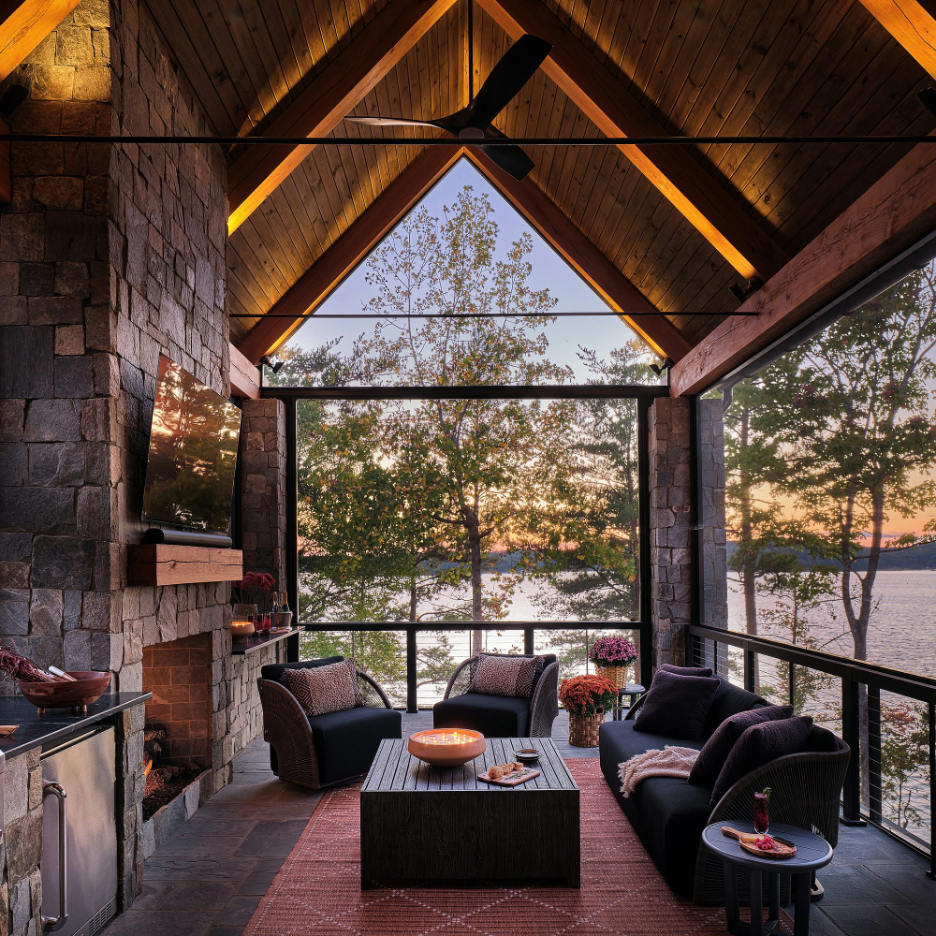
In 2025, lake home design trends are evolving to align with contemporary design movements while maintaining the tranquility of lakeside living. Inspired by the natural beauty of wooded shorelines, calm waters, and seasonal transformations, these homes embody style and functionality. Emerging design trends emphasize sustainability, energy-efficient technology, and seamless indoor-outdoor integration. This ensures that every space enhances the lakeside experience.
Whether nestled in the Great Lakes region, tucked away in the Adirondacks, or set against the dramatic landscapes of the Pacific Northwest, these trends reflect how people want to experience lake life in 2025. Here are seven top interior design trends shaping modern lake homes. Also, explore ways to incorporate them into your retreat.
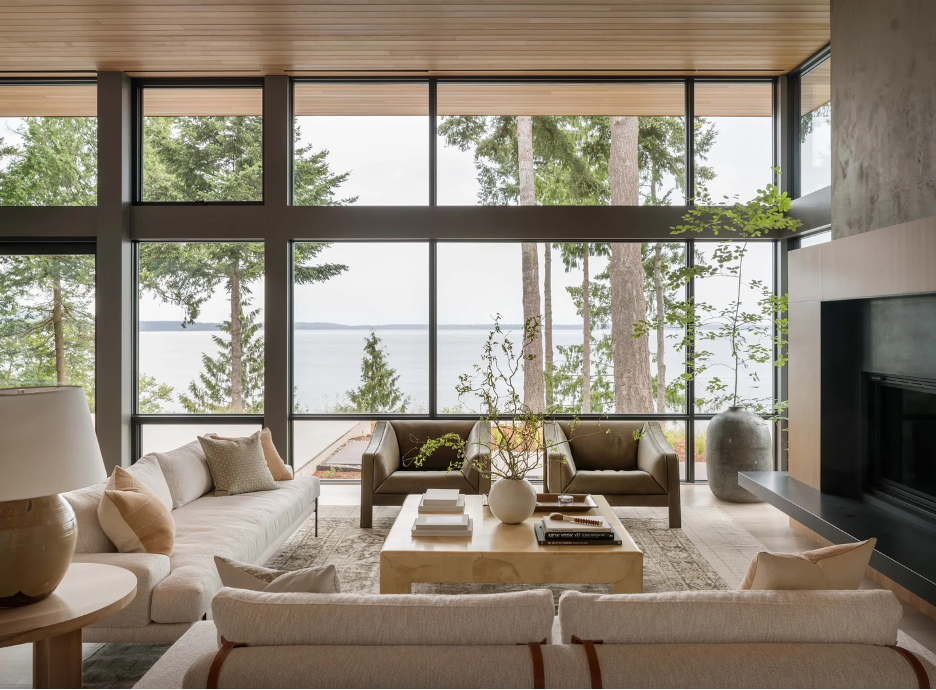
Why it’s trending: Homeowners are embracing a more pared-down aesthetic that lets the lake’s natural beauty shine while maintaining a cozy, livable feel.
How to incorporate it: Choose simple, organic materials such as light-stained wood, linen, and handcrafted ceramics to create a calming interior. Additionally, large, unobstructed windows frame picturesque views. Built-in furniture maximizes space while reducing clutter. This aesthetic is perfect for homes in the Great Lakes region. Here, clean lines and natural textures complement the expansive water views.
Why it’s trending: Advances in home technology are making lake houses more energy-efficient and eco-friendly. Homeowners can reduce their environmental footprint without sacrificing comfort.
How to incorporate it: Install smart thermostats, solar panels, and energy-efficient lighting to optimize sustainability. Additionally, water filtration systems and reclaimed materials further enhance eco-conscious living. Automated blinds and climate control systems benefit regions like the Upper Midwest, where seasonal temperature shifts require adaptable solutions.
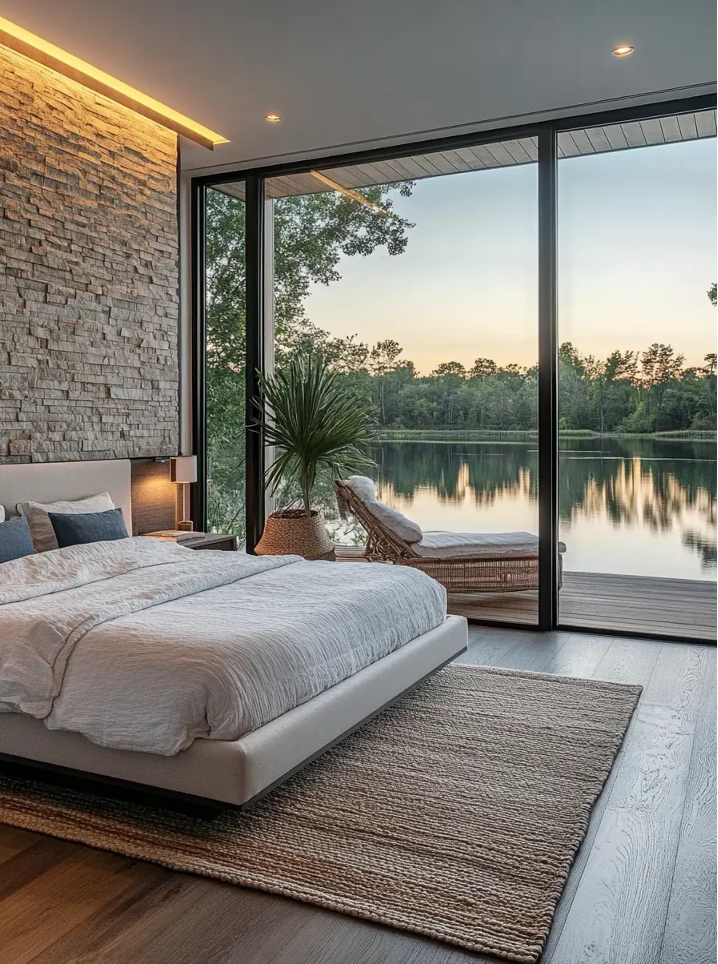
Why it’s trending: Homeowners prioritize a deeper connection to nature by bringing outdoor elements inside through biophilic design.
How to incorporate it: Use natural textures like stone, raw wood, and woven materials in furniture and decor. Incorporate indoor water features, living plant walls, and large-scale botanical prints to reinforce a connection to the outdoors. This trend is especially fitting for homes in the Pacific Northwest, where the lush, forested lake surroundings inspire organic interiors.
Why it’s trending: Instead of just being a summer retreat, lake homes are now designed for year-round use. Outdoor spaces are adapted for all seasons.
How to incorporate it: Heated patios, retractable glass walls, and covered outdoor kitchens extend the usability of decks and porches throughout the year. Fire pits and cozy outdoor furniture encourage lakeside gatherings even in cooler months. This approach is beneficial in the Midwest and Northeast, where lake homes must withstand varying seasonal conditions.
Earthy, Nature-Inspired Palettes
Photo courtesy of Ellen McDermott; Design, OAD Interiors via Livingetc.
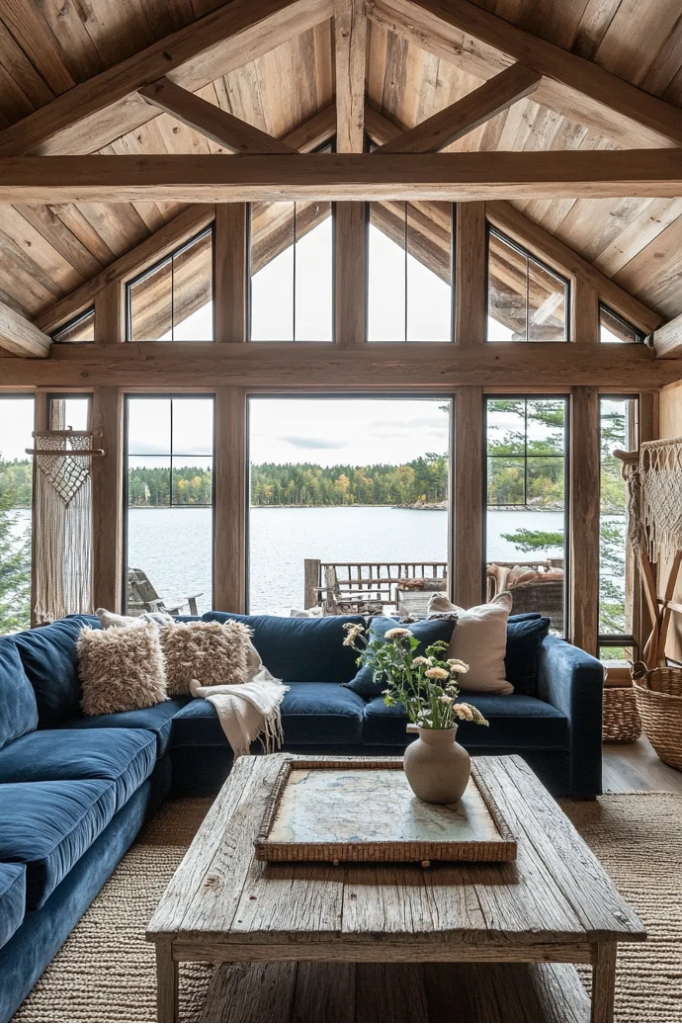
Why it’s trending: Instead of the bright blues and whites of coastal design, lake homes are leaning into moodier, more complex color schemes inspired by their surroundings.
How to incorporate it: Incorporate deep lake blues, mossy greens, charcoal hues, and warm clay tones through textiles, accent walls, and furniture. Opt for matte finishes, reflective elements, nature-inspired materials, and textured fabrics to enhance depth. This trend is ideal for homes in the Mid-Atlantic and Southeast. In these regions, lakes are often surrounded by dense forests and rolling hills.
Why it’s trending: With more people working remotely and using their lake homes as multifunctional retreats, interiors must be adaptable to different purposes.
How to incorporate it: Use convertible furniture, sliding partitions, and built-in storage to create flexible spaces that transition from work to relaxation. A guest room that doubles as an office or a retractable wall that opens up to an outdoor lounge can maximize usability. This trend especially suits homes in California and the Gulf region. Here, vacation homes are increasingly used as hybrid live-work spaces.
Why it’s trending: Homeowners are moving away from mass-produced furnishings. Instead, they are favoring handcrafted, locally sourced pieces that add authenticity and character.
How to incorporate it: Support local artisans by incorporating custom furniture, handmade ceramics, and woven textiles into your décor. Incorporate unique, one-of-a-kind elements like hand-carved wooden accents or locally crafted light fixtures. The trend is particularly popular in the Adirondacks and Pacific Northwest. In these areas, a rich tradition of craftsmanship blends seamlessly with natural surroundings.
In 2025, the design trends for lake homes largely embrace nature, sustainability, and adaptability. By integrating energy-efficient technology, organic textures, and flexible living spaces, homeowners can create a retreat that harmonizes with their lake environment while supporting modern lifestyles. Whether designing a year-round escape in the Great Lakes or a seasonal hideaway in the Pacific Northwest, these trends ensure your lake home remains timeless, stylish, and deeply connected to its surroundings. For more design inspiration, visit Lake Home Lifestyles.
When you’re trying to find a real estate agent, you want to ensure you’re getting the best representation possible. Glenn Phillips, CEO of Lake Homes Realty, discusses a few things agents believe aren’t really true.
“I work at the largest brokerage in the area.” Agents working for a large local brokerage are working alongside their competitors. Large brokerages make agents feel comfortable by bringing in a large number of agents. Large brokerages don’t make a difference for consumers, as their home gets listed no matter what.
“My listings appear on thousands of websites.” Homes listed by any agent in any market across the country are syndicated to thousands of websites. Unless the property is being hidden and not advertised on the internet, it will appear on thousands of websites.
“I earn stock in my publicly traded brokerage.” This is a common tactic for retention and recruiting agents. However, you can invest in the brokerage yourself if it’s publicly traded.
“The ‘serious’ clients will leave a message.” People don’t want to leave messages anymore. If they get sent to voicemail, they’ll keep calling around until someone picks up. Great agents answer the phone even if it means dealing with spam.
Like anybody else, agents often believe things they do work when they don’t. Watching out for these sayings can help you find the best agent for you. If you’re looking to buy or sell, visit lakehomes.com to connect with expert agents who are ready to help you through the process.
It’s time to let the light in. Sunshine always lifts our spirits, especially during the cold winter doldrums, so why not harness this mood-lifter in your lake home? A sunroom is an exceptional addition to any lake property, providing a serene space to soak in the natural beauty of the surroundings. Offering a perfect blend of indoor comfort and outdoor charm, a sunroom allows homeowners to enjoy panoramic views of the lake in a controlled environment shielded from harsh weather or insects. The allure of having a sunroom is particularly evident in colder regions, where it provides a cozy retreat to experience the beauty of winter landscapes without braving the cold.
The unique charm of a sunroom lies in its ability to merge relaxation with functionality, serving as a versatile space for entertaining, reading, or simply unwinding. Depending on your location, a sunroom can also serve as a reflection of regional design influences. Check out these decorating tips and aesthetic suggestions tailored to six lake regions across the United States.
The rustic and tranquil surroundings of the Northern Lake region inspire a cozy, cabin-like retreat. Capturing stunning views of Reeds Lake in East Grand Rapids, Michigan, this charming sunroom offers the best seat in the house. Instantly inviting, the space needs little more than some comfy seating pieces and simple accessories. It’s best to choose overstuffed sofas and armchairs with pillows and throws for extra softness and warmth in this climate. If you have a central fireplace or wood stove, that’s even better. You can arrange your seating around it for cozy warmth during the chilly months.
Large picture windows with no treatments maximize natural light and views. If privacy is needed, use simple wooden blinds or shades. Earthy tones or nautical blues mix effortlessly with neutral tones to enhance the rustic feel of the lake landscape. Layer the room with faux-fur throws, handwoven blankets, and natural fiber rugs to create an environment of livable luxury. You can also include soft lighting, wildlife-themed artwork, and organic sculptural works to complement the beauty of the outdoors.
The Southeastern Lake region’s sunny climate and lush landscapes call for a breezy, Southern-inspired aesthetic. Opt for whitewashed wood or wrought iron furniture with plush cushions. Arrange seating to create a cozy conversation area and include a side table for refreshments. Uncovered windows are best for capturing lake views, and enhancements like arched windows or plantation shutters are ideal for a classic Southern feel. Lightweight sheer curtains in pastel hues will also complement the airy vibe.
Soft pastels like mint green, peach, and sky blue, accented by crisp white, create a light and cheerful ambiance. Bare floors bring a cooling rustic touch, and for softness, you can incorporate sisal or seagrass rugs, floral-patterned pillows, and gauzy throws. Personalize your space with framed vintage maps, prints, or botanical artwork to befit your style.
A sunroom in the Upper East Lake region, known for its historic charm and lush greenery, can evoke a classic New England feel. Focus on timeless and elegant styles with modern touches. Opt for wicker or rattan furniture with weathered wood finishes. Arrange seating to maximize views, with a central coffee table anchoring the room. Include a chaise lounge or swing chair for added comfort. Bay windows or floor-to-ceiling panes work well to frame picturesque landscapes. Pair these with light linen curtains or Roman shades for privacy without obstructing natural light.
Neutral cream, sage green, and soft gray palettes, accented by navy blue or cranberry red, reflect the coastal inspiration. Introduce braided jute rugs, plaid or striped throw pillows, and soft wool blankets. For a region-specific touch, add coastal artwork, such as watercolor prints of lighthouses or sailboats.
The Mid-Atlantic Lake region blends traditional and transitional styles, offering opportunities to create a polished yet inviting sunroom. Choose upholstered furniture with clean lines and subtle patterns. A loveseat paired with armchairs and a tufted ottoman adds a sophisticated touch. Arrange pieces around a small coffee table to encourage conversation. Opt for French doors or casement windows for a classic look. Use sheer curtains or bamboo blinds to balance light and privacy.
Warm neutrals, such as beige, taupe, and soft gold, accented by jewel tones like emerald green or sapphire blue, evoke the richness of the region’s heritage. Layer the space with Persian-style rugs, velvet cushions, and ceramic vases. To enhance the traditional vibe, incorporate framed botanical prints or antique-inspired mirrors.
Capture the coastal essence of the Gulf Coast Lake region with a casual and vibrant sunroom style. Choose sturdy outdoor furniture with weather-resistant cushions. Arrange seating in a U-shape for entertaining and include a bar cart for a beachy vibe. Sliding glass doors or oversized windows offer unobstructed water views. Opt for minimal treatments like solar shades to reduce glare. Bright hues like turquoise, coral, and sandy beige mimic the coastal landscape. Include woven area rugs, macramé wall hangings, and brightly patterned pillows. Seashells, driftwood art, or nautical décor enhance the coastal aesthetic.
The Pacific Northwest Lake region’s eclectic and nature-inspired style invites you to create a sunroom that’s both modern and organic. Choose minimalist furniture with clean lines, such as mid-century modern pieces. Arrange seating to emphasize openness and flow. Floor-to-ceiling glass walls or skylights maximize natural light. Use sheer panels or roller shades for an unobtrusive look. Earthy neutrals like taupe, olive, and charcoal, accented by soft blues or mustard yellow, reflect the natural surroundings. Incorporate shag rugs, woolen throws, and leather pillows. Abstract artwork or nature photography ties the design to the region’s scenic splendor.
A sunroom at your lake property is more than a design choice—it’s an invitation to immerse yourself in nature while enjoying modern comforts. By tailoring the design to your specific region, you can create a space that complements the local landscape and reflects your personal style. Thoughtful furniture arrangements, carefully selected colors, and layered textures ensure your sunroom becomes a cherished retreat, enhancing both the functionality and beauty of your lake property. For more design inspiration, visit Lake Homes Lifestyles.