4 Fun Facts about Maine Lakes

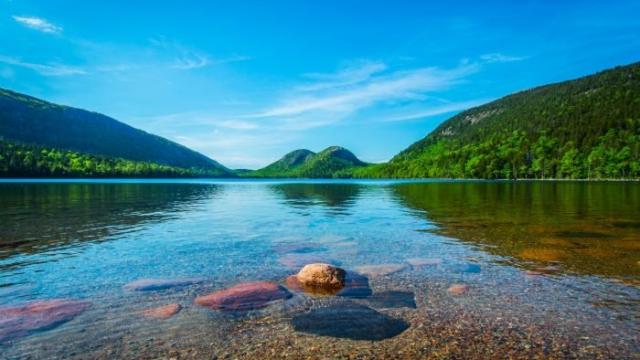
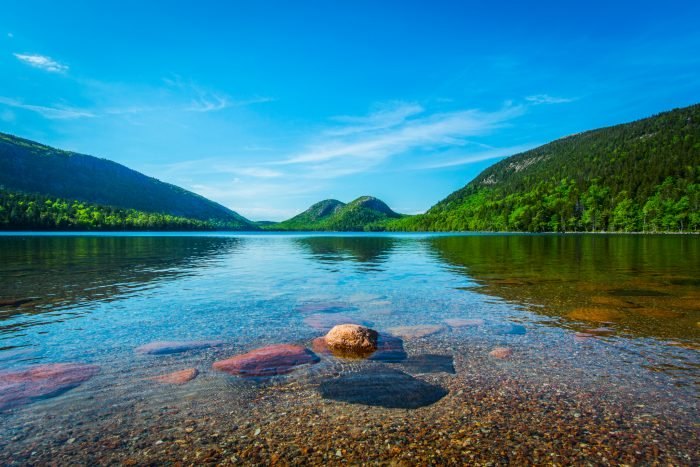
Photo courtesy of onlyinourstate.com.

For some, a dream lake house means countless boats on the water, a thriving city nearby, and a sense that there’s always something going on. But others prefer a secluded, quiet slice of paradise. If you’d choose the latter, a home on one of the Maine lakes might be perfect. As the least populated state in the country, you’re likely to have more outdoor space to yourself. Bordered by the Appalachian Mountains and the Atlantic Ocean, the state is surrounded by majestic nature, and its lakes are no exception. Check out these fun facts about four Maine lakes!

Henry David Thoreau Loved Moosehead Lake

The Maine Woods – Amazon

Henry David Thoreau, the famous American poet, philosopher, and essayist in the 1800s, was famous for his pastoral lifestyle. His book, Walden, describes the simple joys of existing in nature. On one of his many outdoor journeys, he visited Moosehead Lake, where he climbed the state’s highest peak, Mt. Katahdin. In his book, The Maine Woods, he fondly refers to Moosehead Lake’s nature as “uninterrupted” and a “gleaming silver platter at the end of a table.”

Although he wrote these words over 100 years ago, he isn’t wrong today. According to the New York Times, an average of 4 people per square mile live in Piscataquis County, where you will find Moosehead Lake. The landscape is scattered with tall spruces, firs, and pines. Wildlife like moose and bald eagles inhabit these spaces. If you’re looking to live on a peaceful, rustic lake, endorsed by Henry David Thoreau himself, Moosehead Lake is the one to check out.

Damariscotta Lake is Home to a Rare Alewives Run
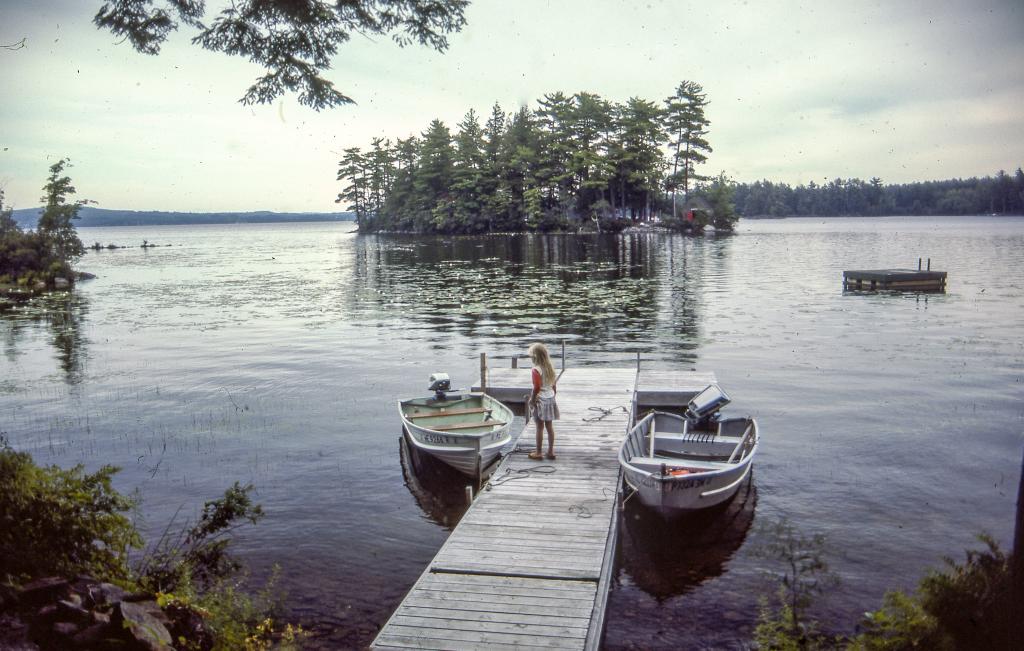
Photo courtesy of Kent Kanouse via Flickr

Of the Maine lakes, this one is slightly lesser-known, and you may see fewer boats on the water. But despite its isolation, Damariscotta Lake is not one to skip. The lake’s remarkably clear waters allow you to see 10 feet below the surface. This clarity is an especially useful feature for witnessing the famous annual Alewives Run. 

Alewives, members of the herring family, are seawater fish that travel to freshwater to spawn each year. Although the alewife population has thrived in the past, they have significantly decreased in Maine over the last 200 years. Most recently, the Damariscotta Mills fish ladder has revived this population. This year alone, the ladder has helped 1,069,488 alewives into Damariscotta Lake. You can witness their migration annually over Memorial Day weekend. As part of the annual Alewife Festival, the Damariscotta Mills community hosts a 5K run, a cookout, and a chance to watch the fish.

Of the Maine lakes, this one is slightly lesser-known, and you may see fewer boats on the water. But despite its isolation, Damariscotta Lake is not one to skip. The lake’s remarkably clear waters allow you to see 10 feet below the surface. This clarity is an especially useful feature for witnessing the famous annual Alewives Run. 

Alewives, members of the herring family, are seawater fish that travel to freshwater to spawn each year. Although the alewife population has thrived in the past, they have significantly decreased in Maine over the last 200 years. The Damariscotta Mills fish ladder has revived this population. This year alone, the ladder has helped 1,069,488 alewives into Damariscotta Lake. You can witness their migration annually over Memorial Day weekend. As part of the annual Alewife Festival, the Damariscotta Mills community hosts a 5K run, a cookout, and a chance to watch the fish.

Sebago Lake is the Deepest in New England
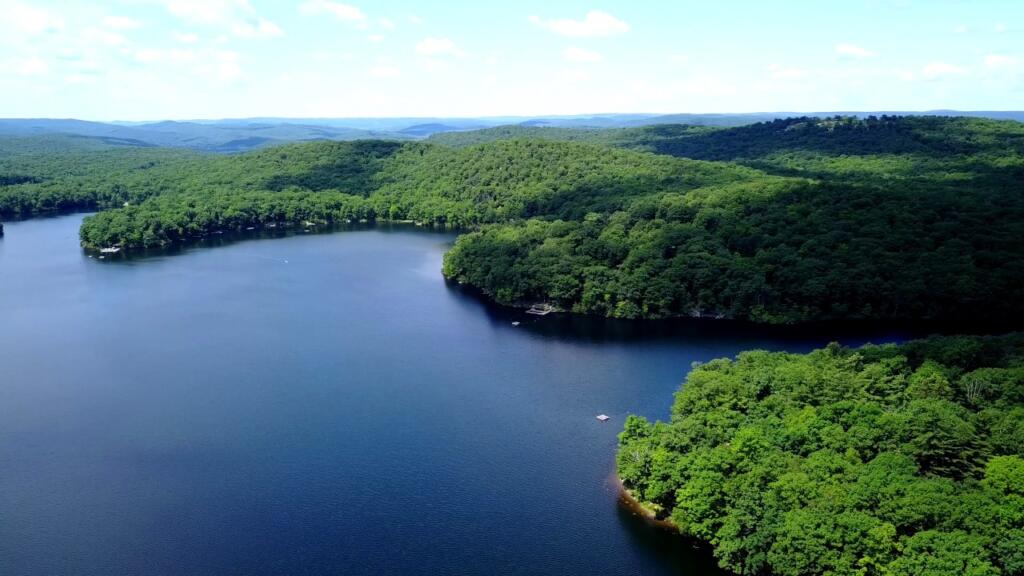
Sebago Lake – YouTube

Just northwest of Portland is Sebago Lake, which is the deepest lake in New England. Its depth of 316 feet is enough to hold the Statue of Liberty, plus the base. It contains almost a trillion gallons of clear water that provides the Greater Portland Area’s water supply. As well, it’s the second largest lake in Maine at 28,771 acres. The lake’s depths make it very popular for fishing lake trout. Sebago Lake’s underwater islands and coves also make it home to multiple other fish breeds like largemouth bass, smallmouth bass, and crappie. If you’re choosing one of the Maine lakes for fishing, look no further.

The First Registered Maine Guide is from Rangeley Lake

Cornelia “Fly Rod” Crosby – Boothbay Register.

If you’re seeking outdoor sports on the Maine lakes, you may have heard of the Rangeley Lake Resort. It’s a prime destination for travelers who ski and snowboard in winter and fish and kayak in summer. Today, it’s a revered travel destination. But at one point in time, Rangeley Lake wasn’t on the map. 

In the 1850s, the presence of 12-pound brook trout in the lake brought a slough of anglers to Rangeley Lake. Over the following decades, the region brought on local guides. One of them was Cornelia Crosby, also known as “Fly Rod Crosby.” She gave up a steady job in baking to fish Lake Rangeley, caught hundreds of fish per day, and wrote popular journal articles about her sport. She later became the first registered Maine guide — a prestigious feat, especially for a woman in the 1800s. You can find her namesake trail by the lake, the Fly Rod Crosby Trail.

Learn more about lake living on Maine lakes at Lakehomes.com

Enjoy trivia? Be sure to join our newsletter for weekly article updates! SIGN UP

Top 5 Deepest Lakes in the World

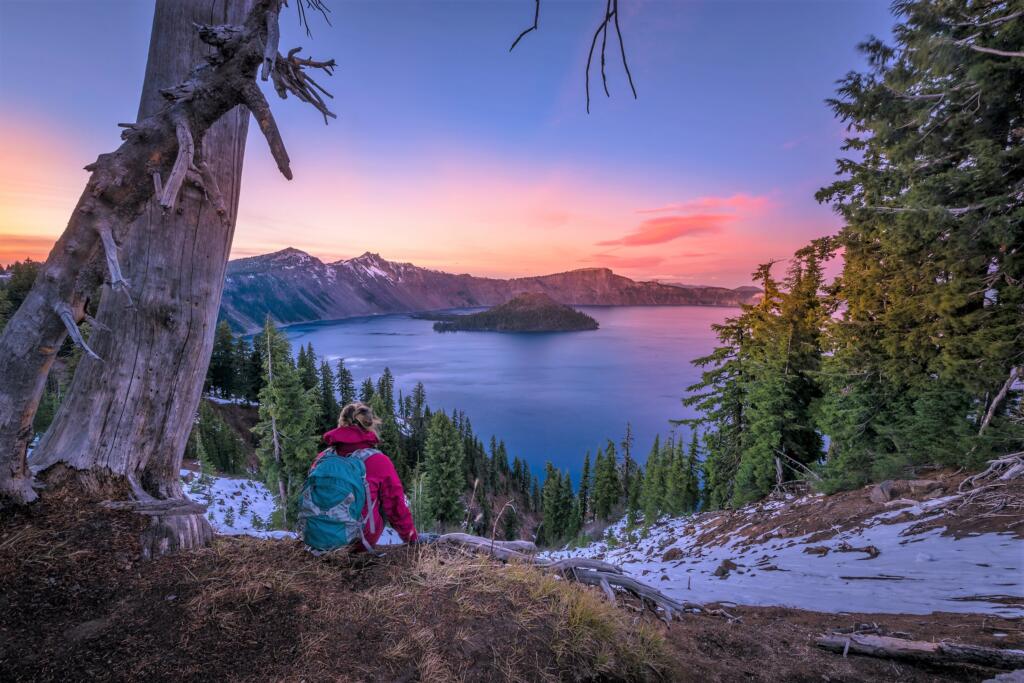
Photo courtesy of travelmedford.com.

Whether it’s the mystery of “what lies beneath” or the sheer natural wonder, deep waters are fascinating. The U.S. is home to many deep lakes, including Crater Lake in Oregon, which is deep enough to fit One World Trade Center with 200 feet to spare. In the Lake Homes market footprint, Lake Superior ranks the deepest at 1,333 feet. Although we love our country’s lakes, today, we appreciate the five deepest lakes across the globe. 

Lake Baikal (5,577 feet)

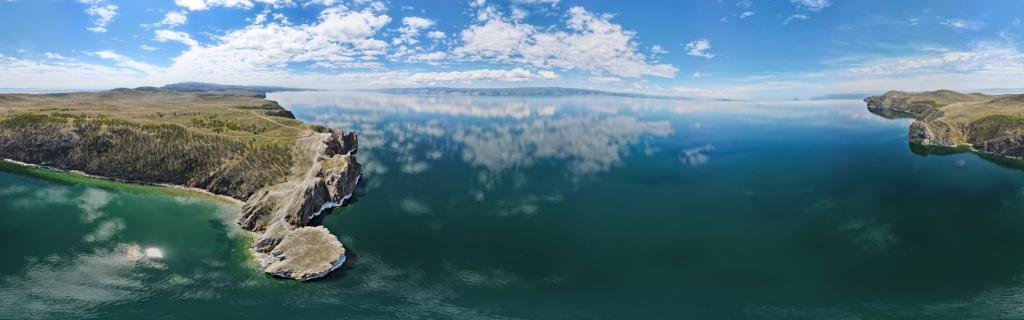
Photo courtesy of Nadezhda Moryak via Pexels

This Russian UNESCO World Heritage site could fit the world’s two tallest buildings (Burj Khalifa and the Makkah Royal Clock Tower) plus the Washington Monument. It also contains almost 20% of the world’s unfrozen freshwater reserve. Not only is Lake Baikal the world’s deepest lake– it’s also the oldest. It was formed 25 million years ago through the planet’s diverging crust. Baikal’s age and isolation have resulted in unique freshwater fauna. More than 1,500 animal species reside in Lake Baikal, 80% of which are endemic (i.e., they don’t live anywhere else in the world). One of these creatures is the Nerpa seal, the world’s only freshwater seal. As photographer James Napoli documented for National Geographic, they like to lounge on the lake’s rocks. If you visit Baikal in winter, be sure to dress appropriately, as it can reach minus 40 degrees. It is Siberia, after all! 

Lake Tanganyika (4,700 feet)

Photo courtesy of Wikimedia Commons

Tanganyika is a massive lake in Africa that borders four countries: Tanzania, Burundi, the Democratic Republic of the Congo, and Zambia. Its depth results from proximity to The Great Rift Valley, a pronounced fissure in the earth’s crust. Besides being the second deepest lake, it’s also the world’s longest freshwater lake. Its remarkably clear waters (visible of up to 65 feet) are 350 species of tropical fish. Most of these fish are cichlids, and 90% of them are endemic. Similar to Lake Baikal, Lake Tanganyika’s old age and seclusion helped these fish flourish. It’s no wonder Tanganyika is renowned for aquarium exports and angling. If you visit, be sure to skip the swimming — this deep lake is home to crocodiles! 

Caspian Sea (3,360 feet)

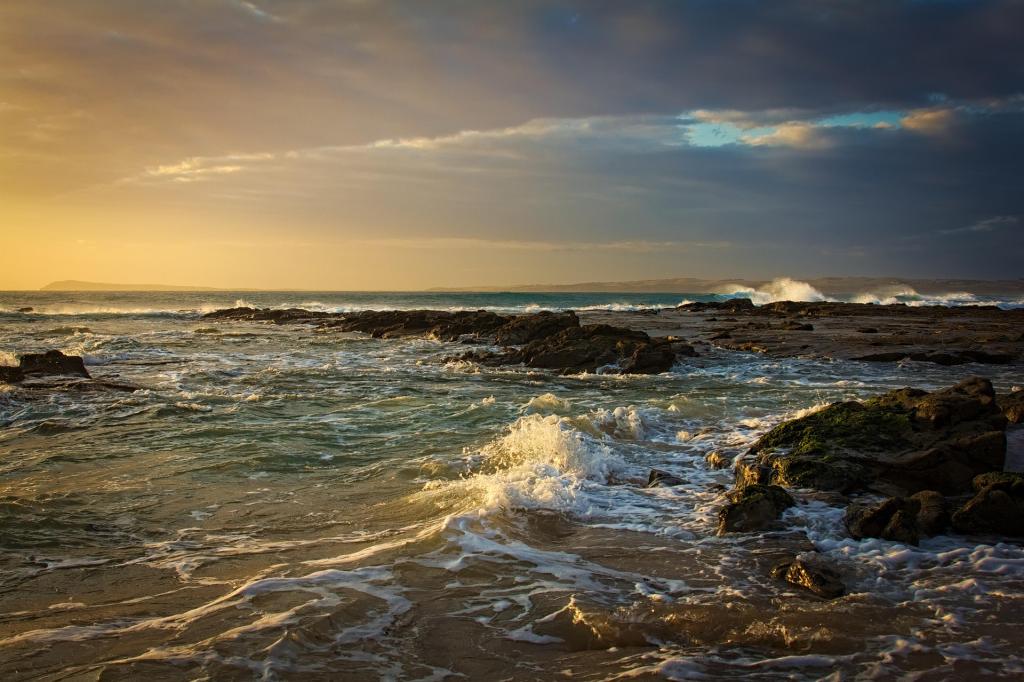
Photo courtesy of Aussiepics from Pixabay

Despite its name, the Caspian Sea is both a sea and lake. However, the distinction is more than semantics. If it’s a sea, the United Nations splits the sea’s ownership based on the neighboring countries’ shoreline length. However, if it’s a lake, countries can evenly divide ownership. As such, its surrounding nations (Azerbaijan, Iran, Kazakhstan, Russia, and Turkmenistan) quarrel over its ownership. Kazakhstan, with the longest coastline, would prefer a “sea” classification. But Iran with a shorter border, will vote for “lake.” It’s unsurprising why this body of water is coveted — it’s famous for its oil and natural gas. According to the U.S. Energy and Information Administration, the Caspian Sea produces 2.6 million barrels of crude oil per day. Besides its economic value, bathing in these oils can heal up to 70 ailments, according to one doctor at a spa in Azerbaijan. 

Lake Vostok (2,950 feet)

Photo courtesy of Wikimedia Commons

Vostok, near the South Pole, is one of the earth’s most intense climates. It’s home to the lowest recorded temperature on the earth’s surface at minus 89.2 degrees. However, the lake is even colder below the surface. For at least 15 million years, Lake Vostok has been covered by 1.2 miles of thick ice. Its presence was unknown until the 1960s when a Russian pilot noticed its outline from the sky. In the 1990s, researchers confirmed this subglacial lake’s existence. Today, only scientists can visit. When first studying the lake, Russian researchers at Vostok Station were intrigued by its lack of access to sunlight and nutrients. They thought a climate akin to Jupiter’s moons must be inhospitable to life. However, recent research indicates that there is life beneath its waters. This discovery points to the possibility of life on other planets. Check out NASA’s video from scientist Dr. David Morrison describing Lake Vostok’s space-related implications.

Lake O’ Higgins/ San Martín (2,742 feet)

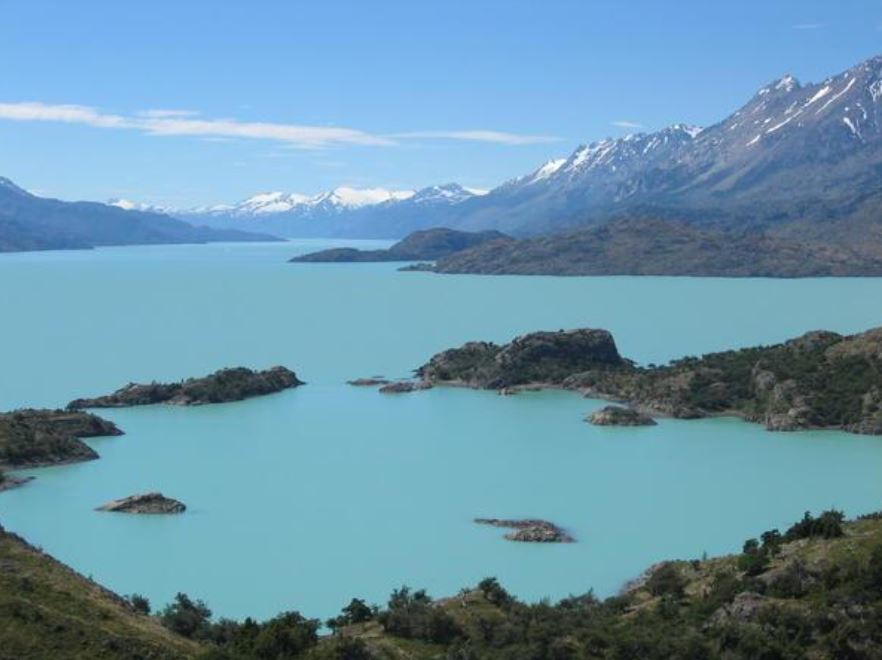
Photo courtesy of travelblog.org.

Divided between Chili and Argentina, Lake O’ Higgins/ San Martín is the deepest lake in the Americas and 5th deepest in the world. Its depth is caused by the constant glacial movement that erodes the lake’s floor. Its irregular shape distinguishes it with eight distinct arms and the water’s milky blue color is caused by rock flour. The lake is also known for its steep surrounding mountains that were not inhabited until the early 1900s. If you’re confused by the lake’s double name, the answer depends on your country. If you’re in Chili, it’s Lago O’Higgins and San Martín in Argentina. Both sides are named for influential leaders, Argentinian Jose de San Martín and Chilean Bernardo O’Higgins, who fought for Chile’s independence in the early 1800s. 

For more lake-related trivia, check out American Lakes With the Highest Elevation and 5 of the World’s Largest Man-Made Lakes.