

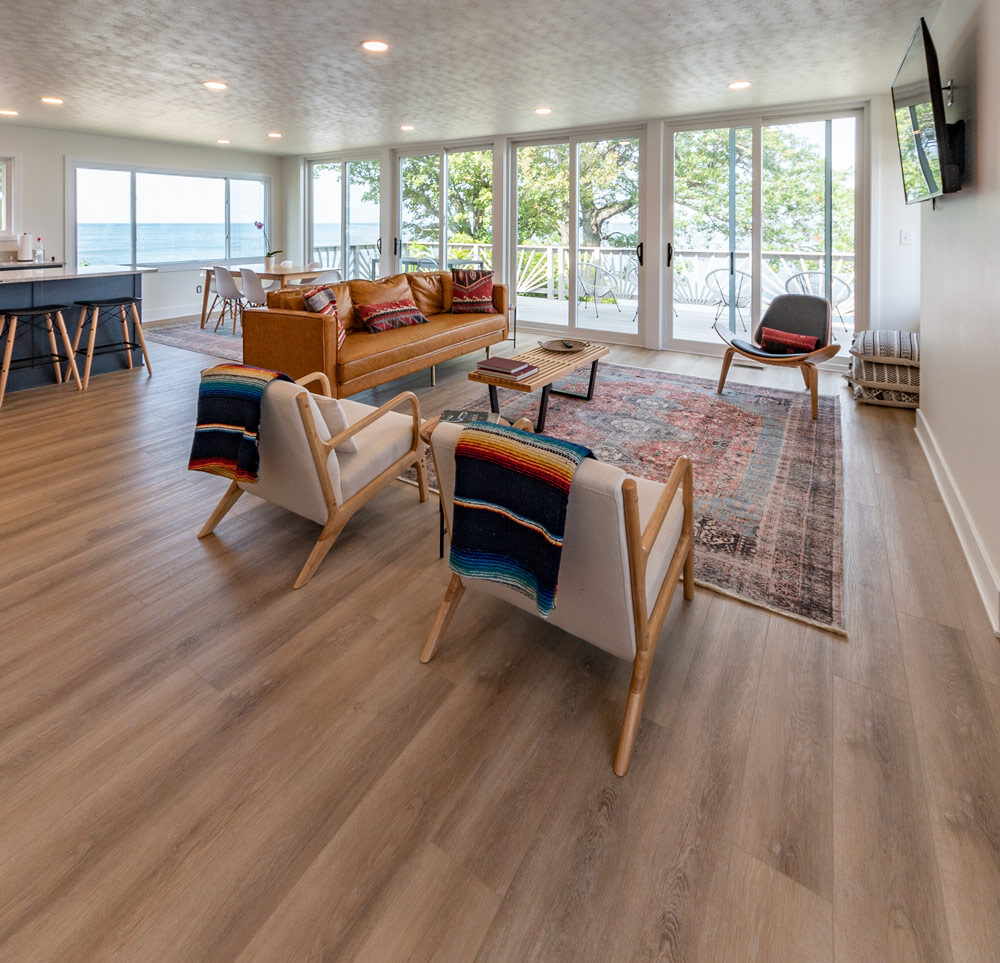
Laminate flooring has become a practical staple in many lake homes across the United States. It delivers the look of natural wood with a durability that holds up well against sandy feet, wet towels, fishing gear, and the constant indoor-outdoor flow that defines lake living. From the Upper East and Mid-Atlantic lake districts to the Texas Hill Country and the Pacific Northwest, homeowners appreciate laminate for its affordability and wear resistance. Yet keeping it looking like freshly finished wood requires a slightly different approach than traditional hardwood.
Laminate flooring is built from layered composite materials with a photographic wood grain beneath a clear protective wear layer. That surface resists stains and scratches, but it also means moisture, heat, and abrasive tools can cause long-term damage if used improperly. Excess water can seep between planks and cause swelling or warping, while harsh cleaners and rough scrubbing tools can dull the finish that gives laminate its convincing wood appearance.
For lake homeowners—who often deal with tracked-in grit, fluctuating humidity, and seasonal traffic—smart cleaning habits are essential. The goal is simple: preserve the floor’s finish, remove debris before it scratches the surface, and clean gently enough to avoid moisture damage. With the right techniques and a few practical tools, laminate floors can maintain a warm wood-like glow that complements the relaxed architecture of lakefront homes. The following six strategies focus on cleaning methods and preventative steps that keep laminate floors sparkling while minimizing scuffs and wear.
Start With a Daily Dry Microfiber Sweep
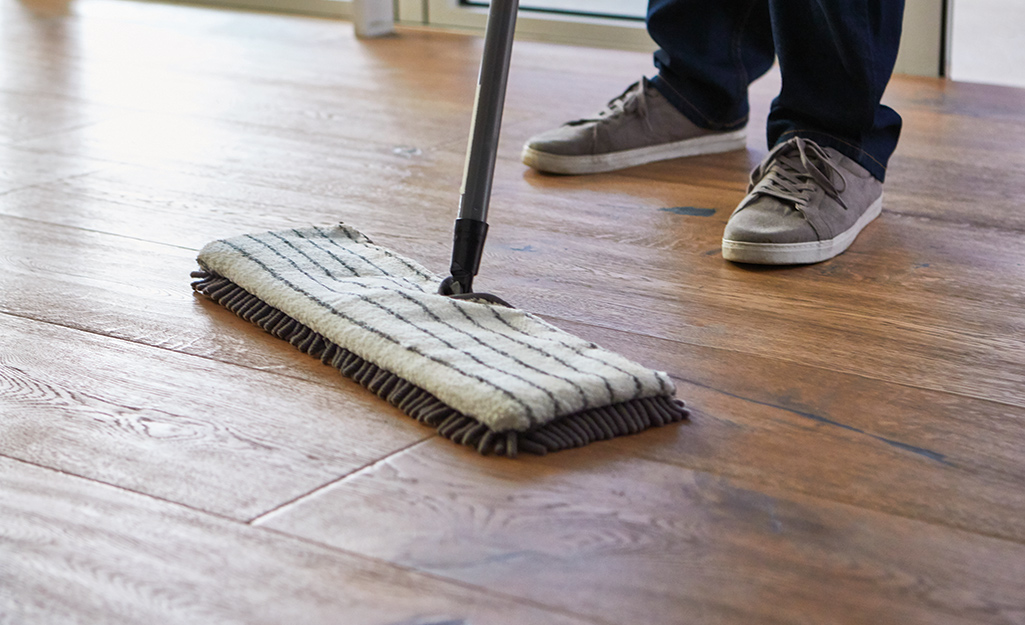
One of the simplest ways to maintain laminate floors is also the most effective: frequent dry cleaning. A microfiber dust mop or soft broom captures dirt before it becomes abrasive underfoot. Tiny particles of sand—common around lake homes—can behave like sandpaper when ground into laminate surfaces.
Dry mopping works because microfiber attracts dust and grit without scratching the protective wear layer. Removing debris before wet cleaning prevents dirt from smearing across the floor or grinding into the finish.
For lake homes in the Northern Great Lakes, Pacific Northwest, and Upper East lake regions, where pine needles, soil, and lake sand frequently enter the home, this habit is especially valuable. In California and Texas lake regions, dry mopping also removes fine dust common in warmer climates.
Recommended equipment
- Microfiber dust mop with washable pad
- Lightweight vacuum without a rotating brush head
- Soft indoor broom for quick sweeps
Use a Damp—Not Wet—Microfiber Mop
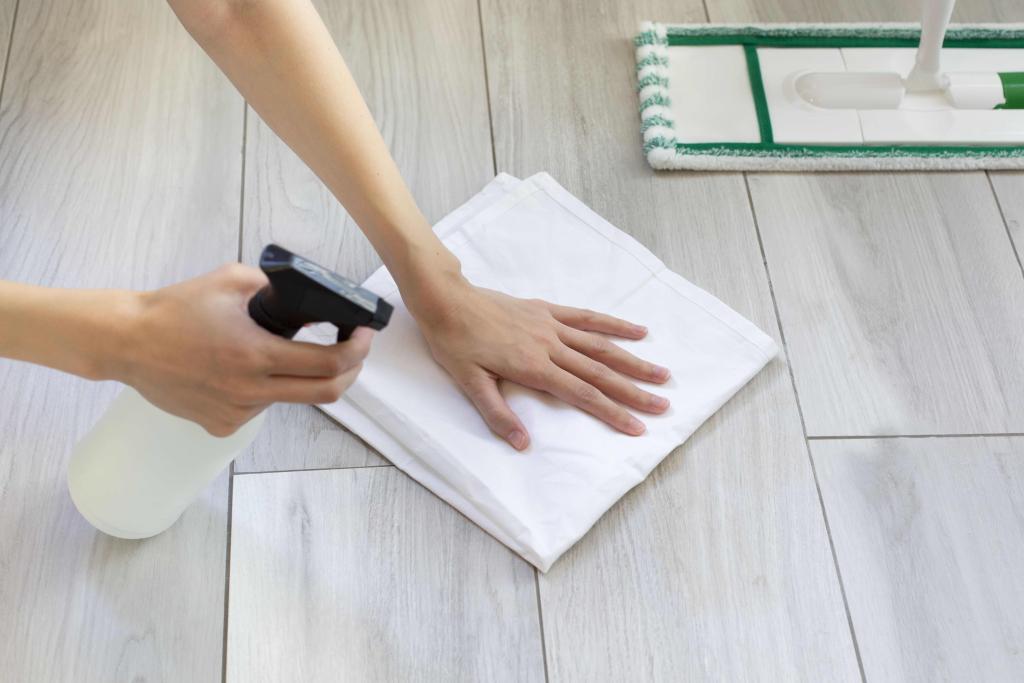
Using the wrong cleaning product is one of the fastest ways to dull laminate floors. Oil soaps, waxes, and many hardwood cleaners leave residue that causes streaks or sticky buildup.
Laminate flooring performs best with pH-neutral cleaners formulated specifically for laminate surfaces. These products lift dirt without leaving film or damaging the protective layer. Using too much soap or harsh chemicals can leave a cloudy appearance that attracts more dirt over time.
In lake homes where open floor plans and sunlight highlight every surface detail—especially in California and Pacific Northwest lake homes with expansive windows—avoiding residue is crucial for maintaining the illusion of natural wood.
Recommended equipment
- Laminate-specific floor cleaner
- Spray bottle for controlled application
- Microfiber mop or cloth
Clean Spills Immediately—Especially Water
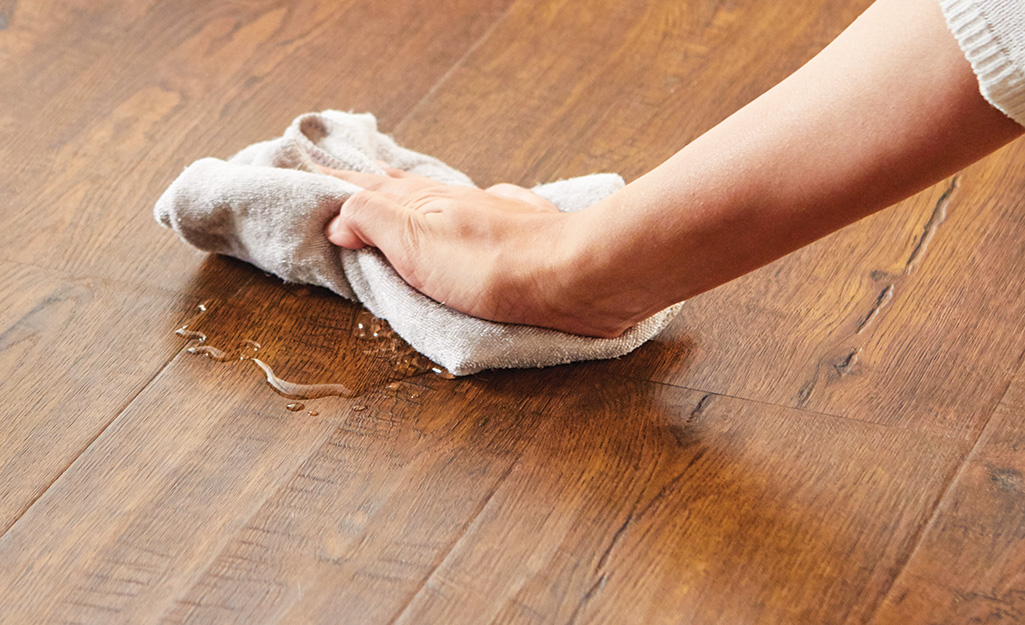
Water is laminate flooring’s biggest enemy. While many modern laminates are water-resistant, prolonged exposure can cause swelling or lifting at plank seams.
Lake homes naturally face higher spill risks: wet swimsuits, dripping paddleboards, melting ice from coolers, and rainy dock returns. Prompt cleanup prevents moisture from penetrating the seams of the flooring.
Experts recommend wiping spills immediately with a microfiber cloth or sponge rather than allowing liquid to sit on the surface.
This practice is particularly important in the Southeast, Mid-Atlantic, and Great Lakes regions, where humidity and frequent water activity increase the likelihood of spills.
Recommended equipment
- Microfiber cloths
- Absorbent towels near entryways
- Entry mats at lakeside doors
Prevent Scuffs With Protective Pads and Entry Mats
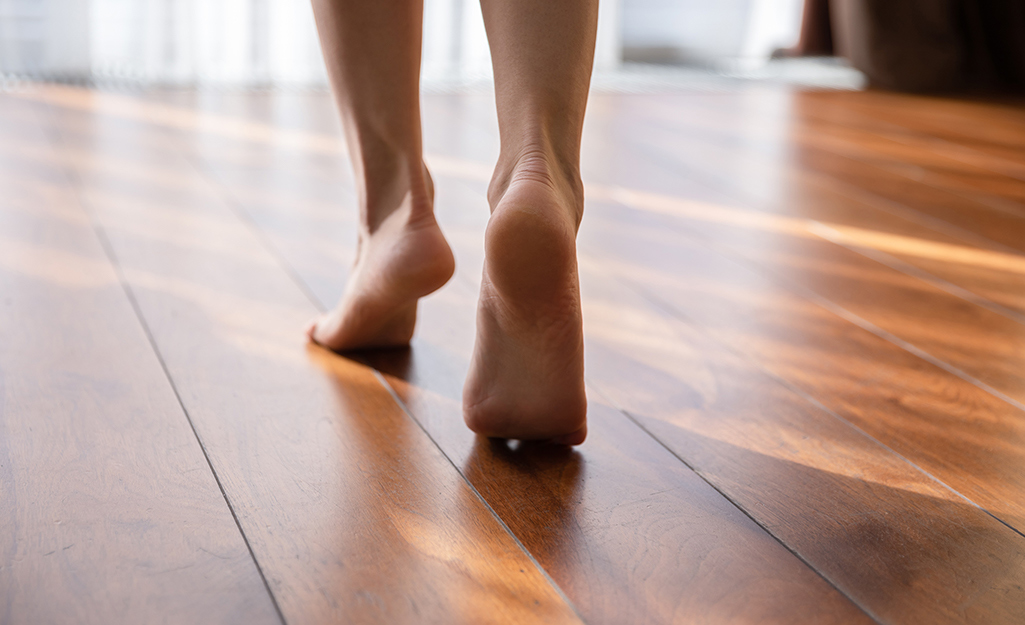
Preventing damage is often easier than repairing it. Furniture legs, sliding chairs, and grit from outdoor shoes are among the most common causes of laminate scuffs.
Adding felt pads beneath furniture distributes weight and prevents scratching when pieces move slightly across the floor. Entry mats also capture debris before it reaches the laminate surface.
This approach is particularly useful in Northern lake regions and the Upper East, where seasonal boots and heavy gear are common, and in Texas lake homes, where dust and gravel can easily be tracked inside.
Recommended equipment
- Felt furniture pads
- Indoor-outdoor entry mats
- Area rugs in high-traffic zones
Avoid Steam, Abrasive Tools, and Excess Heat
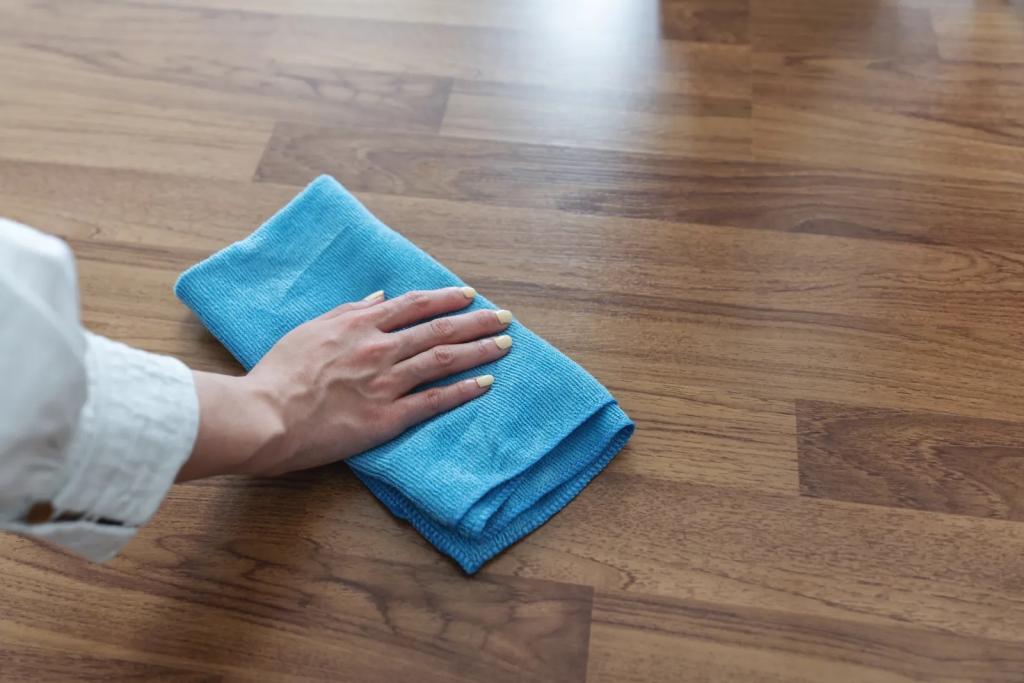
Many cleaning tools designed for tile or stone floors can damage laminate. Steam mops, stiff scrub brushes, and steel wool can weaken the adhesive layers or scratch the protective surface.
Heat combined with moisture can loosen the bonding layers within laminate planks and cause long-term structural damage. For that reason, steam cleaners are generally discouraged for laminate floors.
This precaution is especially relevant in the Pacific Northwest and Great Lakes regions, where homeowners may be tempted to use steam cleaning for sanitizing during colder months.
Recommended equipment
- Soft microfiber cleaning pads
- Non-abrasive cloths
- Laminate-safe mop heads
Laminate flooring succeeds in lake homes because it combines visual warmth with practical durability. But maintaining that polished wood-like appearance depends less on heavy cleaning and more on consistent, gentle care. Removing grit before it scratches the surface, using minimal moisture, and protecting high-traffic areas all contribute to long-term performance.
For lake homeowners—from the pine-lined lakes of the Northeast to the bright reservoirs of California—these simple habits ensure laminate floors remain both resilient and visually convincing. With the right maintenance routine, laminate flooring can deliver the relaxed elegance of wood while standing up to the daily realities of life by the water. For more cleaning tips and design inspiration, visit Lake Home Lifestyles.