

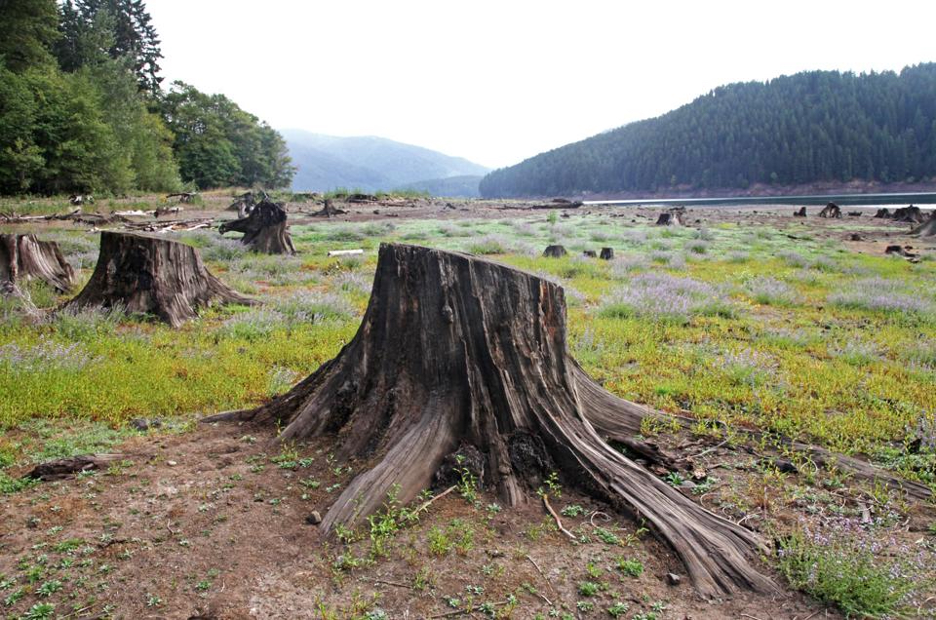
At a lake home, a tree stump is rarely just an aesthetic nuisance. In fact, it can become a safety hazard along frequently used pathways. Moreover, it can interfere with future landscaping projects, attract wood-boring insects, harbor fungal diseases, and even produce vigorous new shoots that compete with surrounding plants. On waterfront properties, every square foot of outdoor living space matters—from fire pit terraces and shoreline gardens to kayak storage and lakeside entertaining areas. Therefore, a lingering stump can limit both usability and long-term landscape health.
Removing a stump requires more planning than simply cutting down the tree. Root systems often remain alive for months or even years, depending on the species, moisture levels, and regional climate. The right removal strategy depends on your timeline, the size of the stump, nearby structures, proximity to the water, and environmental considerations. Furthermore, lake homeowners should be mindful of local shoreline regulations governing the use of chemicals or excavation near the water.
Professional arborists generally recommend starting with the least aggressive approach that suits the situation. If one method proves ineffective—particularly with hardwoods such as oak or hickory—you can progress to more intensive techniques. Whether you’re preparing for a new dock-side patio or simply restoring a healthier landscape, these five expert-approved methods offer practical solutions. They are designed for lake homes throughout the United States.
Apply a Chemical Stump Killer or Herbicide
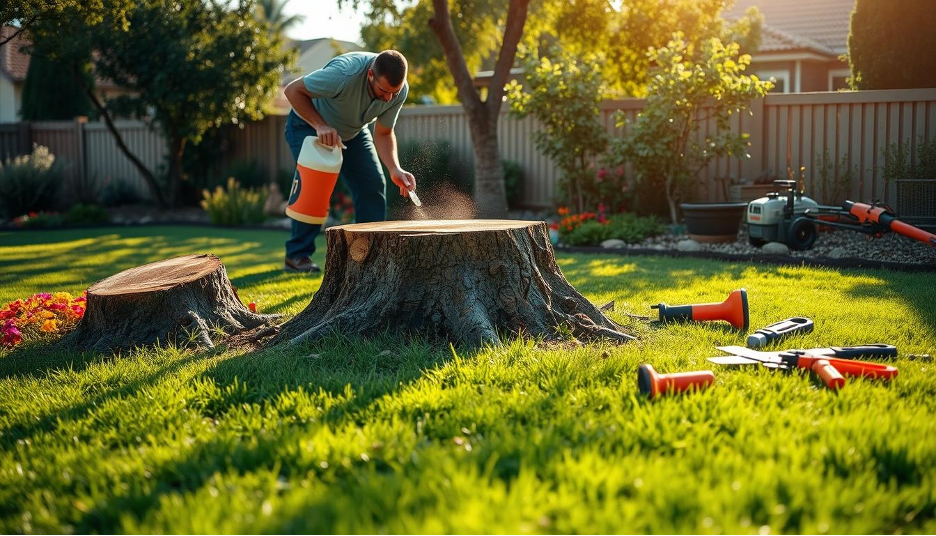
Chemical stump killers remain one of the quickest methods for stopping regrowth. Most products rely on potassium nitrate or systemic herbicides that accelerate decomposition or kill the remaining living tissue. Experts recommend applying the product immediately after making a fresh cut or drilling several deep holes into the stump to improve absorption.
This approach is especially useful when you eventually plan to manually remove the softened stump. You may want to avoid months of vigorous resprouting. Follow all manufacturer directions carefully, wear chemical-resistant gloves and eye protection, and avoid application immediately before heavy rain. Additionally, on lakefront properties, always check local shoreline regulations and avoid allowing chemicals to enter the water.
Recommended equipment:
- Drill with a large wood bit
- Commercial stump killer
- Safety glasses
- Chemical-resistant gloves
- Plastic tarp (optional during rain)
Most practical for: Upper East, Mid-Atlantic, Southeast, California lake regions, where moderate growing seasons encourage continued stump growth.
Grind the Stump Below Grade
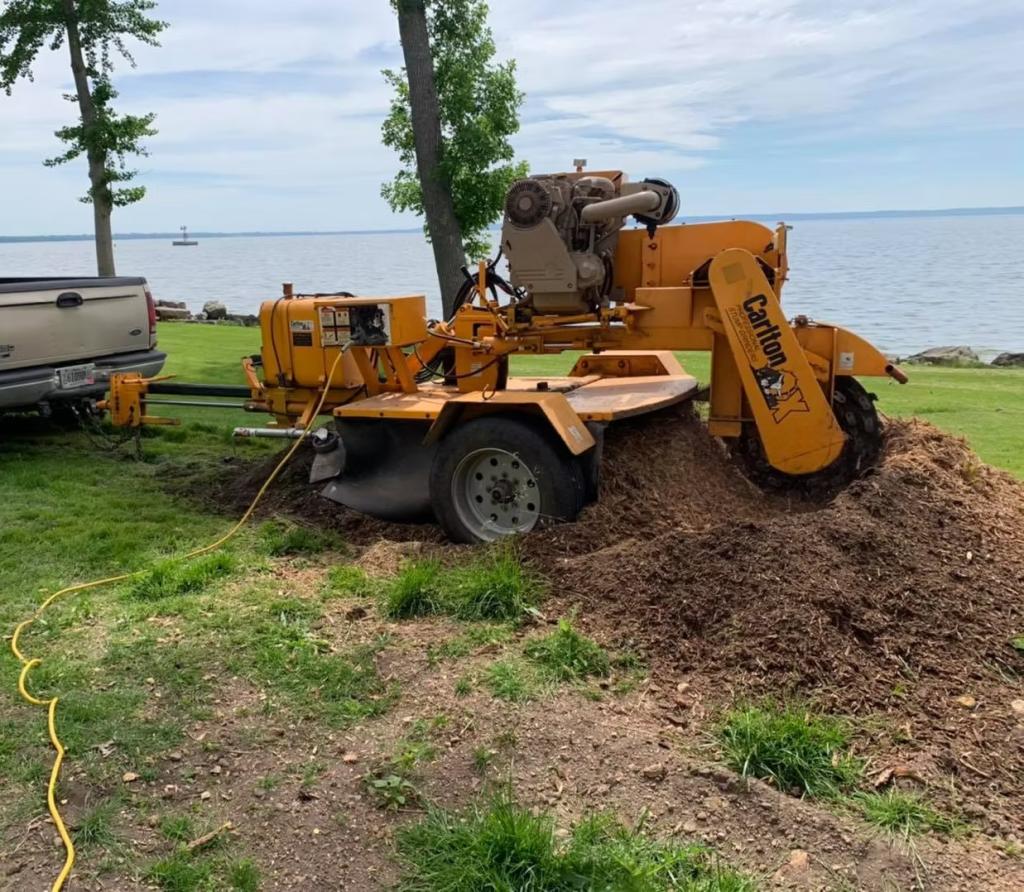
Professional arborists often consider stump grinding the fastest overall solution. A stump grinder mechanically chips the wood several inches below ground level, allowing the remaining roots to decay naturally underground.
Grinding is ideal when you’re planning immediate improvements such as expanded patios, outdoor kitchens, new lawns, or shoreline gathering areas. Although rental grinders are available, larger stumps on lake properties often justify hiring a certified arborist with commercial equipment. This becomes especially important when rocks or extensive roots are present.
Grinding also minimizes soil disturbance compared with complete root excavation. This is especially important on sloped lake lots, where erosion can be a concern.
Recommended equipment:
- Commercial stump grinder
- Hearing protection
- Face shield
- Steel-toe boots
- Rake and wheelbarrow for wood chips
Most practical for: Northern Great Lakes Region, Pacific Northwest, Upper East, where mature hardwoods and large conifers often produce substantial stumps.
Dig Out the Stump and Root Ball
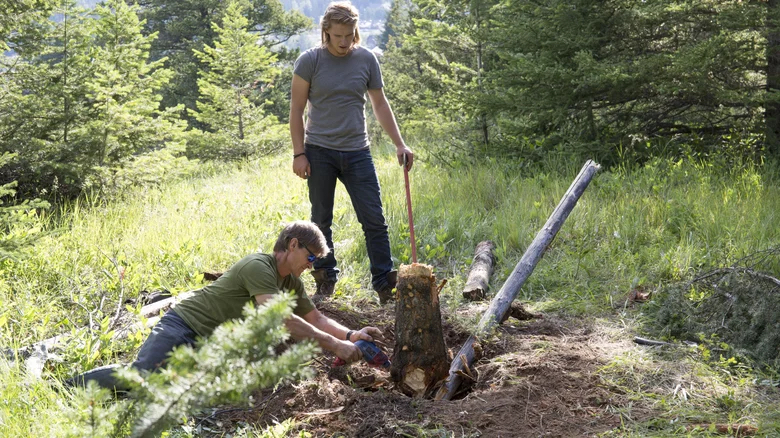
For smaller trees, physical removal remains one of the most complete solutions. After exposing the primary roots, they can be cut with a reciprocating saw, loppers, or an axe. You can then lever the stump out of the ground. This method eliminates both the stump and much of the root system. Therefore, it makes an excellent choice before installing retaining walls, irrigation, new trees, or permanent hardscaping.
Because excavation disturbs surrounding soil, restoring the area with fresh topsoil and native groundcover is particularly important. This measure especially helps on waterfront lots to reduce runoff toward the lake.
Recommended equipment:
- Round-point shovel
- Mattock
- Axe or reciprocating saw
- Root pruning saw
- Heavy-duty pry bar
Most practical for: Southwest Texas lake regions, Southeast, California reservoirs, where smaller ornamental trees and younger plantings are common. They are typical around developed waterfront landscapes.
Use Epsom Salt or Rock Salt to Encourage Natural Decay
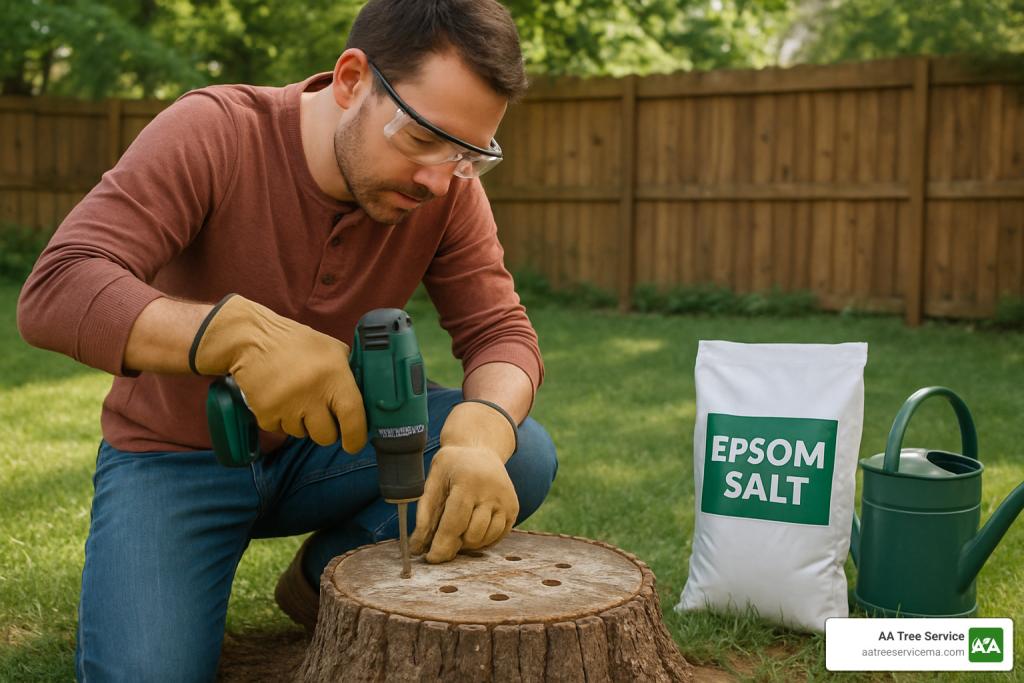
If speed isn’t your priority, many experts recommend using Epsom salt as a relatively low-impact way to accelerate decomposition. After drilling numerous holes into the stump, fill them with Epsom salt, add a small amount of water, and cover the stump to reduce dilution by rainfall.
Over time, the stump gradually dries out, allowing fungi and natural microorganisms to break down the remaining wood.
Although patience is required—often several months to more than a year—this method minimizes disturbance to surrounding plants. It also avoids introducing synthetic herbicides into sensitive landscapes. Standard rock salt can also work, but excessive salt should never be allowed to migrate into nearby planting beds or the lake.
Recommended equipment:
- Drill
- Epsom salt
- Funnel
- Plastic tarp
- Waterproof weights
Most practical for: Environmentally sensitive lake properties in the Pacific Northwest, Northern Great Lakes, California, and Upper East.
Burn the Stump (Only Where Legal and Safe)
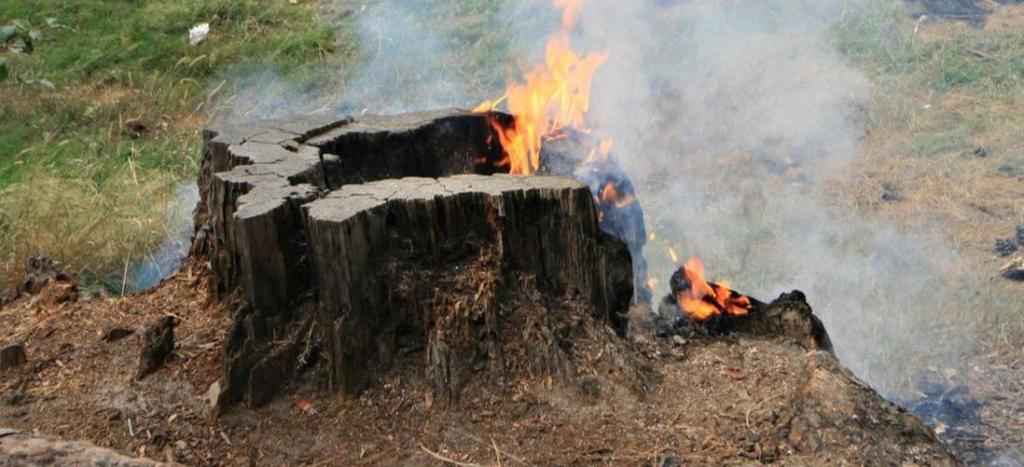
Burning remains an option in certain rural areas where local ordinances permit open burning. After allowing the stump to dry thoroughly, holes are drilled into the wood to improve airflow. You must then maintain a carefully controlled fire that gradually consumes the stump.
This method is becoming less common because of wildfire concerns, smoke restrictions, and local burn bans. It should never be attempted during dry, windy conditions or in neighborhoods with closely spaced homes. Before considering this option, consult your local fire authority and shoreline regulations.
For larger lake properties with significant setbacks from structures, controlled burning may still be practical when conducted legally and safely.
Recommended equipment:
- Drill
- Fire extinguisher
- Garden hose
- Steel rake
- Protective gloves
Most practical for: Rural portions of the Southeast, Southwest Texas lake country, and selected Upper East areas. These are places where local regulations allow controlled burning.
Before You Remove It: Consider Letting the Stump Become Part of the Landscape
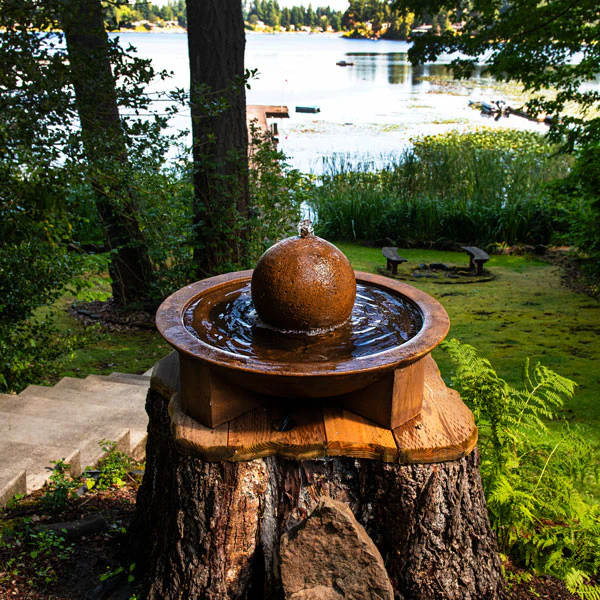
Not every tree stump has to disappear. If the stump is structurally sound, located away from walkways, and isn’t producing unwanted suckers or harboring pests or disease, it can become a surprisingly compelling landscape feature. Many landscape architects intentionally preserve distinctive stumps as natural sculptures. These stumps lend age, texture, and a sense of permanence to a garden. At a lake home, the goal is often to blur the line between the built environment and the surrounding landscape. In this context, a weathered stump can anchor a native planting bed and support mosses, lichens, and woodland ferns. It may also serve as a pedestal for a handcrafted planter or piece of outdoor art. Larger stumps may even serve as informal side tables near a fire pit or a quiet seating area.
Before deciding to preserve one, have an arborist confirm that the stump is stable and free of decay. Decay could attract termites or other wood-destroying insects. If it passes inspection, occasional cleaning and selective planting around its base are usually all that’s required.
Best suited for: Northern Great Lakes, Pacific Northwest, Upper East, and California lake regions. Here, woodland-inspired landscapes and naturalistic garden design are especially popular.
Every lake property presents a different set of priorities. So, the best approach depends on the stump’s location, condition, and your long-term landscape plans. Whether you choose to eliminate a stump or thoughtfully incorporate it into your outdoor design, the goal is the same: to create a safer, healthier, and more functional lakefront property that enriches both the beauty and the long-term stewardship of your waterfront home. For more tips to enhance your lake life, visit Lake Homes Lifestyles.