

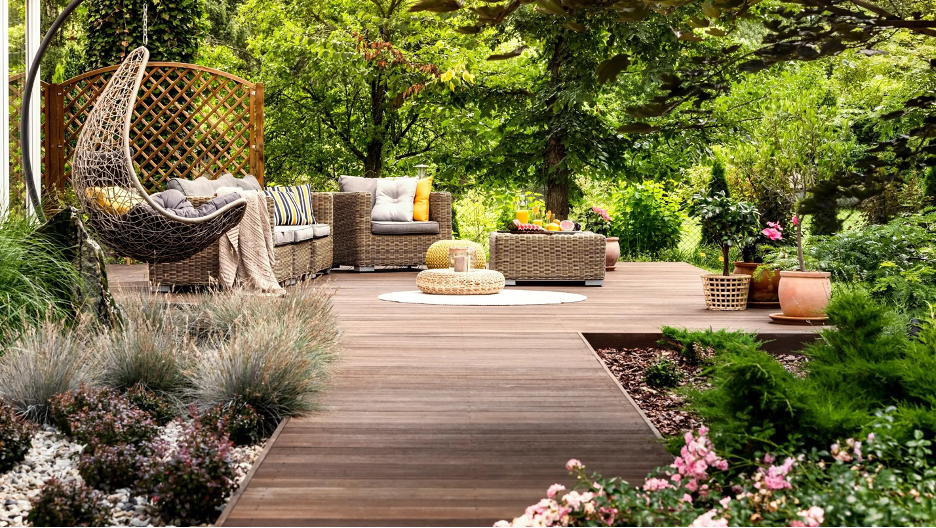
A compact backyard doesn’t have to read as a compromise—especially at the lake, where the surrounding landscape already does much of the visual heavy lifting. With thoughtful planning, even a modest outdoor footprint can deliver the same sense of retreat, hospitality, and quiet luxury as a far larger property. The key is restraint paired with intention. Rather than trying to fit everything in, the most effective small backyard designs edit aggressively, layer strategically, and invest in a few high-impact elements that anchor the space.
For lake homeowners, this approach is particularly relevant in 2026, as design trends lean toward immersive, sensory-driven outdoor environments—spaces that engage sound, texture, and light as much as they do square footage. A clipped hedge, a gravel path underfoot, or the subtle movement of water can shift a backyard from purely functional to quietly transportive. Add to that the growing emphasis on indoor-outdoor continuity, and small yards become an opportunity to extend living space rather than limit it.
Whether you’re working with a narrow lakeside lot in the Northeast or a compact waterfront retreat in Texas, these six design strategies show how to think big in a small footprint—without overbuilding or overdecorating.
Lay a Luxe Foundation
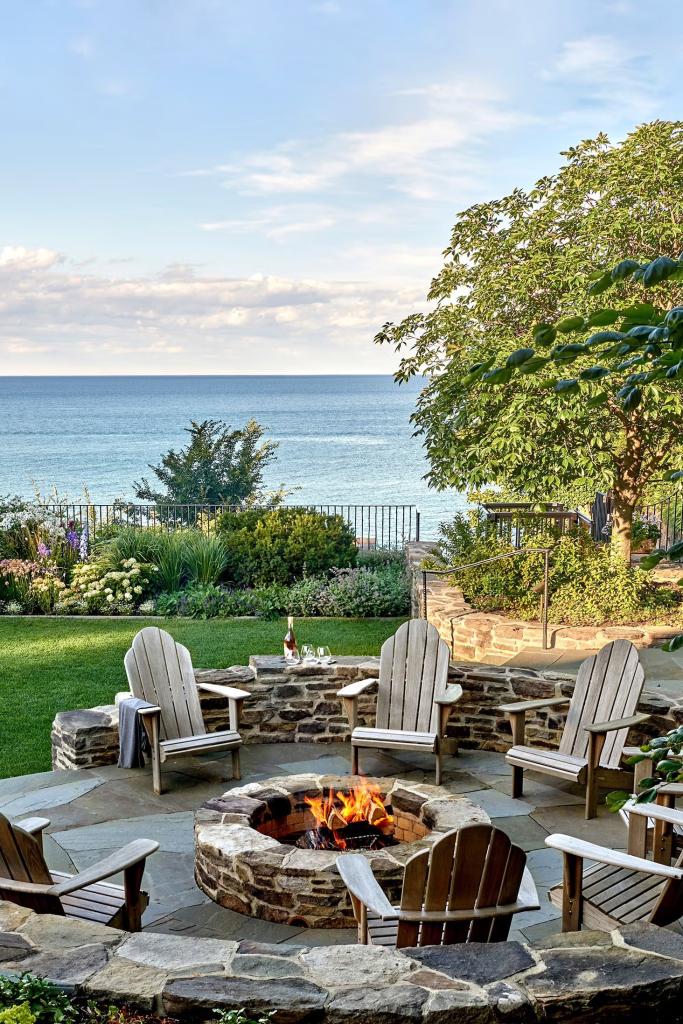
Concept: Elevate surfaces and structure to set the tone.
Why it works (2026 trend): High-end hardscaping is replacing excess ornamentation, allowing materials to do the talking.
Best regions: Upper East, Mid-Atlantic, Northern Great Lakes
In smaller lake properties, the ground plane matters more than ever. Accent pavement—think subtle banding with marble or onyx inlays—adds visual rhythm without clutter. Pair this with low hedging to soften edges and define space. A slightly raised seating platform introduces dimension, while a compact fountain provides ambient sound that carries into adjacent interiors.
How to implement:
- Use limestone or bluestone with contrasting inlays for understated luxury
- Add a small wall fountain near a window or door
- Frame the seating area with clipped boxwood or native shrubs
Make Small Accents Feel Grand
Concept: Use fewer, more distinctive features with strong character.
Why it works: Curated details outperform crowded décor in tight spaces.
Best regions: Southeast, California, Mid-Atlantic
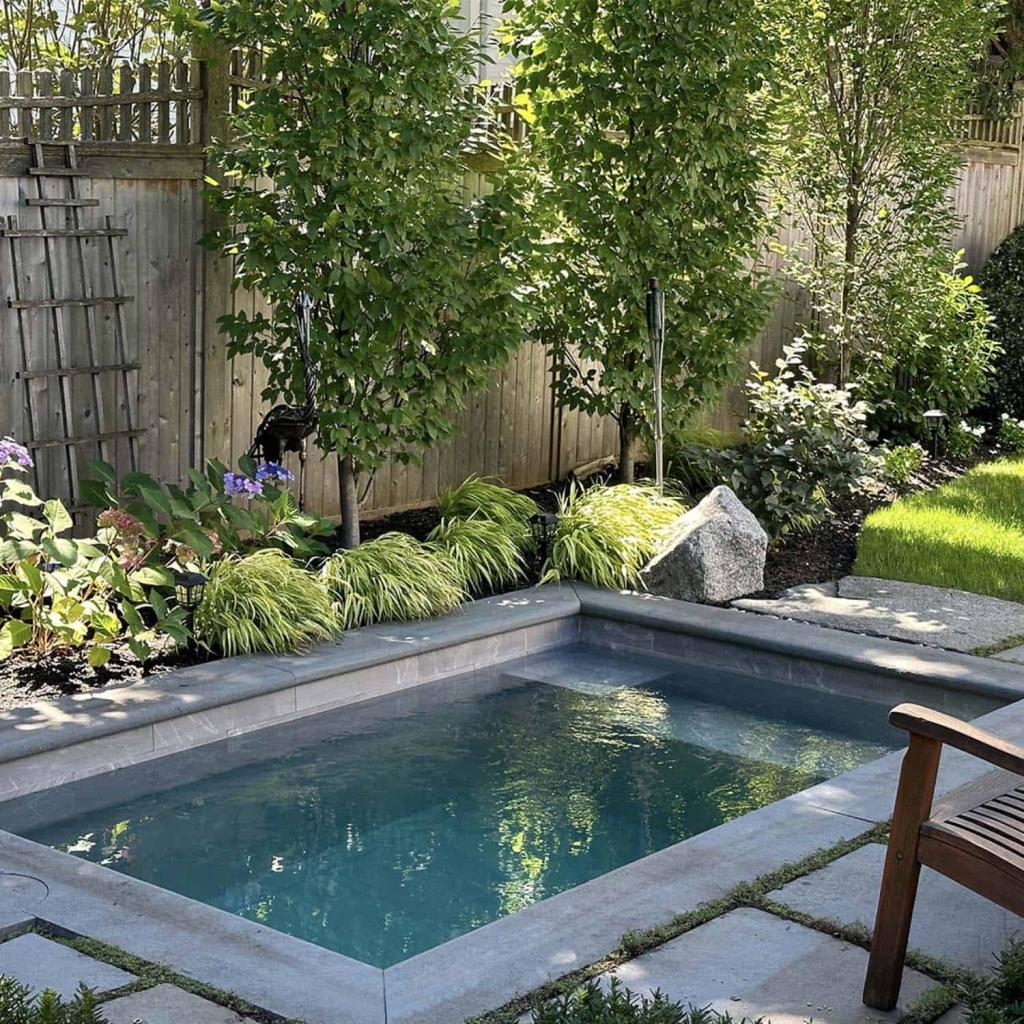
A plunge pool with a water feature, a deep green gate, or a sculptural bench can define the entire backyard. These elements bring a sense of narrative and permanence—qualities often associated with larger estates.
How to implement:
- Install a compact plunge pool with a spillover edge
- Choose a statement gate in a saturated, nature-inspired hue
- Incorporate one sculptural piece (stone urn, antique bench, or lantern)
Pick Playful Pavers or Style with Stones
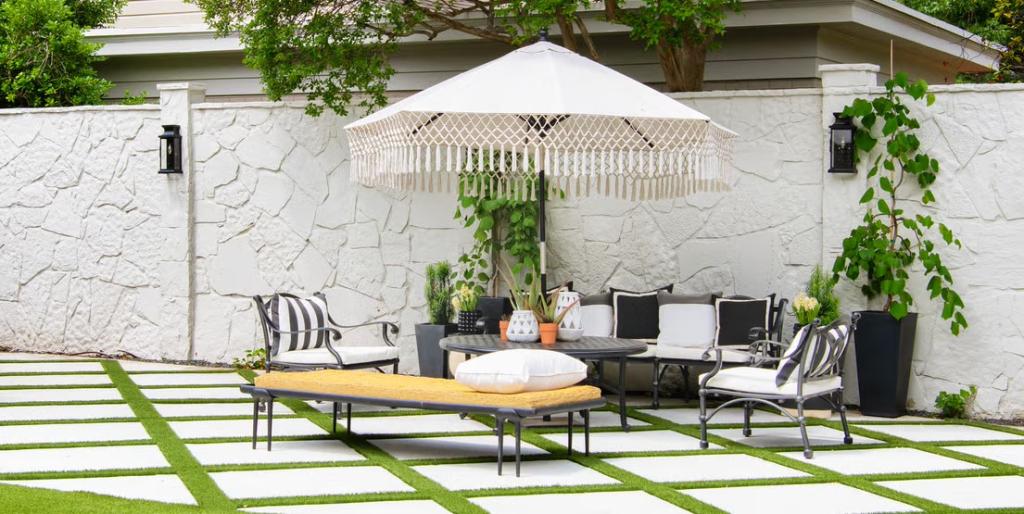
Concept: Introduce pattern and material contrast underfoot.
Why it works: Layered paving adds depth and movement without taking up space.
Best regions: Southwest (Texas), California, Upper East
Even in the tightest yards, a thoughtfully designed path can guide the eye and create a sense of journey. Mixing stone tones or incorporating cobblestone details lends an “aged” quality that feels rooted and intentional.
How to implement:
- Combine gravel with stone slabs for a relaxed path
- Use two tones of pavers to create subtle patterning
- Incorporate reclaimed cobblestones for texture and history
Green Glory
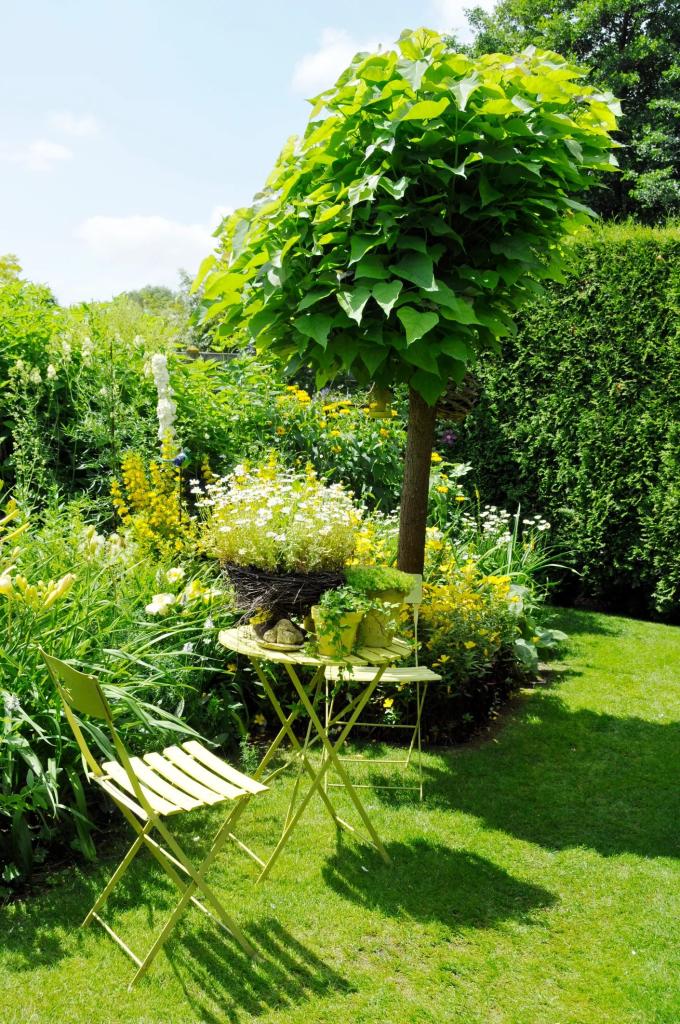
Concept: Limit the color palette and let greenery dominate.
Why it works: Monochromatic planting schemes feel cohesive and expansive.
Best regions: Pacific Northwest, Northern Great Lakes, Southeast
A restrained palette—primarily greens with slight tonal variation—creates a calming, unified look. This approach also reflects the natural surroundings of many lake regions, blending the backyard seamlessly into the broader landscape.
How to implement:
- Stick to layered greens: ferns, grasses, boxwoods, and climbing vines
- Use matching green furniture or painted metal pieces
- Add one or two subtle accent colors through seasonal blooms
Table Talk
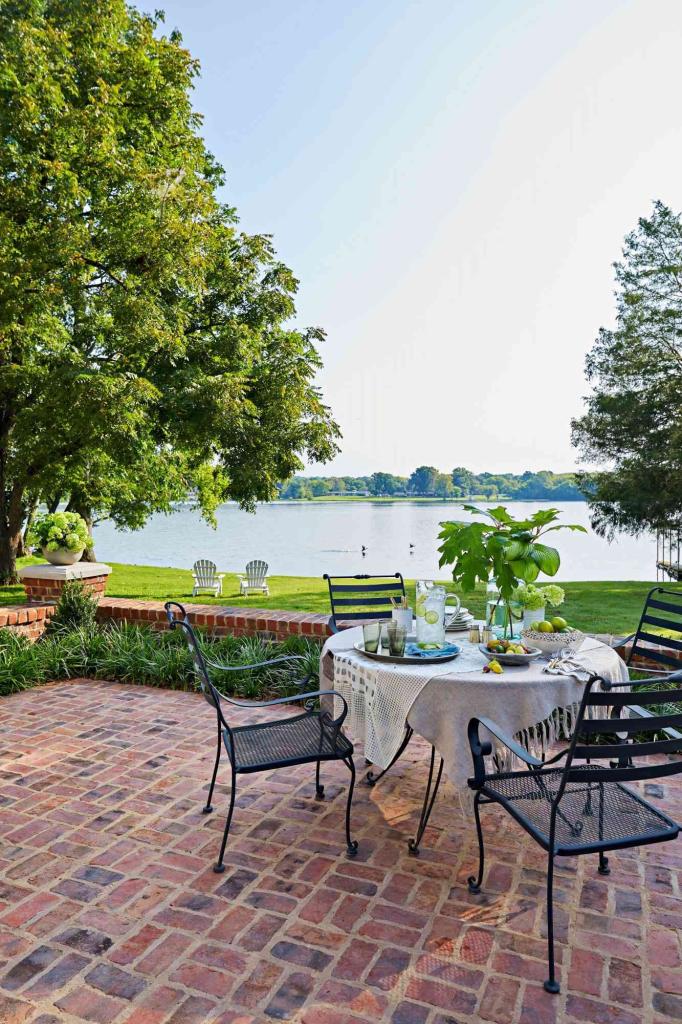
Concept: Prioritize a well-scaled dining or gathering area.
Why it works: Outdoor dining remains central to lifestyle design in 2026.
Best regions: Mid-Atlantic, Southeast, California, Texas
Even the smallest backyard can accommodate a bistro table or a narrow dining setup. When framed with vertical plantings or layered gardens, the space feels more expansive than it is.
How to implement:
- Opt for a round bistro table to improve flow
- Position seating near a focal point (water view, garden wall)
- Use vertical planters or espalier trees to enclose the space
Raise It Up
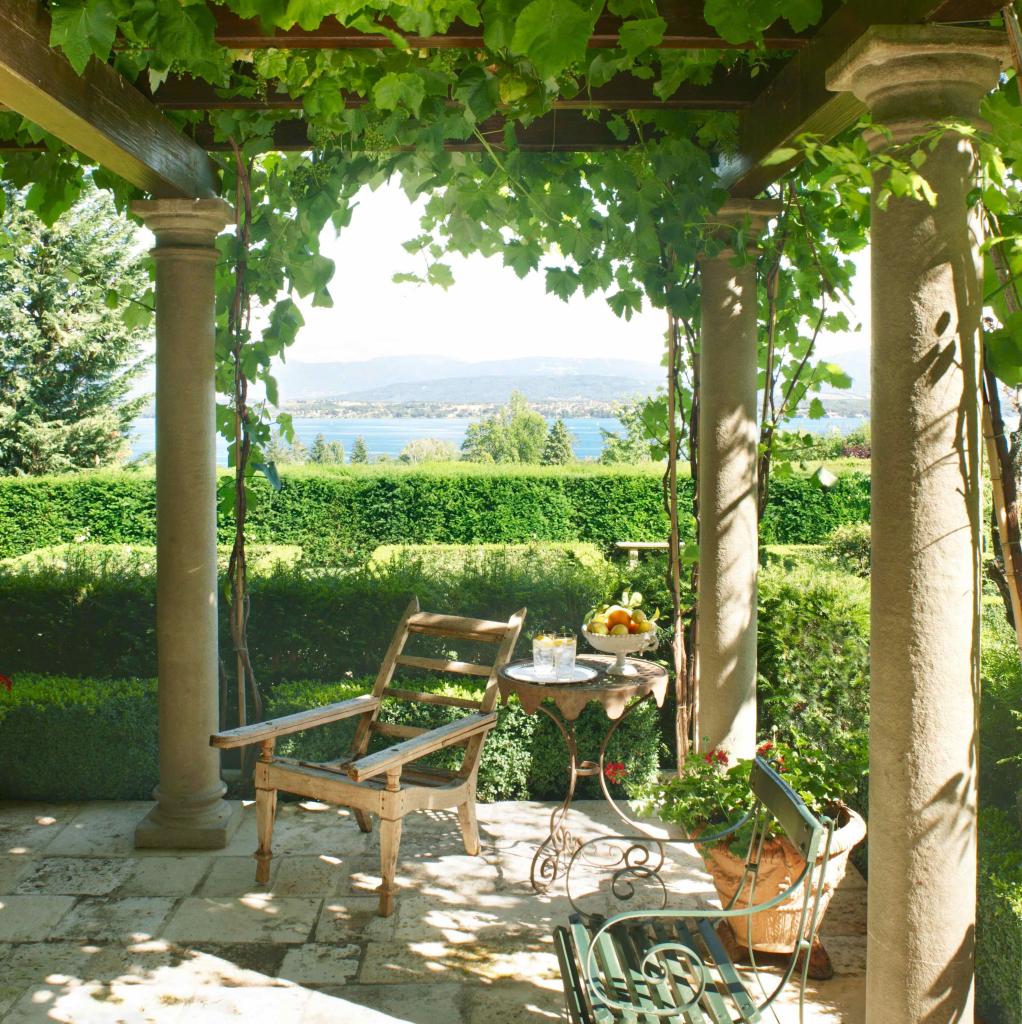
Concept: Build vertical layers with planting and structure.
Why it works: Verticality maximizes visual interest without expanding footprint.
Best regions: Pacific Northwest, Upper East, California
Layering—from window boxes to pergolas—creates depth and directs the eye upward, making the yard feel larger. Lighting plays a critical role here, emphasizing structure and extending usability into the evening.
How to implement:
- Install window boxes or railing planters for mid-level greenery
- Add a pergola or overhead frame to define space
- Use uplighting on trees and downlighting from structures
- Combine tall trees, mid-height shrubs, and low potted plants
Designing a small backyard at the lake is less about limitation and more about precision. When every element has a purpose—whether functional, aesthetic, or sensory—the space begins to feel intentional rather than constrained. The most successful compact yards don’t attempt to replicate large landscapes; they reinterpret them through material, proportion, and layering. By focusing on strong foundations, curated details, and vertical depth, you can create an outdoor environment that feels immersive and complete, regardless of size. For more design tips to enhance your lake life, visit Lake Homes Lifestyles.