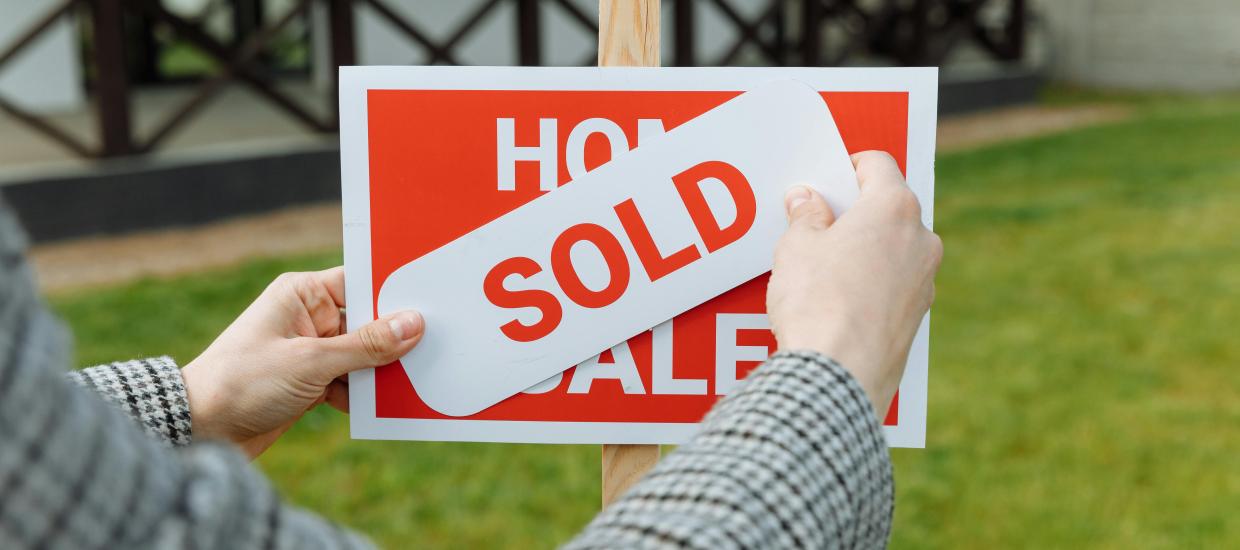
Whiteboard Topics: 5 Mistakes Made by Lake Home Sellers

Selling your lake home is a big deal, so you’ll want to do it right. Glenn Phillips, CEO of Lake Homes Realty, discusses 5 mistakes made by lake home sellers.

  1. What Seller Paid for the Property. Similar to stocks, you often can’t sell your lake home for exactly what you bought it for. The buyer doesn’t care about how much you paid for the house years ago.
  2. Price of Listed (i.e. Unsold) Homes. If the listed homes were priced right, they would be sold homes. When these homes sit for a while, it should be a warning about the price. Your neighbors aren’t getting that number, so it’s unlikely you will, too.
  3. Seller’s Blood, Sweat, and Tears. Oftentimes, sellers get caught up in what they’ve done to the property or the memories they have there. However, buyers aren’t interested in those things; they care about the house’s value, according to them. In fact, sellers often intend to remove additions to the home the buyer made, creating negative value.
  4. Outlier Sales. When a home sells for a fantastic price, sellers often want to get that price themselves. However, the price alone doesn’t tell the whole story of that transaction. There could be things like closing costs, additional property, and more that the price included that make the price deceptive.
  5. Taking Offers Personally. Even if the “low” offer is fair, but under the listed price, you can’t get offended by it. A low offer is better than no offers. Low offers open the opportunity for discussion about prices that no offers don’t allow for. Keep the discussion going, and try to land that transaction.

Lake home sellers can often make mistakes when they aren’t familiar with lake property. Using these tips can help guide you to a better transaction. Visit lakehomes.com to connect with expert lake agents ready to guide you through the lake market.


Nation’s Largest Lake-Focused Real Estate Brokerage Expands to California & Nevada

Estimated reading time: 2 minutes

Photo courtesy of Artur Westergren on Unsplash

Lake Homes Realty (LakeHomes.com), the nation’s largest lake-focused real estate brokerage, is thrilled to announce its expansion into California and Nevada, a move that brings unparalleled expertise in lake property transactions to two of the West’s most iconic markets in the United States.

This expansion continues to solidify Lake Homes Realty’s presence as the nationwide leader in connecting buyers and sellers of lake properties.

The West is home to some of the most stunning lake destinations in the United States, including Shasta Lake, Big Bear Lake, and Clear Lake in California, and the famous Lake Tahoe stretching into both California and Nevada. These areas offer serene retreats, vibrant year-round living, and a thriving demand for lake properties.

With its proven track record, Lake Homes Realty is poised to meet this demand by offering a seamless, technology-supported real estate experience tailored to the unique needs of lake home buyers and sellers.

As with its approach in other parts of the country, Lake Homes Realty is committed to building a strong network of licensed agents with a deep knowledge of each local lake community. The company is already in discussions with experienced real estate professionals in California and Nevada about joining its growing team of lake real estate experts.

These agents, combined with Lake Homes Realty’s national resources and award-winning support team, deliver unparalleled service and guidance to clients throughout the buying or selling process.

“Expanding into California and Nevada marks an exciting milestone for us,” said Glenn S. Phillips, CEO of Lake Homes Realty. “The stunning lakes and dynamic lake communities in these states perfectly embody our mission to help people embrace the lake lifestyle of their dreams.” “We are uniquely positioned as millions of people already use our website, LakeHomes.com, to find their dream lake home, often searching on multiple lakes and in different states. With our national market presence and local real estate agents, we can connect more buyers and sellers in these remarkable locations,” adds Phillips.

Whiteboard Topics: Things to Know About the Lake Real Estate Market

The lake real estate market is a unique type of market. Glenn Phillips, CEO of Lake Homes Realty, discusses six things to know about this niche real estate market.

  1. Unofficial Recession. Homes aren’t moving in the current market. Across the entire industry, it will be the lowest number of transactions in almost 30 years. This trend also applies to lake property.
  2. Inventory Has Grown. More houses are on the market, so it looks like we aren’t in a recession. However, despite the strong demand for these houses, people won’t pay current prices.
  3. “Phantom Inventory.” This is inventory listed at a price that buyers aren’t willing to make an offer on. Sellers set these aspirational prices to get their homes sold at their lottery ticket price.
  4. Aspirational List Prices. You likely won’t get any engagement if you sell and list for an aspirational price. In fact, it damages how much money you’ll get over time. Once a home has been on the market for a long time, buyers begin to wonder if there’s something wrong with the house.
  5. Prudent Buyers. Lake home buyers want what they want but aren’t willing to overpay for it. Prudent buyers and aspirational list prices create this unofficial recession.
  6. Next: No Boom, No Bust. Lake real estate won’t experience more inventory to change pricing. Additionally, the lake market won’t bust with changing mortgage rates. So, lake real estate will be steady, with the same prices. Inventory will also loosen up a bit, with sellers becoming more practical and prudent buyers becoming impatient.

Lake real estate has several nuances that are not present in other real estate markets. With these tips, you can more successfully navigate this market. Visit lakehomes.com to connect with expert lake agents ready to help you.

Whiteboard Topics: Selling a Lake Home Requires a Buyer Mindset

When selling your lake home, and especially when setting your price, you need to think like a buyer. Glenn Phillips, CEO of Lake Homes Realty, shares a few questions to get you in the buyer mindset.

  1. “Would I Rent This?” Think about whether or not you would rent your property for a week if you saw it on rental websites. Try to take emotion out of your thinking and act as if you’ve never seen it before.
  2. “Would I Rent This Again?” After asking yourself if you would rent your property, ask if you would rent it again. Think about if your house has things that would make you come back over other lake properties.
  3. “Would I Pay More Than List?” Before setting a price, ask yourself if you would pay more than the price you plan to list.
  4. “Would I Buy at This Price?” You should also consider if you would pay the current list price of the property. The price you paid for the house a few years ago is probably relatively the same, if just slightly higher.
  5. “Is it The Best Value In This Market?” The best value doesn’t necessarily mean the lowest price. Working with an expert lake agent helps you determine if your property is the best value in your market. Additionally, you want your property to be the best value compared to other lakes.
  6. When It Doesn’t Sell, You Won the Bidding! Every day your property doesn’t sell, you win the bidding by getting to keep it for another day. This can help you determine if you need to change your mindset to a buyer’s perspective.

Selling your home can be challenging if you don’t have the right mindset. Using these questions and guidelines helps you to think like a buyer and get your lake property sold. Connect with expert lake agents at lakehomes.com and sell your home faster.

Whiteboard Topics: Seller Confusion When a Lake Home Doesn’t Sell

Sellers often get confused when their lake home doesn’t sell. Asking questions helps to get rid of the confusion, but some questions are better than others. Glenn Phillips, CEO of Lake Homes Realty, discusses questions to avoid asking when your lake home doesn’t sell.

  1. “How Many Views?” Sellers ask how many views their property has, but this can be deceptive. There’s no good answer to this question for sellers. If a property has millions of views, they’ll wonder why it hasn’t sold. If it doesn’t have any views, they wonder why it’s not getting exposure. The only number of views that matters is the one that buys the property.
  2. “Can We Promote It ‘Better’?” Some agents promote homes better than others, so this can be a valid question. However, if the property is populating in the MLS and other websites, the consumer knows it’s there; they just aren’t willing to buy it.
  3. “Have an Open House?” Buyers for lake homes typically come from some distance away. This means they won’t arrange their weekend around your open house schedule. They know if your home is for sale and they’re coming into town, they can see it.
  4. “Should I Change Agents?” Has your agent properly promoted and priced your home and given sound advice? If they’ve done all this, you probably already have a good agent. Once they bring the buyers, it’s on you to get the negotiating going.
  5. After Exposure, Price Fixes Everything. When asking yourself why your house hasn’t sold, the answer is almost always the price. An appropriate price will answer all of these questions.
  6. Be the Best VALUE. This doesn’t necessarily mean the lowest price, but being at a price that people are willing to invest in your home. Buyers are ready to buy lake homes but aren’t willing to overpay.

Talk with your agent when confused about why your lake house isn’t selling. Every agent would bring a buyer if they knew one that would get a transaction. An unsold home always boils down to price. Visit lakehomes.com to connect with expert lake agents ready to help get your home sold.

What Are Closing Costs?

There are lots of things that need to be taken into account when you are planning to buy or sell a property. One of those things is known as closing costs. It’s something that first-time buyers may not be aware is required. And seasoned buyers and sellers may not realize can vary greatly from state to state.

Closing costs come from a variety of fees and often overlooked expenses. So what are these closing costs?

There are lots of factors that need to be taken into account when it comes to closing costs. These can include inspections, loan fees, government recording charges, and title charges. These costs are generally covered by the buyer, although there are also instances in which the buyer can ask the seller to cover some part of the closing cost fees.

To help provide you with a clearer picture of closing costs, we will go into more detail.

Real Estate Closing Costs

Closing costs can change according to the area and the type of transaction performed. However, in general, the things that comprise closing costs are:

• The cost of conducting surveys
• Inspection services fee
• Appraisal services fee
• Title search fees
• Title insurance
• Closing service (including notary closing services)
• Courier and Funds transfer/wire fees
• Loan origination fees
• Assessments
• Payoffs of unresolved liens and taxes
• Mortgage and deed preparation costs
• Document Recording Fee (including electronic recordings, or “eRecordings”)
• Other

Buyer’s Fees

In general, the majority of the fees included in closing costs are part of the buyer’s deal. This is why buyers generally have to take responsibility for the payment of closing costs.

Closing costs vary according to the state, type of agency, and transaction. All buyers should acquire an estimate of the closing cost fees they are liable to pay to avoid surprises at the end of the deal. Lenders are required by law to give you this, also known as a GFE (good faith estimate).

Seller’s Fees

When it comes to sellers fees, they don’t have to worry about closing costs as much as the buyer. The only thing they will be required to do is take care of the loan payoff costs, agent’s commission, associated penalties, notary fees, homeowner association fees, and transfer taxes.

Payment Options

When it comes to closing costs, the majority of the fees fall upon the buyer. These are the ones who usually have to decide how to pay it. They can choose to pay it outright through wire transfer or with a cashier’s check. They can also choose to negotiate with the seller to cover some part of the costs in a sale. Also, some lenders offer loans with the closing costs rolled into the mortgage. This option will almost always cost the buyer more in the long run, as they will end up paying interest on these items.

Many buyers and sellers are confused about the closing costs and the types of fees included in them. If you face any confusion, you should never hesitate to ask your mortgage broker or your real estate agent to explain any fees to you.

Whiteboard Topics: Pricing Your Lake Home To Maximize Suffering

Are you in the process of selling your lake home? If so, one thing you want to avoid is the stress and suffering that can follow by not taking proper steps for a smooth process. Two main reasons lake homes typically don’t sell are lack of exposure and price. Lake Homes Realty CEO Glenn Phillips explains how to maximize this suffering; that way, you can hopefully avoid these mistakes when pricing your home!

After Exposure, Price Fixes Everything – This refers to the price at which the house is sold. 

  1. Overprice: If you think of pricing the house because of things you put into it or anything along those lines, think again. That has nothing to do with the market; these are simply wants due to emotional attachment.
  2. Planning “The Haggle”: If you plan to go high so the buyer offers lower, resulting in a middle-ground number you’d still be happy with, you should reconsider it. Our data tells us that homes that are appropriately priced come in at the list price or slightly above. If it’s overpriced, they tend to drop significantly over time.
  3. “Test the Market”: Generally when people test the market, they never figure out how they are going to score it. What is the test? Is it one week? Two weeks? Testing the market usually ends up being an excuse to overprice, and the test almost always fails.
  4. DOM (Days on Market): The longer the home sits on the market, the longer it becomes a problem for consumers. 
  5. “Death Spiral”: Consumers are more informed now than at any other time in history. The more things you use, the more likely you are to be caught in this death spiral that is hard to escape. 

Nobody wants to maximize their suffering when it comes to selling. If you stick with these different steps, it’ll definitely happen. One of the best ways to avoid this is to price appropriately. If you aren’t sure the best way to go about that, reach out to a lake agent at LakeHomes.com. They would love to be involved in the process with you.

Whiteboard Topics: Don’t “Price In” Memories When Selling A Lake Home

Living life at the lake provides fun, laughter, memories, and more! Even when it comes time to sell, memories will be made in the process. Glenn Phillips, CEO of Lake Homes Realty, goes into detail on why you shouldn’t price in those memories when selling.

  1. “Gateway to Memories”: People buying these lake homes can already picture their own memories that they will be making at the house. Buying a lake home doesn’t come from the need of simply having shelter. It comes from the desire to have these amazing experiences that come along with it.
  2. Whose Memories?: You, as the seller, have important memories at that lake home. While they are important to you, they aren’t that important to the buyer. The buyers are wanting to create their own memories. However, you have an emotional attachment as the seller, making you think it has more financial value. Try to separate that due to the buyer not having that attachment.
  3. Selling? Depersonalize (and Protect!): You have many things in the house that bring memories. You might want to put these things away; that way, it gives buyers a different feel to the home. You should also protect those valuables. You don’t want something happening to them while buyers look at your home.
  4. Buying is Desire: You want to do things to where you aren’t pricing in memories. However, make it a way for the buyers to imagine creating their own memories in the house.
  5. Selling is a Business Transaction: Think of your lake property as a stock. If you bought a stock at a certain price, it doesn’t necessarily matter. At the end of the day, it’s what the market says it’ll pay. You can always enjoy the memories later and not price how you feel depending on the memories.

Pricing a lake home can be difficult, especially when you begin to think of all the memories made there. If you’re still struggling with this today, reach out to one of our lake market experts at LakeHomes.com. They know the ins and outs and would be more than willing to help you in the process. 

Whiteboard Topics: 5 Negotiation Tips For Lake Home Real Estate!

When you think of selling a lake home, or any home for that matter, you probably think of negotiating. Whether you’re great at it or if your skills could use a little practice, it’ll probably come into play. Lake Homes Realty’s CEO, Glenn Phillips, goes over 5 key tips for when the time of negotiating arrives.

  1. Any Offer is Better than NO Offer!: Don’t get upset because somebody made a low offer. The people you should be upset with are the ones who didn’t make an offer at all. Having a low offer just means you have some started. 
  2. Don’t Get “Stuck” on Single Points: In negotiations, don’t let one thing hold you up. You should let it ebb and flow.
    • Agent Commission: You want an agent who brings their value. 
    • Seller’s Compensation: If the buyer has made an offer and wants some compensation to help cover costs, figure out how that fits in. 
    • Closing Costs: Similar to the seller’s compensation, find out how this will fit in with the negotiations. 
    • Personal Property: Is there a boat, interior decor, whatever it might be, there is a way to find opportunities to help make the other party happy.
  3. Cash Only Means Less Closing Risk: If the buyer makes a big deal about it being a cash offer, from the seller’s perspective, cash offers only matter if it is de-risking the deal. If you’re selling, you’re getting cash from somebody regardless. 
  4. Restructure Offers: Being able to find ways to work with the offer or make it mutually beneficial can help more than people might realize. 
  5. Be Creative: You can come up with some angle for a home that people might not think of. There are plenty of ways to be creative to help everyone.

Negotiating is something that comes along with buying or selling a home. However, if you take these tips into consideration, it can truly help with the process. As always, if you’re looking for more information regarding negotiating or have any other real estate questions, reach out to one of our lake experts at LakeHomes.com.