Smith Mountain Lake agent Peggy Overstreet was honored with the Big Wave Award at Lake Homes Realty’s 13th Annual National Agent Summit, recognizing her outstanding success in real estate.
The award celebrates agents who achieved a total transaction volume between $10 million and $25 million or completed 40 or more transaction sides with a combined volume of at least $6 million during the period from Sept. 1, 2024, to Aug. 31, 2025.
Here is the latest on Columbia’s movers and shakers, making a splash locally and nationally:
Lake Murray agent Cat Thornton was honored with the Big Wave Award at Lake Homes Realty’s 13th Annual National Agent Summit, recognizing her outstanding achievements in real estate.
Lake Murray real estate agent Michael Murphy was recognized with the Big Wave Award at Lake Homes Realty’s 13th Annual National Agent Summit, celebrating his exceptional accomplishments in the industry.
At this year’s Lake Homes Realty National Agent Summit in Birmingham, Alabama, Tony Luna was recognized with the Big Wave Award, celebrating his outstanding success and dedication in real estate. This distinguished honor highlights agents who achieve exceptional transaction volumes and embody the company’s commitment to excellence. Luna’s achievement reflects not only his hard work and professionalism but also the continued growth and strength of Lake Homes Realty, one of the nation’s fastest-growing real estate brokerages.
“Tony continues to impress with his hard work and dedication, year after year, and we are proud to present him with this major award,” said Glenn S. Phillips, CEO of Lake Homes Realty. – Smithville Review
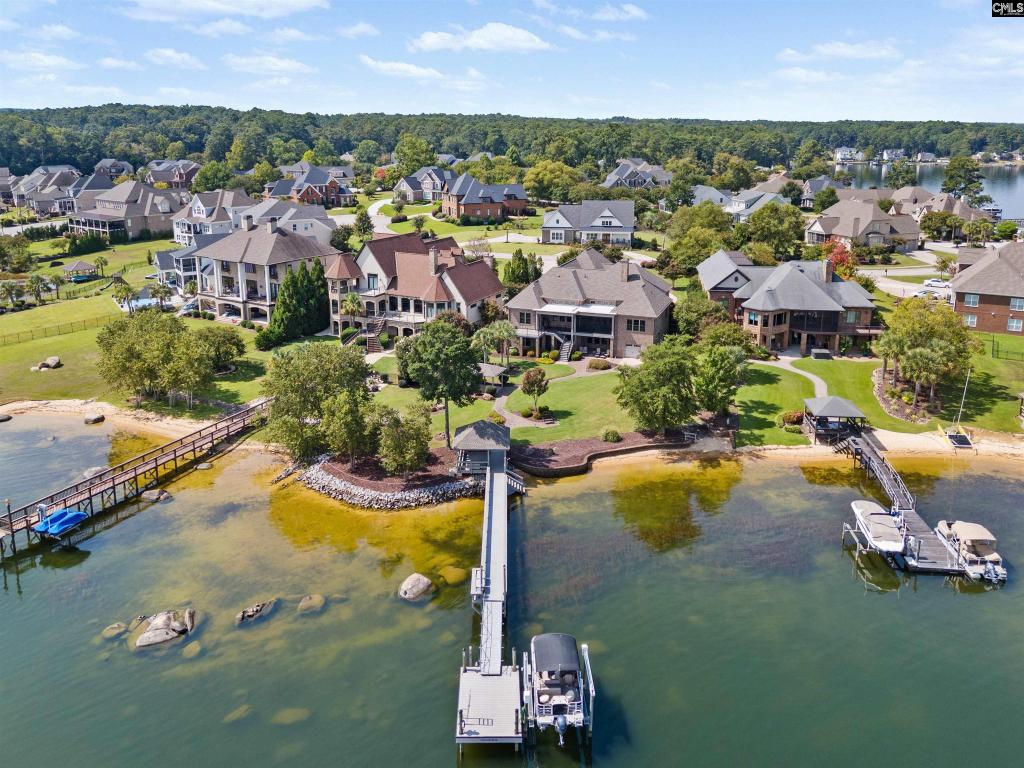
A newly listed $2.95 million Lake Murray home offers luxury living on the Lexington side with 6,358 square feet of space, six bedrooms, and 150 feet of lake frontage. Built in 2010 and recently updated, the property features soaring 14-foot ceilings, a renovated 2024 kitchen with quartzite counters and custom cabinetry, and a primary suite with heated bathroom floors and a walk-in closet designed for convenience. Outdoor amenities include multiple porches, a gazebo, a dock with a boat lift, and even a private lakeside beach.
A new study shows that Walloon Lake in Northern Michigan has become the most expensive lakefront housing market in the U.S., with an average listing price of $6.44 million. This outpaces Lake Sherwood at $6.15 million and Lake Tahoe at $3.83 million. Within just three months, Walloon Lake’s active listings totaled about $84.7 million, driven by strong interest from buyers in states such as Texas and California. With demand rising, the local real estate market continues to flourish, exhibiting notable year-over-year price growth as luxury lakefront living attracts an increasing number of buyers.
“In a remarkable reveal, Walloon Lake in Northern Michigan has been identified as the most expensive lakefront home market in the United States, as reported in a recent study by Lake Homes Realty. – HERE Novi
After two of the toughest years in recent history, the U.S. lake real estate market is showing signs of life and that means new opportunities for buyers.
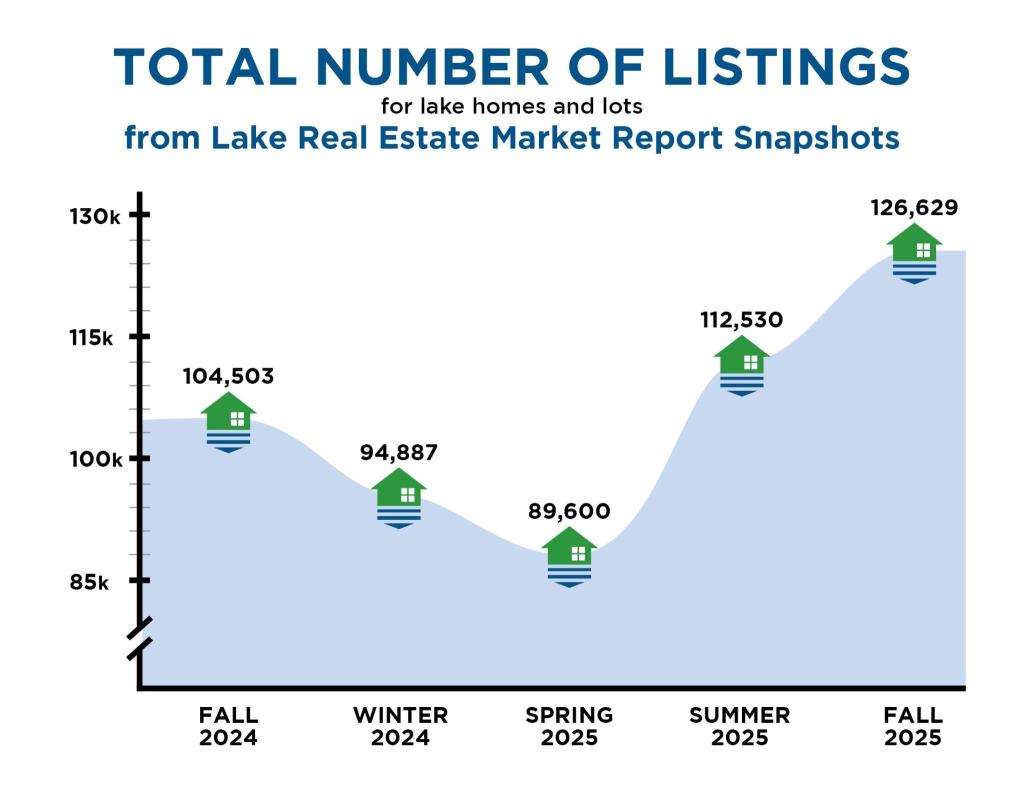
According to Lake Homes Realty’s free Fall 2025 Lake Real Estate Market Report, transactions are finally on the rise after a prolonged stall. Lake Homes Realty is the nation’s largest lake-focused brokerage, operating in 39 states and serving millions of visitors each year at LakeHomes.com. “2024 was the worst year for residential real estate in 29 years, and 2025 started off even worse,” said Glenn S. Phillips, CEO of Lake Homes Realty. “But over the past three months, we’ve seen deals start moving again. We’re not calling it a boom, but the market is thawing.”
What Stalled the Market
Unlike most residential markets, more than half of lake home purchases are paid in cash. That meant high mortgage rates weren’t the culprit. Instead, fear, and inflated pandemic-era pricing froze activity.
“Overpriced homes just sit,” Phillips explained. “If it’s priced right for the current market, it sells. If it’s not, buyers won’t even show up for a viewing.”
What’s Changing Now
Stabilizing tariffs, easing inflation concerns, and a steadier stock market have started to restore buyer confidence. At the same time, sellers are starting to reset their price expectations. “Some sellers are finally listening to what the market has been telling them since last year,” said Phillips. “That’s the shift we needed to see.”
Looking Ahead
Lake Homes Realty expects the final months of 2025 to bring steady, measured improvement after a record-breaking stall, creating a window of opportunity for buyers who have been waiting on the sidelines.
Highlights from the Fall 2025 Lake Real Estate Market Report
TOP LAKE REAL ESTATE MARKETS NATIONWIDE
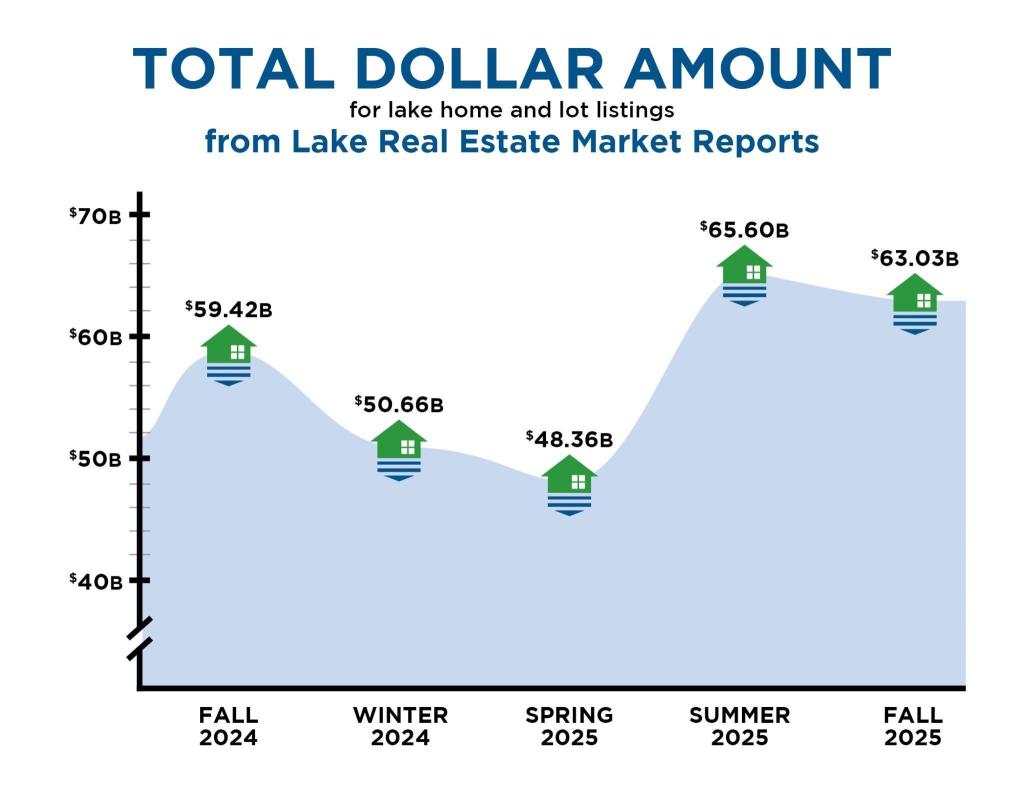
This summer, Puget Sound, WA leads with the most extensive selection of properties, boasting a total value of $2.120 billion in lakefront, lake view, and lake access properties, according to Lake Homes Realty’s Fall 2025 Lake Real Estate Market Report.
Following Puget Sound, homebuyers seeking lakefront living have numerous options across the country. Other top contenders for largest lake real estate markets include:
Puget Sound, Washington
Lake Washington, WA
Lake Tahoe, Nevada
Lake Norman, North Carolina
Lake Travis, TX
According to the quarterly report, twenty-one states serviced by Lake Homes Realty had over one billion dollars in lake home and lot real estate listings.
Texas continues to set the standard with a massive $13.1 billion in lake property listings, followed by Florida at $6.8 billion, and Washington at $6.4 billion. States that surpass the $1 billion mark include:
Texas – 13,117,383,135
Florida – 6,843,458,911
Washington – 6,495,273,833
Vermont – 4,896,387,253
North Carolina – 4,148,755,162
Minnesota – 3,883,782,766
Tennessee – 3,762,071,064
Michigan – 3,636,662,656
Georgia – 3,561,959,969
California – 2,392,165,678
South Carolina – 2,299,515,818
Alabama – 2,200,472,993
Missouri – 2,192,135,398
Arkansas – 2,035,096,462
Nevada – 2,028,852,121
New York – 1,737,880,687
Idaho – 1,724,336,165
Illinois – 1,474,223,184
New Hampshire – 1,395,392,368
Oklahoma – 1,135,565,323
Virginia – 1,134,567,762
As for the most luxurious lakes, Michigan, California, Florida, and Massachusetts land on top. Walloon Lake in Michigan tops the chart with an average price of $6.444 million, followed by Lake Sherwood in California at $6.153 million.
High-end lakes include:
Walloon Lake, MI – Avg. of 6,444,923
Lake Sherwood, CA – Avg. of $6,153,145
Lake Vedra, FL – Avg. of $5,835,500
Brookline Reservoir, MA – Avg. of $4,332,538
Lake Butler, FL – Avg. of $3,935,200
Lake Tahoe, NV – Avg. of $3,828,001
Lake Washington, WA – Avg. of $3,695,662
Lake Sheen, FL – Avg. of $3,638,923
Heron Lagoon, FL – Avg. of 3,625,415
Lake Thonotosassa, FL – Avg. of 3,413,921
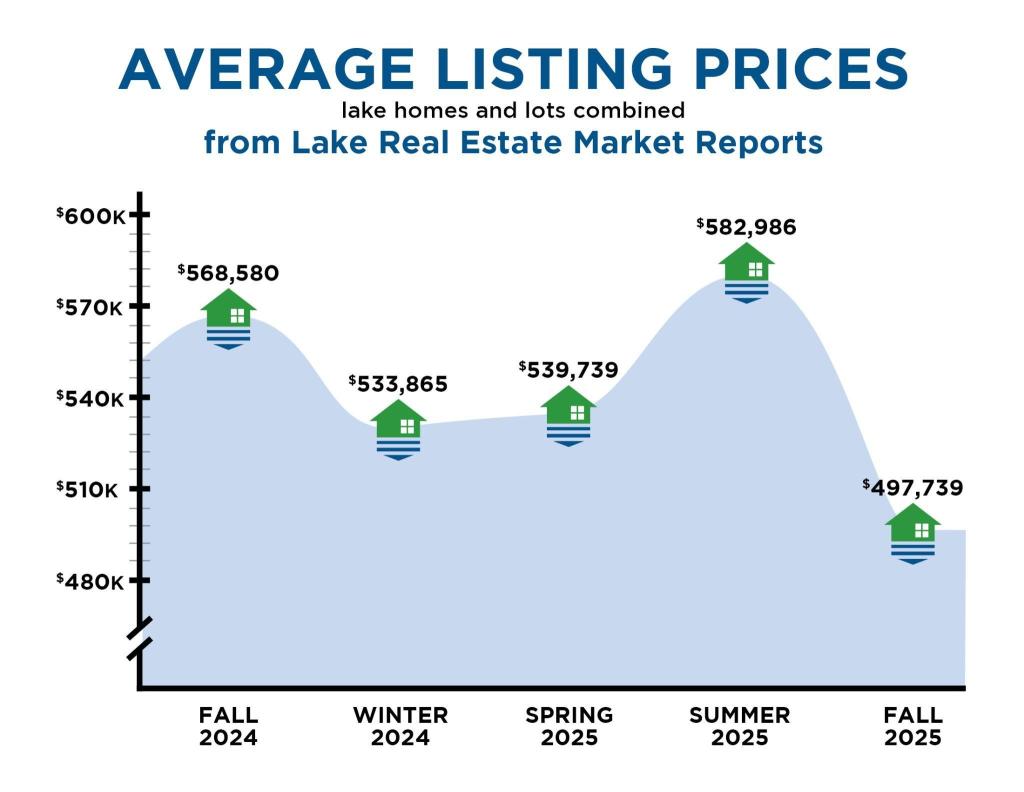
Across all lake properties listed on LakeHomes.com, the average price is a more accessible $497,739.
Top 10 States for Lake Property Listings
1. Texas – 22,962
2. Florida – 12,695
3. Tennessee – 8,091
4. North Carolina – 6,022
5. Minnesota – 5,996
6. Arkansas – 5,892
7. Washington – 5,863
8. Georgia – 5,814
9. Missouri – 5,543
10. Michigan – 5,312
Top 5 Most Expensive Lakes for Home Listings (Average Price)
1. Walloon Lake, MI – Avg. of 6,444,923
2. Lake Sherwood, CA – Avg. of $6,153,145
3. Lake Vedra, FL – Avg. of $5,835,500
4. Brookline Reservoir, MA – Avg. of $4,332,538
5. Lake Butler, FL – Avg. of $3,935,200
Top 5 Lakes for Number of Home and Lot Listings
1. Lake of The Ozarks, MO – 2,136
2. Puget Sound, WA – 1,976
3. Lewisville Lake, TX – 1,849
4. Lake Travis, TX – 1,648
5. Lake Norman, NC – 1,502
The Fall 2025 Lake Real Estate Market Report shares a summary of data collected from 168 Multiple Listing Services (MLS) areas in the 38 states served by Lake Homes Realty and is, to its knowledge, not available from any other source. Thirty-five of these states are covered in this report. States that are not included in this report have data that has not yet been evaluated.
Copies of the Fall 2025 Lake Real Estate Market Report are now available to download for free at www.lakehomes.com/report.
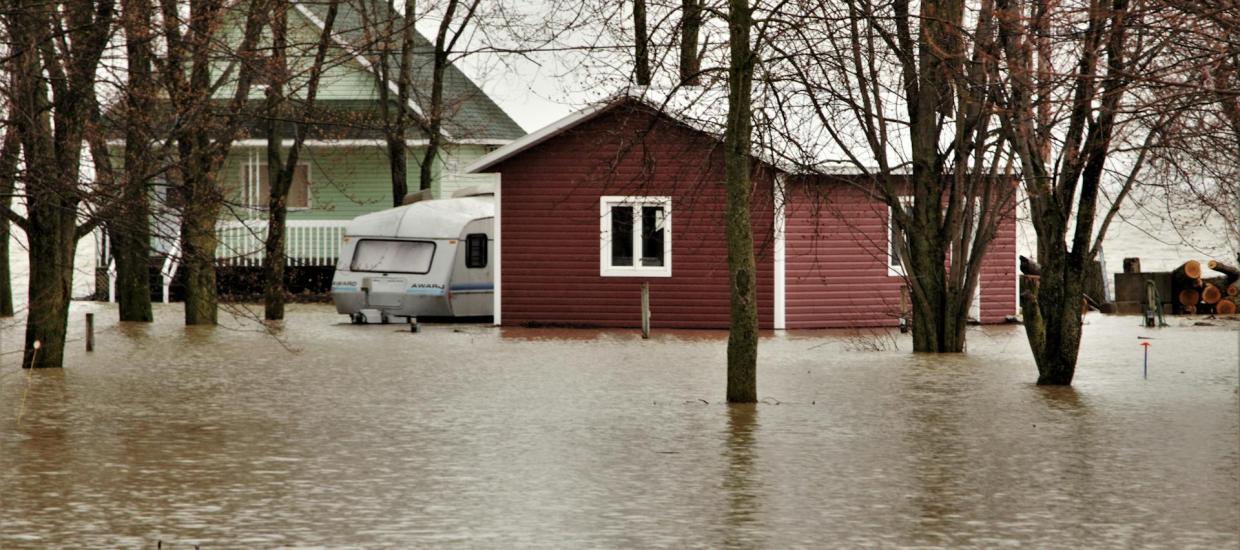
When buying home insurance, many homeowners overlook the possibility of flooding. However, assessing flood risk is crucial for all homeowners, especially those at the lake. According to Realtor Magazine, almost 6 million homes and commercial buildings in the U.S. are at high risk for flooding. In fact, according to the Federal Emergency Management Agency (FEMA), flooding is the most common natural disaster in the country. Even if a hurricane doesn’t hit your home, even an inch of flooding can cause damage to your property and result in mold. These repairs are not inexpensive either. The average annual damage cost in the country due to flooding is $2 billion. Given these consequences, knowing your risk based on the flood zones, preparing for these risks, and protecting your lake house are paramount.
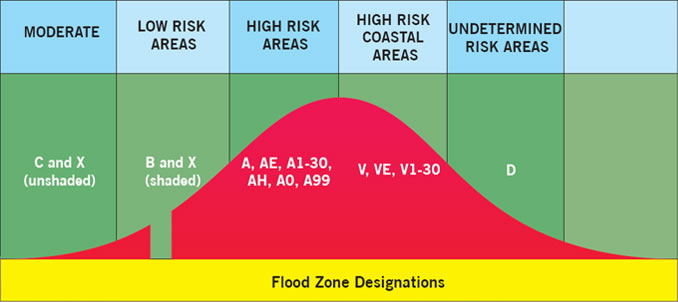
If you’re a first-time homeowner, the concept of flood zones might be new. Essentially, flood zones are different areas distinguished by their risk of flooding. There are four flood zone classifications:
A – high risk, usually along bodies of water
B or Shaded X – moderate risk
C or Unshaded X – low risk
V – a high-risk coastal area
In fact, in an A or V zone, flood insurance is required due to the risk level. Oftentimes, lake houses fall into zone A. However, this isn’t always the case. Your zone could also change over time. Due to the changing environment and warming atmosphere, more storms and hurricanes are possible. The result is that some homes previously in a low-risk flood zone are now higher risk. Your zone could also change due to nearby construction or recurring weather-related factors. Since flood zones are not static, it’s important to stay informed about your home’s risk.
No home is free from flood risk, so it’s best to stay vigilant no matter your residence. However, lake homes are at increased risk due to their proximity to a body of water. While most lake houses are situated on controlled water and elevated enough to prevent flooding, hazards can still occur. Due to the surrounding water, it’s best practice to investigate your flood risk and need for insurance.
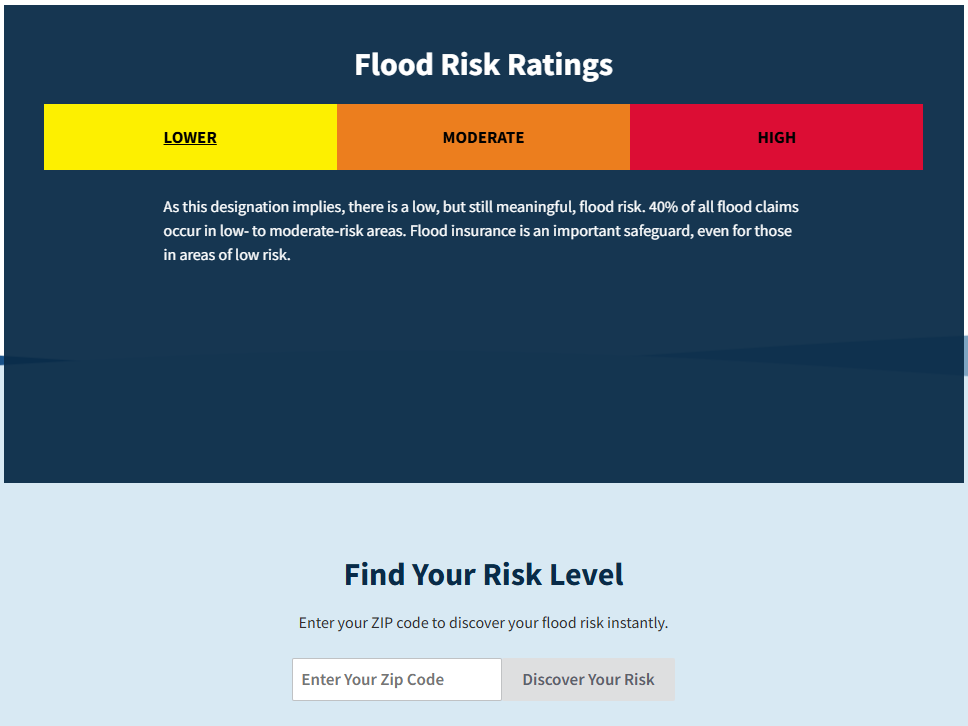
Thankfully, online resources can help you determine your house’s risk of flooding. With many of these free tools, you simply type in your address to receive a wealth of helpful information: your flood risk, the proportion of properties at risk in your county, the history of floods in your area, and recommendations. In addition to revealing this information within seconds, it includes climate data and risks of rainfall and flooding — both of which are not currently included on federal maps. Federal maps also tend to underestimate the number of homes that are actually in flood zones. If you want a more individualized approach to assessing your flooding risk, you can also hire a surveyor to evaluate your home. They will take more personalized features into account, such as the age of your home.
If you’re in a flood zone, there are several precautions you can take. First, consider getting flood insurance from the National Flood Insurance Program or a private insurer. Since the typical homeowner’s insurance does not cover flood damage, you’ll need to buy flood insurance separately. According to FEMA, flood insurance typically costs $898 per year, but this is very little compared to the cost of repairing flood damage. However, this cost can differ depending on your home’s elevation.
In addition to purchasing insurance, there are several solutions to control flooding on your own. Sealants, rain barrels, and sandbags are less expensive options, while installing a sump pump is a more pricey way to manage excess water.
Although proximity to water is a huge selling point of owning a lake home, it also comes with increased flood risk. Know the flood zones, and prepare accordingly!
Lake Homes Realty, a Hoover-based company specializing in lake and beach properties across more than 40 states, announced this week its entry into the mountain real estate market.
From its headquarters in Meadow Brook Corporate Park, the company unveiled a new brokerage, Mountain Homes Realty, which features over $100 billion in mountain properties spanning 21 states on its website, MountainHomesRealty.com.
“Across all our specialty brands we’ve learned how to connect local and out-of-state buyers with unique lifestyle properties,” said Glenn Phillips, CEO of Lake Homes Realty, in a statement on the Mountain Homes Realty website. “The purchaser of a mountain home may live hundreds of miles away and scan listings in several states at once. We make that search – and the seller’s exposure to those distant buyers – dramatically easier.” – Hoover Sun
Hoover-based Lake Homes Realty announced this week that it is expanding into the mountain homes market with the launch of a new firm, Mountain Homes Realty. Both companies are headquartered in Meadow Brook Corporate Park. The new website, MountainHomesRealty.com, offers buyers and sellers access to over $100 billion in available mountain properties across 21 states.
“Across all our specialty brands we’ve learned how to connect local and out-of-state buyers with unique lifestyle properties,” said Glenn Phillips, CEO of Lake Homes Realty, in a statement on the Mountain Homes Realty website. – 280 Living

![[Roanoke Times] Names and changes: Business recognitions and promotions for the week of Oct 19, 2025](https://www.lakehomes.com/info/wp-content/uploads/2025/10/Smith_Mountain_Lake-1-867x550.jpg)

![[Columbia Star] Folks About Town](https://www.lakehomes.com/info/wp-content/uploads/2025/10/Lake_Murray_B0078-1024x550.jpg)

![[Smithville Review] Luna wins the ‘Big Wave’ award](https://www.lakehomes.com/info/wp-content/uploads/2025/10/15416536432_9961bec860_k-1240x550.jpg)

![[The Post and Courier Columbia]18,000 square feet for $1.8 million in Fairfield County](https://www.lakehomes.com/info/wp-content/uploads/2025/10/617706-0_20250918135942-1240x550.jpeg)
![[herenovi.com] Walloon Lake Named Most Expensive Lakefront Market in the U.S.](https://www.lakehomes.com/info/wp-content/uploads/2025/09/28778917428_db6d6305f5_k-1240x550.jpg)






![[Hoover Sun] Lake Home Realty expands, creates mountain home website](https://www.lakehomes.com/info/wp-content/uploads/2025/06/pexels-myburgh-3081701-1240x550.jpg)

![[280 Living] Lake Home Realty expands, creates mountain home website](https://www.lakehomes.com/info/wp-content/uploads/2025/06/mountainhomesrealty1-1240x550.jpeg)