Garage Door Facelift: The Best ROI Home Improvement Project for Your Lake Home

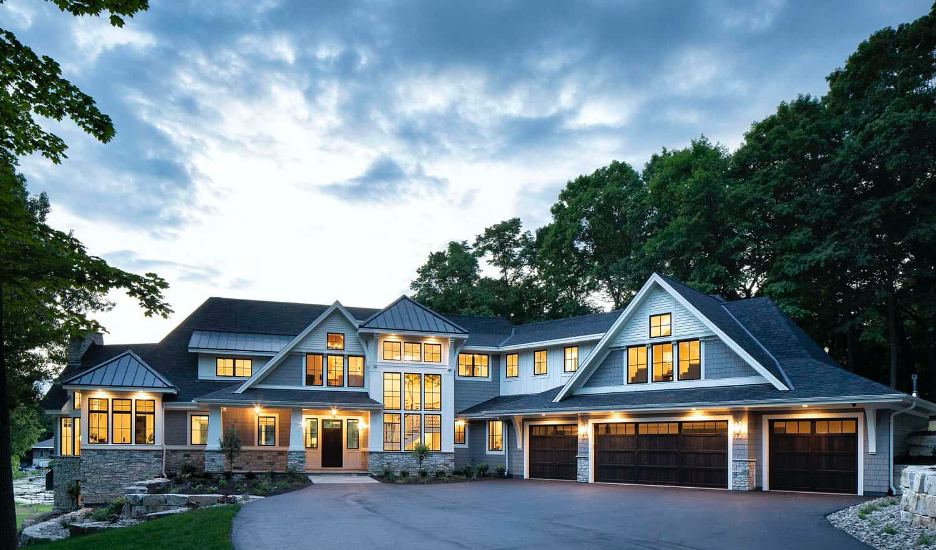
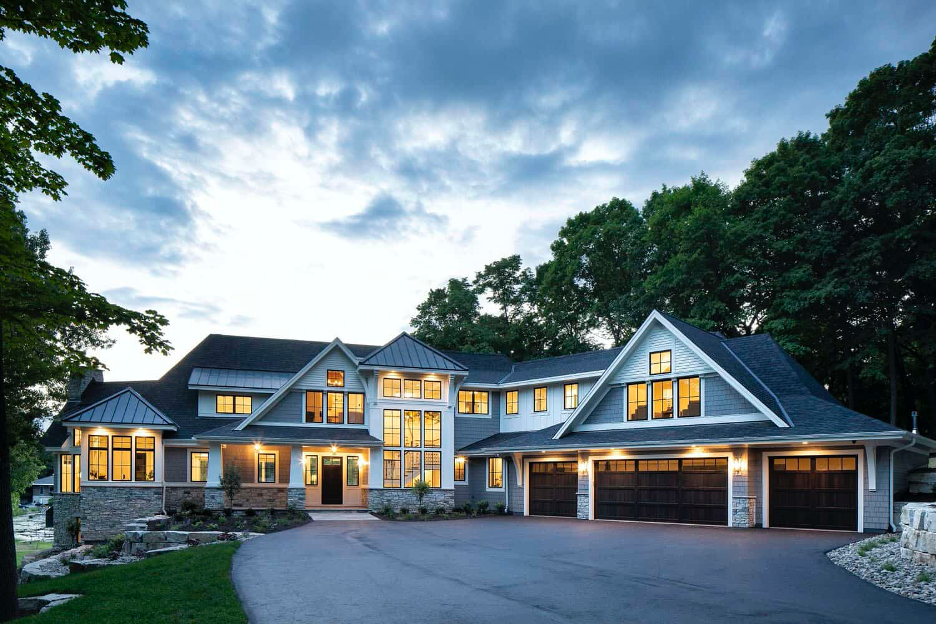
Beautiful garage door updates to increase your home's ROI illustrated here in a Lake Minnetonka, MN lake home
Photo courtesy of OneKindesign

A garage door offers one of the most visually dominant elements on a home’s exterior, yet it’s often treated as purely functional. For lake-home owners, this oversight is particularly costly. Unlike suburban properties where landscaping softens the façade, lake homes are frequently more exposed—set against water, sky, and natural terrain—making every architectural element more visible. In this context, the garage door becomes a defining feature rather than a background detail.

What’s changed in recent years is the financial case for upgrading it. In 2026, garage door replacement continues to rank as the top home improvement project for return on investment, delivering an average ROI of roughly 268% based on current national remodeling trends. In practical terms, homeowners are spending around $4,600 to $4,900 on a new garage door and seeing increases in resale value of $11,700 to $12,500, depending on the region.

It’s this outsized return that’s driving more homeowners to rethink garage doors as architectural features rather than afterthoughts. As one industry professional notes, homeowners are motivated not only by personal taste and curb appeal but also by resale performance—where a well-designed garage door can make a home feel more cohesive and ultimately easier to sell. Increasingly, wood and faux wood garage doors are being used to bridge architecture and landscape, available in styles ranging from ultramodern to transitional. For traditional homes, designers often draw from carriage doors—echoing old coach houses with decorative hinges and hardware—while modern builds may conceal garage doors entirely within the façade. Ultimately, it’s the style of the home that dictates the approach, and for lake properties, garage doors have become a subtle but powerful way to make a design statement.

Modern Flush Panels with Natural Wood Finish
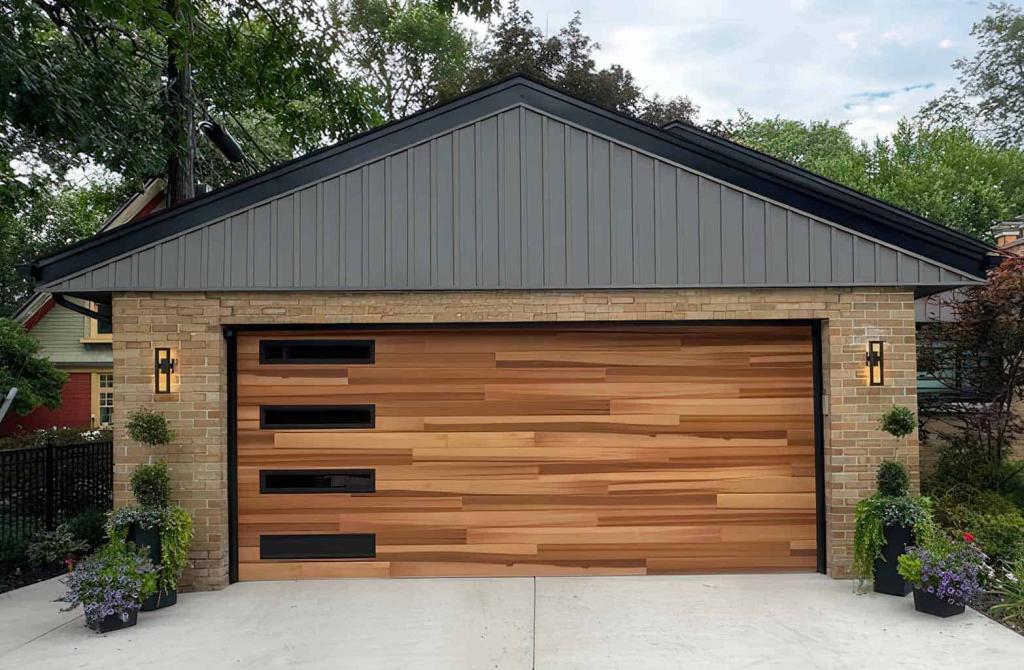
Modern Flush Garage Door Panels with Natural Wood Finish
Photo courtesy of Forest Garage Doors

Clean-lined, flush-panel garage doors finished in natural or faux wood are increasingly favored for contemporary lake homes. The emphasis is on simplicity—horizontal grain patterns, minimal seams, and concealed hardware.

This approach aligns with modern lake architecture, where large glass expanses and low-profile rooflines dominate. The wood tone softens the geometry, connecting the structure to the surrounding trees and shoreline.

Best regions:

  • Pacific Northwest lake homes
  • Northern Great Lakes modern builds
  • California lake regions (Tahoe, Shasta)

Carriage House Doors with Decorative Hardware
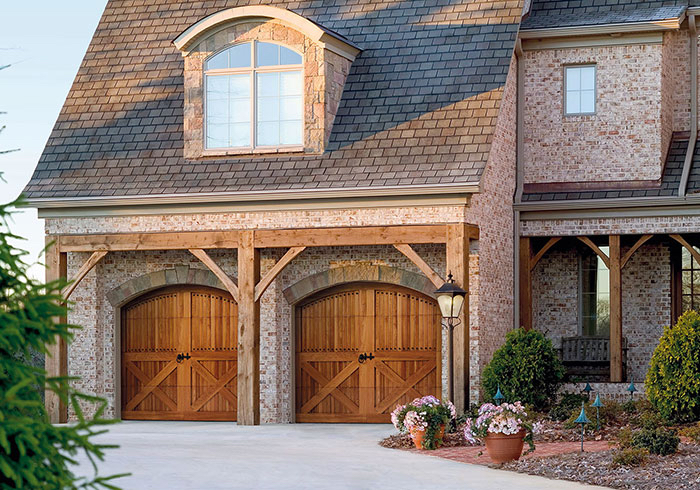
Carriage House Garage Doors with Decorative Hardware
Photo courtesy of Amarr Garage Doors

Inspired by historic coach houses, carriage-style garage doors feature crossbuck panels, visible hinges, and iron pulls. Today’s versions often use insulated steel cores with wood overlays for durability.

For lake homes with traditional or farmhouse influences, this style adds depth and narrative. It reinforces a sense of heritage, which resonates strongly in established lake communities.

Best regions:

  • Upper East lake regions
  • Mid-Atlantic lake properties
  • Southeastern lake homes

Full-View Glass Garage Doors
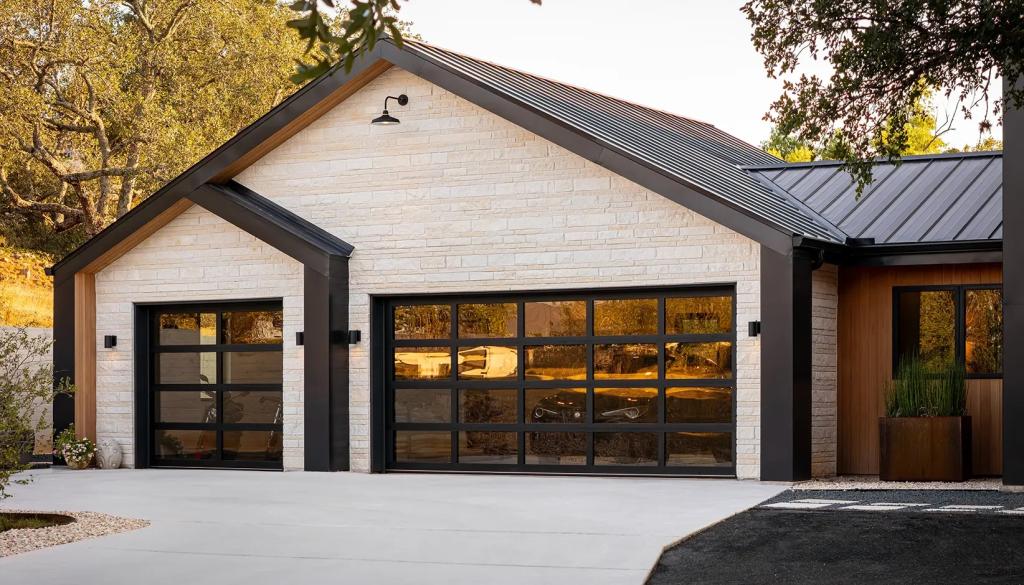
Full-View Glass Garage Doors
Photo courtesy of Aero Garage Door

Full-view glass doors—typically aluminum-framed with frosted or clear panels—are a bold, high-end choice. While more common in urban settings, they’re gaining traction in luxury lake homes.

They reflect water, sky, and landscape, effectively extending the view. For properties with detached garages or well-positioned structures, this can be a striking design feature.

Best regions:

  • California lake regions
  • Pacific Northwest
  • Select high-end Great Lakes properties

Faux Wood Composite Doors for Durability
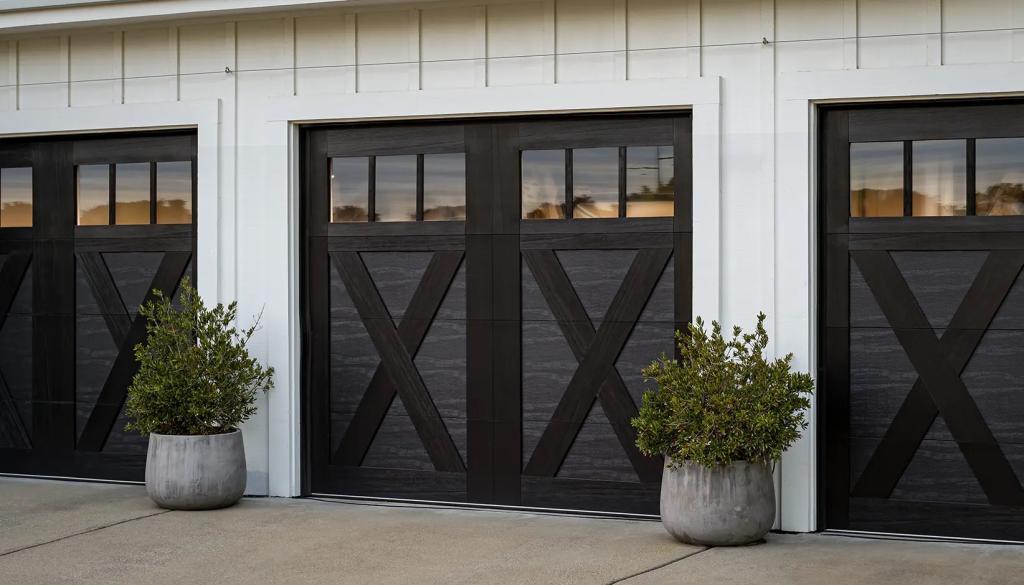
Faux Wood Composite Garage Doors for Durability
Photo courtesy of New England Overhead Door

Faux wood garage doors offer the warmth of timber without the maintenance challenges. Made from composite materials or steel with realistic grain finishes, they resist moisture, warping, and UV exposure.

For lake environments—where humidity, wind, and seasonal shifts are constant—this is a practical upgrade that still delivers strong visual appeal.

Best regions:

  • Southeast lake regions (high humidity)
  • Texas lake properties
  • Mid-Atlantic and Upper East lake homes

Integrated or Concealed Garage Doors
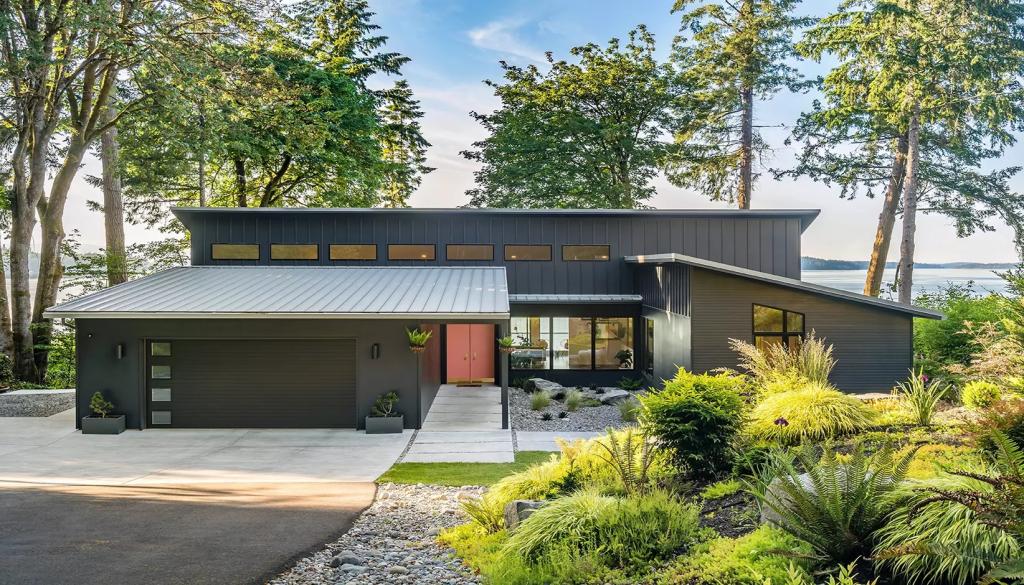
Integrated or Concealed Garage Doors
Photo courtesy of Aero Garage Door

In more architecturally ambitious homes, garage doors intentionally disappear into the façade. Cladding materials—wood slats, metal panels, or even stone—continue seamlessly across the door surface.

This approach prioritizes architecture over utility, allowing the garage to recede visually. It’s particularly effective in homes where the focus is on lake views rather than street presence.

Best regions:

  • California modern lake homes
  • Pacific Northwest contemporary builds
  • Upscale Great Lakes properties

Mixed-Material Doors (Wood + Metal Accents)

Mixed-Material Garage Doors (Wood + Metal Accents)
Photo courtesy of Fancy House Design

Combining wood panels with metal framing or accents creates a balanced, transitional look. Black steel or bronze detailing adds contrast while maintaining a refined, understated palette.

This style works well for lake homes that blend rustic and modern influences—common in newer builds designed to feel both timeless and current.

Best regions:

  • Northern Great Lakes region
  • Upper East transitional homes
  • Texas lake properties

Upgrading a garage door is a relatively contained project with an outsized impact—particularly for lake homes, where architecture must respond to both landscape and lifestyle. Whether through the warmth of wood, the precision of modern panels, or the subtlety of concealed designs, the right garage door can unify a home’s exterior while signaling quality to prospective buyers.

In a market where differentiation matters, these updates do more than improve appearance—they streamline the property’s narrative. For lake-home owners looking to enhance value without overextending with major renovations, the garage door offers a pragmatic, design-forward starting point. For more design inspiration, visit Lake Home Lifestyles.

Common Pricing Mistakes to Avoid When Selling Lake Real Estate

Want more videos like this one? Subscribe to our YouTube channel!

Selling a lake property in today’s market is a rewarding yet complex endeavor. And for those who have done their research, know that unlike typical residential homes, lakefront properties are often considered “discretionary assets” — luxury purchases driven by lifestyle rather than necessity. Furthermore, they come with unique characteristics and market dynamics that require careful consideration, especially when it comes to pricing. Setting the right price is crucial — not only to attract savvy buyers but also to protect your equity and further maximize your return. Glenn S. Phillips, CEO of Lake Homes Realty, shares five common pricing mistakes and offers practical advice on how to navigate today’s market.

Overreliance on Automated Valuation Models (AVMs)

In today’s digital age, many sellers turn to online tools known as Automated Valuation Models (AVMs) to estimate their home’s worth. While convenient, AVMs are fundamentally algorithms that rely on limited data and generalized assumptions. The technology has improved for residential homes; however, they remain flawed for lake real estate. They cannot see the variables that actually drive lake property value, such as water depth at the dock, the quality of the view, or the steepness of the path to the shoreline.

The New Reality: A digital tool might tell you what a house is worth based on concrete factors such as square footage, but it will fail to accurately assess unique, nuanced details, such as whether your shoreline is eroding or your dock is the best on the lake. Blindly trusting an AVM can result in leaving money on the table or pricing yourself out of the market entirely.

Using “Active Listings” as a Pricing Benchmark

Photo by Thirdman

A common mistake is pricing your home based on what your neighbor is asking. In the current market, active listings only tell you what sellers hope to get — not what buyers are actually paying. Properties that linger on the market often indicate that their prices are unrealistic.

Pro-Tip: The “10-Day/10-Showing Rule”: In today’s fast-moving information environment, if your property hasn’t seen significant showing activity or serious inquiries within the first 10 days or 10 showings (whichever comes first), the market is sending you a clear signal. You shouldn’t wait three months to adjust; you must listen to the market’s feedback immediately to avoid becoming a “stale” listing.

Setting Unrealistic “Financial Need” Expectations

Many sellers enter the market with emotional or financial expectations that don’t align with current market realities. The phrase “I need to get $X amount” is a dangerous starting point. Whether you’re looking to recoup renovation costs or fund your next purchase, the market is indifferent to your personal financial goals and ultimately dictates what buyers are willing to pay.

Pro-Tip: Personal Financial Goals Detachment: Phillips advises sellers to detach their personal financial goals from the math. “The ‘rich idiot’ buyer of years past has been replaced by a highly informed, data-driven buyer,” he explains. To succeed, you must conduct thorough research into recently closed sales — the only true data points that buyers, lenders, and appraisers will respect.

Emotional Reasoning vs. Objective Market Data

When selling a home, people often believe their custom upgrades add a dollar-for-dollar increase in value. While your custom floors or personally-designed landscaping are beautiful, they may not translate to a proportional price hike if the “comparable sales’ in your area don’t support it.

Pro-Tip: The Pre-Listing Appraisal: One of the most powerful moves a seller can make this year is commissioning an independent appraisal before listing. Having a professional valuation in hand serves as a “shield” against lowball offers and gives prospective buyers (and their lenders) immediate confidence in your asking price.

Failing to Consult a Lake Real Estate Expert

Finally, perhaps the most critical mistake is working with a general real estate agent rather than a lake specialist. While it might be tempting to work with a friend or family member, lake real estate sales require specialized knowledge of unique legalities such as dock permits, Corps of Engineers boundaries, and water rights, which a non-lake agent may miss.

Pro-Tip: Cross-Lake Comparison: Today’s buyers aren’t just looking at one lake; they are “cross-shopping” similar lifestyle lakes across the region or in other parts of the country. A lake expert understands how your property stacks up against a similar home that may be three counties or even states away. They don’t just price your home for your cove — they price it for the entire regional market.

How to Successfully Sell Your Lake Home: Recap

Photo by Thirdman from Pexels

Selling a lake property requires a strategic approach grounded in market knowledge and expert guidance. Here are some actionable steps to help you avoid the common pricing mistakes as outlined by Lake Homes Realty’s CEO, Glenn S. Phillips.

Get Professional Appraisal: Start with a formal appraisal or a detailed market analysis from a lake real estate expert to understand your property’s true market value.

Research Recent Sales: Focus on comparable properties that have recently sold rather than relying on current listings or automated estimates.

Set Realistic Goals: Align your pricing expectations with market realities, balancing your financial needs with what buyers are willing to pay.

Separate Emotion from Pricing: Appreciate your home’s unique features, but let market data guide your pricing decisions.

Hire a Lake Specialist: Choose an agent who specializes in lake properties to leverage their expertise and network.

Pricing a lake property correctly is an art and a science. Avoiding common mistakes such as relying on automated valuations, mimicking neighbors’ prices, setting unrealistic goals, letting emotions cloud judgment, and neglecting expert advice can make a significant difference in your selling experience. With careful preparation and the right support, you can sell your lake home confidently and successfully.

If you’re considering selling a lake property and want more personalized advice, let the lake experts at LakeHomes.com help guide you through every step of the process — from pricing and marketing to closing the sale — ensuring you avoid common pitfalls and make informed decisions.

You can find the original source for this article here: Whiteboard Topics: What Are 5 Pricing Mistakes Made By Lake Home Sellers?

Whiteboard Topics: What Lake Homes Sellers Expect That Rarely Helps

Expectations are a part of everything in life. Real estate is not exempt from having expectations either. When selling your home, you might have certain expectations from your real estate agent in order to get your home sold. Glenn Phillips, Lake Homes Realty’s CEO, discusses the different things a seller might expect that don’t always help.

  1. Open Houses: Typically, when it comes to lake real estate, the buyer is many miles away. They might even be in a completely different state. These buyers will schedule a showing to see that house if they are interested. An open house, on the other hand, typically attracts people who come by to view the house, usually without any intention to buy.
  2. “Just Listed” postcards: Who would you be sending these to? You don’t really need to send them to your neighbors because they already live at the lake. It doesn’t logically make sense to send these across the country, but it makes the seller feel good when sending them out. That doesn’t inherently mean anything will come from it.
  3. “Just Listed” social media: This is related to the “Just Listed” postcards. Not only that, but the algorithms don’t typically like these kinds of posts. If it shows up to an audience, it will more than likely show up on a family or friend’s feed.
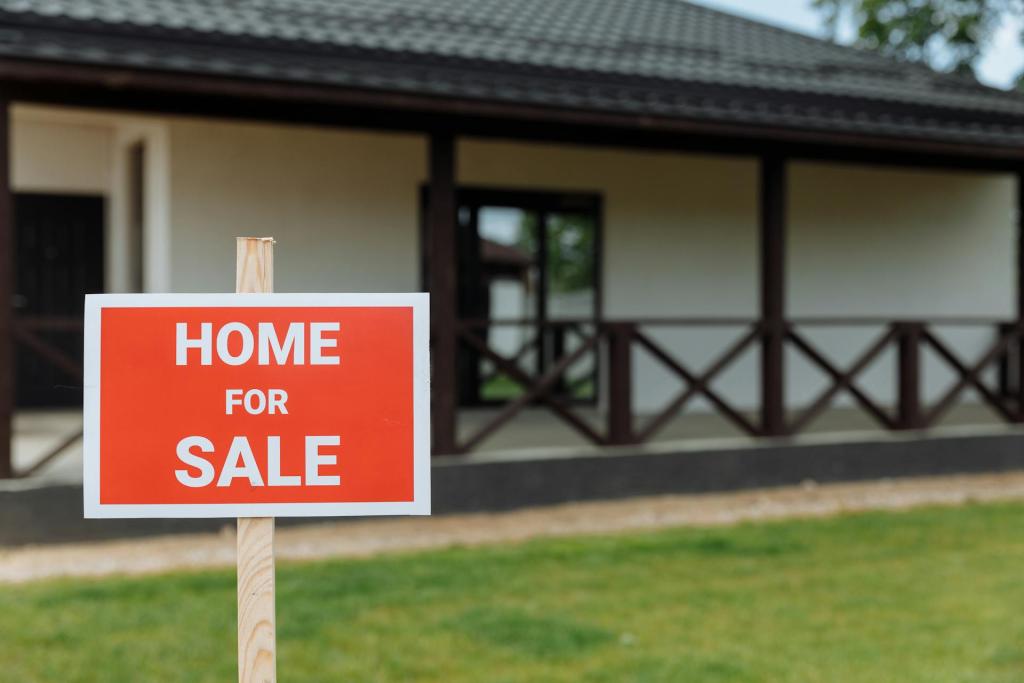
  4. “For Sale” signs: Most lake homebuyers start their search online. Going back to the first point, many buyers might not even live in the state you’re in, having a for sale sign doesn’t really help as much as you think.

A lot of the time, an agent will do these things out of habit or to make their sellers happy. However, that doesn’t mean it will sell the home. If you’d like to discuss these topics or anything else with an agent, please contact one today at https://www.lakehomes.com/.

Whiteboard Topics: Overpricing Your Lake Home Is Easy!

What comes to mind when you’re getting ready to sell your home? Pricing! Knowing how to and what to price your lake home is crucial in the selling process. If you go too high, more than likely, it will sit on the market longer than you’d like. Lake Homes Realty’s CEO, Glenn Phillips, delves into the importance of proper pricing and how easy it is to accidentally overprice.

  1. “What I have in it”: This is the concept of what you, as the owner, have financially put into the home. However, buyers do not care about this. The market is the market. When you were the buyer, you didn’t ask the seller what they had put into the home. The same goes for your potential buyers; they don’t care. The market sets the price.
  2. “What I ‘need’…”: At the end of the day, need has nothing to do with it. Need is market-independent and not relevant to any of the buyers.
  3. “I just ‘feel’ it is worth this”: There have been many studies that indicate we value our own possessions a lot more than other people’s possessions. This is something you need to be mindful of. It’s very easy to justify why you think your property is worth a certain amount.
  4. “The neighbor’s house sold for…”: That might be a true statement, or it might be a rumor someone has made up. If it is factual, there are many factors that could have been at play, such as selling when the market was hot. Having an agent who can pull a market analysis is more beneficial than basing pricing on the neighbor’s home.
  5. “The house nearby is listed for…”: “Listed for” is exactly what it sounds like, a listing. That house is still on the market.
  6. “If I can get this much, then I’ll sell”: This means you are not actively trying to sell the home. If something were to come along at a price you like, then you might. Something like this wastes time for all parties.

Having the correct pricing is truly the most important thing if you’re trying to sell. However, as mentioned above, it’s very easy to overprice a lake home. If you’re trying to figure out how to get accurate pricing, reach out to our lake experts at https://www.lakehomes.com/.

Whiteboard Topics: Lake Home Sellers Should Know These Buyer Traits

Are you selling your lake home? You, as a seller, have traits that most sellers exhibit. The same goes for lake home buyers. Because you are trying to sell your home, you should be aware of what these typical buyer traits are and how to spot them. Lake Home Realty’s CEO, Glenn Phillips, discusses what some of these traits are and how to be on the lookout for them.

  1. Often Live >100 Miles Away: Most buyers who purchase lake property are looking for something they can move to in retirement or a place they can have as their getaway. Knowing that typical lake buyers are coming as far away as other states or cross country is important when it comes to marketing towards them.
  2. “Want What They Want”: It isn’t very common that your typical lake home buyer is looking for anything in a hurry. They don’t need a home immediately to ensure their kids can be in a certain school system or any other reason behind a quick move. They could spend months to years waiting to find exactly what it is they want.
  3. Willing to pay…but RARELY overpay: Most people who are buying lake property are smart with their money. You can see that the inventory has grown a lot in the past couple of months. These buyers aren’t willing to pay for a home that is overpriced, a more and more are becoming that.
  4. Unconcerned with school systems: The usual demographic is 55 and older. They might have grandkids coming to visit, but that doesn’t mean the specific school systems in the area are pertinent for these buyers.
  5. Hospital Reasonably Close: Like the previous point, the age demographic is a little older than your usual real estate market. Knowing you’re not too far away from a medical center is something that is being looked into when a buyer is considering moving to the lake.

Knowing these buyer traits can benefit you if you’re beginning the selling process or have been in it for a minute. If you would like help with selling or simply more details about these traits, reach out to one of our lake agents today at https://www.lakehomes.com/. They would be more than willing to lend a helping hand.

Whiteboard Topics: 7 Signs A Lake Home Is Unrealistically Priced

Pricing is an important factor when it comes to buying and selling a lake home. On the buyer’s side, you typically want to find a home that is within your budget and not something astronomically outrageous. From the seller’s side, pricing a home appropriately means more people are willing to look at it. Glenn Phillips, CEO of Lake Homes Realty, breaks down 7 different signs that a lake home is not priced realistically.

  1. Days-on-Market (DOM): Transparency is important. If your home has been on the market longer than 60-90 days, specifically for lake properties, it typically indicates that something isn’t right about the transaction. If the home is priced about 10-15% or more up than what the market is realistically expecting, people won’t take the time to even look at the home.
  2. Big Appraisal Gap: This was a bigger deal during the COVID frenzy, where people were willing to pay a higher price for the home than the appraisal price. However, since we have shifted from that, people aren’t as willing to spend that money.
  3. “Back on the Market”: This could indicate a price problem, either an issue with the mortgage appraisal not matching or an issue with the house, and the buyer and seller couldn’t agree on how to solve it in terms of the price.
  4. Massive $ Increase: This relates to an increase in the price of the house from when it was initially purchased to now, and there hasn’t been much done or changed about the property. If the seller can’t explain why there would be such a price increase, it more than likely means the home is overpriced.
  5. Multiple Price Cuts: The home has a lot of days on the market, as well as multiple cuts in the price. They might not even be significant price cuts. However, a buyer can see this and expect more cuts to happen before even looking at the property.
  6. Sellers: No (or Few) Showings: Having nobody come to look at the property is a key indicator that the home is priced poorly. Having people come and view your home is something that should be happening.
  7. Sellers: No Offers (or Similarly Low): Having people come and look at the home is great, but receiving no offers or even low offers means the pricing is off. If you’re receiving low offers, it can often be the buyer trying to offer at a more accurate price point.

Having a home that sits on the market for months due to pricing is something no seller or buyer, for that matter, wants. Ensuring you have priced your lake home appropriately is key in ensuring you can sell it. If you’re struggling with pinpointing what price is right for your home, contact one of our lake agents today! They would be more than willing to help you out!

Whiteboard Topics: 4 Big Mistakes When Hiring A Lake Real Estate Agent

Now is the time when you have decided to either buy a lake home or sell the one you currently have. However, you have to make a pretty big decision, which real estate agent to work with? Before you decide to choose one randomly, check out what Lake Homes Realty’s CEO, Glenn Phillips, has to say when it comes to mistakes made when hiring an agent.

  1. Generalist Instead Of Specialist: The biggest mistake people usually make is hiring an agent who doesn’t specialize in lake real estate. A general real estate agent might know the nuances of transactions and other facets of the real estate world but not necessarily the ins and outs of the lake market. There are many different rules and regulations when it comes to buying and selling within the realm of lake real estate.
  2. Family As A Favor: Everyone would love to help out family, especially if they are new to the world of real estate. There are other ways to help out your family without negatively affecting your transactions. This is where working with a specialist really benefits you.
  3. Just Picking A Friend: Similarly to the family aspect, working alongside someone who knows what it really takes to work within this market is always going to be better than simply just someone you know. That friend might not know the exact questions that need to be asked and a plethora of other things that a seasoned lake agent will know.
  4. Only Think Local: This is particularly a mistake when selling. There are ways to target buyers in various parts of the country. This will help directly target lake buyers within many different states. A lake agent knows how to go about this and the ways you can truly target dedicated lake buyers.

These 4 mistakes are common in selling lake properties. However, they don’t have to be. A great way to avoid these is by working alongside a seasoned lake real estate expert. There are many different agents who would love to help you navigate the process of buying or selling lake property. Check them out at https://www.lakehomes.com/ and ask any other questions you might have.

Whiteboard Topics: In Lake Real Estate “Highest And Best Offer” Is Not An Auction

When you are buying or selling, there may be terms thrown around, such as ” Highest” or “Best” when referring to offers. In reality, it’s not an auction. It’s actually the furthest thing from it. Lake Homes Realty’s CEO, Glenn Phillips, breaks down the different meaning meanings behind these terms.

  1. Not An Auction!
    • Highest $ May Not Win: The highest is strictly just a number. This does not ensure whoever offers the highest amount will be the one purchasing the property. The seller is the one who decides who they want to do a transaction with.
    • Seller Selects Their Buyer: When it comes down to the transaction, it is fully up to the seller to decide how and if they want to proceed.
  2. Look To “De-risk The Deal”– Remove the probability the seller might become uncomfortable with the offer.
    • Cash Versus Mortgage: Over half of the transactions done at Lake Homes Realty are made in cash. That doesn’t mean mortgages don’t happen. In the instances when a mortgage is in play, there is always the chance it won’t go through. There could even be an appraisal gap. Using cash is one less risk.
    • Timeframe Might Be Important: A seller could want to move very quickly or they might not have a time constraint. Utilizing the time frame and the nuances that come with it can help to make your offer the best.
    • Size Of Earnest Money: As a seller, seeing someone with a bigger size of earnest money can lead the seller to think they have more intent on wanting to purchase the home.
    • Fewer Contingencies: It’s not just the mortgage aspect. There could be home inspections, HOA fees, and a whole list of other things. If you are able to eliminate any of those extra contingencies, that can remove the possibility that the seller is uncomfortable.
    • Simplicity: If things become too complex, it can lead to the seller becoming confused, which, in turn, leads to the seller saying no.

When it really comes down to it, the “Highest and Best” offer can be great but can also hold a lot more nuance than people might realize. If you still have questions regarding which ways to navigate offers, talk with an agent at https://www.lakehomes.com/. They would be more than happy to help you along your real estate journey.

Whiteboard Topics: AVOID These 5 Questions When Selling a Lake Home

Selling a lake home comes with several questions, but some are better than others. Glenn Phillips, CEO of Lake Homes Realty, discusses 5 questions to avoid when selling a lake home.

  1. “How many views did my listing get online?” The truth is that there’s no right answer to this question. If you get plenty of views, you start to think the websites aren’t good or the buyers aren’t serious. However, if you aren’t getting any, you’re still upset since there’s no traffic. The right amount of views is the one that leads to a transaction. The real reason sellers ask this is to know why they aren’t getting a transaction. Most of the time, if the property is marketed well, the home isn’t properly priced.
  2. “Should we counter-offer?” In negotiation, you always counter-offer. Not giving a counteroffer eliminates any chance of a negotiation. Counter-offers aren’t always about price; they can include extra property or furniture. Work through the negotiation to keep the discussion going until you reach a transaction.
  3. “Can you co-list with my relative?” What this question really means is that you want to hire an agent to do the work and split the check with your relative. If you don’t feel your agent is worth the money, don’t hire them.
  4. “Where is your office?” Office location for lake agents isn’t important. Most lake home buyers come from cities or states away and don’t want to come into town to look at an office. Lake home buyers would rather look at the house than go to an office.
  5. “Does your brokerage have a lot of agents?” This is more of a filler question when interviewing agents. Instead, ask them how they differentiate themselves from the other agents to be successful.

Asking your agent the right questions can make a world of difference when selling lake homes. Visit lakehomes.com to connect with expert lake agents who are ready to guide you to a successful transaction.