4 Easy to Miss Items to Look for When Shopping for a Lake Home

There are lots of people in the world who would simply jump at the chance to purchase a lake home, but like purchasing any piece of property, it should never be rushed.

It is advised that you should consider a home inspection for your potential lake home, before you decide to splash the cash on your dream retreat. This will ensure that you will get the maximum value from your investment and will not live to regret the decision to purchase the lake home. So if you are considering purchasing a lake home, then you should look for the following things in a home inspection for a lake home:

The Water Counts

A lot of people don’t consider checking the actual lake when they are purchasing a lake home, which is probably one of the biggest mistakes that you can make. It may seem like only water to you at first, but there are certain water lots, which you don’t want at all with your lake home. Check to see how much waterfront footage you have on your lake, which should ideally be 100 feet or more.

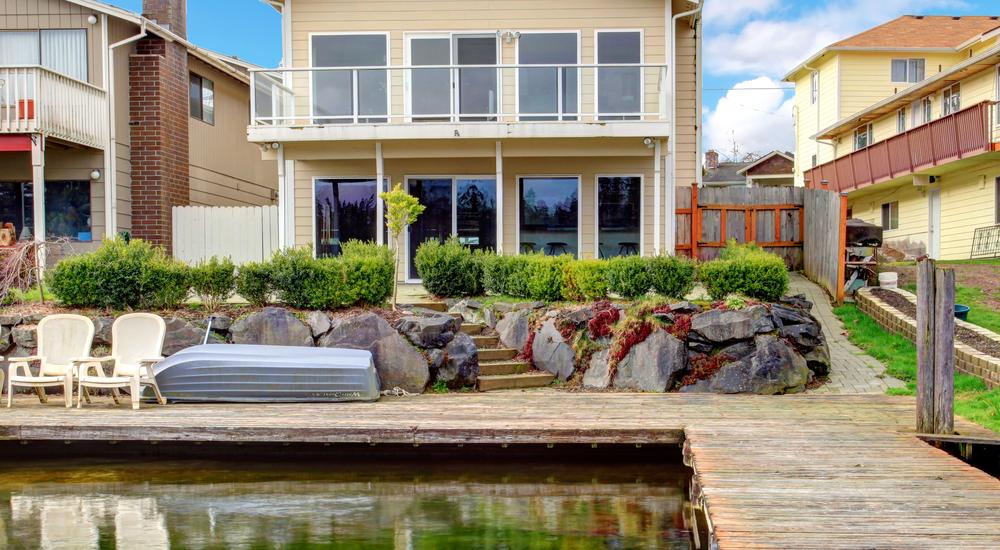
Unsplash: house facing waterDoor Facing the Water

If you were living in the city, you would want to have curb appeal with your home. But, when you are living on a lake, all you should care about is pier appeal.

Check to see if there is a main door facing the lake, since you are going to want to see a whole lot of lake in your lake home. This means that every room in the house should provide you with a view of the lake, whether it is the kitchen, the dining room or the bedroom. A lake home without a great view of the lake from all rooms is less than ideal.

Topography is Essential

Not many people know this, but when you are living at a lake house, you have to consider the topography of the water lot as well. If you are going to go swimming and floating, then you should have a flat lot, which means that the water in the lake will not be deep.

If, however, you want to take your boat out every day, then you would need a steeper lot, which would mean deeper water. It may seem as a simple choice, but it all counts towards the appeal of your lake home.

Docks Are Important

lake dockIt is also important to check the quality of the docks. Make sure that boards aren’t missing or loose and there are no jagged nails.

Living on the lake is a lifelong dream of most people and it is one of the best ways to spend your retirement days in comfort and relaxation as well.


Preparing for War – A Bidding War

You’ve found the lakeside home of your dreams. You put in a bid on it, but the next thing you know you’re in a bidding war for the home. How does this happen? What should you do next? Perhaps more importantly, what shouldn’t you do next? Here are a few tips to help you out if you find yourself in the middle of a bidding war.

real estate agents lined up to bid on a lake homeBidding wars are most common in popular areas or cities, but can also happen on lakes which often have limited inventory.

As the economy recovers in areas where properties are scarce, it’s harder to find desirable homes. With reduced inventory comes increased competition, hence the bidding war.

Now, here are some tips to help you get the home you want.

1. Do your homework and hire an experienced real estate professional. You will want someone who is familiar with not only the area, but the lake in particular. Their knowledge of the local market, real estate regulations, and the overall process will be invaluable throughout the experience.

2. One tactic that can get you ahead of the competition is to get your loan pre-approved. Pre-qualification is not the same thing, as it just means you could get a loan for a given amount. Pre-approval, on the other hand, means you have the finances ready. So when you make an offer, you can pay for the home.

3. Another piece that can help you is if you have a significant down payment. Having that cash on hand shows that you are a serious buyer, and puts you ahead of the potential buyers who are not as financially set. Your offer should be firm, and your best one. If it is, the seller will be more likely to think of you first.

4. If you have done your research on homes in the area, you know what similar homes have sold for, so you can put in an accurate bid. It keeps you from low-balling, or from coming in too high.

5. When you make your offer, try to keep out any extraneous restrictions or requirements. Those can slow down the process and frustrate the seller, putting your offer at the bottom of the list. If there are legitimate things you need to have addressed, like repairs to the home, that is a different matter.

6. That said, you should have a proper inspection conducted on the house that is thorough enough to check all structural issues and things like plumbing and wiring. That can help keep you from looking at properties that will need much work done. It would be best if you planned on paying for this yourself and not put that cost onto the seller.

7. Come back to the home after doing your first walk-through to see if you still love it. It could even be at a different time of day to check how the light looks in the evening, or what that brown paint does on a rainy day. This step helps you be rational about your bid instead of getting swept up in the emotion.

8. Have your agent find out from the seller what the magic trigger is that would make them close now. Is it a matter of changing the closing date? Should you include closing costs to help the seller out? What is the key motivating factor for the seller to complete the sale?

9. Don’t get caught up in a bidding frenzy that takes you out of your budgeted range. Stay calm and logical. Do your best to keep your emotions in check.

It takes some strategizing, and a great real estate agent will prove invaluable, but you can be successful in a bidding war, and come out ahead with the home you have always wanted.

Advantages of Buying Vs. Renting A Lake Home

lake home for saleLiving in a waterfront home is a dream for many Americans, and it’s easy to understand why.

The water is enchanting, peaceful, and seems to offer a different view every time you gaze upon it. Shoreline homes offer great places to escape the noise and stress of the city as well as entertain friends and family.

Owning a lakefront home is a sweet reward reflecting success for many Americans. There are, however, several pros and cons to consider when buying or renting.

We’ve listed several advantages of buying vs. renting a lake home below:

When Owning a Lake Home is Better than Renting

  1. Building equity – The chief reason to buy a waterfront home as opposed to renting one is that you can build equity in your new home each time you make a mortgage payment. Since waterfront property is highly prized in most parts of the United States, there is less downside equity risk involved with owning shoreline property.
  2. You know where you’ll be staying – When you rent a waterfront house for the summer season, you usually have to start looking the day after New Year’s to secure a place for the coming season. Even when you’re a long-time renter, there’s no guarantee that the place you’ve grown to love will be available for the coming summer. The owner may run into financial difficulties and decide to sell the home or may choose to stay there for the summer. When you own the lake house, you will know exactly where and when you will enjoy lake season, year after year.
  3. You can pass it down – When you buy a waterfront home, it becomes part of your estate, and you can enjoy the thought of your children and grandchildren spending their summers at the house long after you’re gone, ensuring many more fond family memories will be made.
  4. You have an any-time retreat – No one says you can only use your lake home in the summer. When you own a lake home, you have a place to which you can retreat for the weekend or gather for holiday celebrations.

Sometimes Renting a Lake Home Makes More Sense

As intriguing as owning a lakefront property may be, there are some scenarios where renting a lakefront home might make more sense.

  1. You’re simply unsure about owning waterfront property – One very good reason to opt to rent rather than buy a lakefront house, at least for a few years, is to see if owning–and maintaining–a waterfront house is right for you and your family. It’s much easier to change your mind if you rent.
  2. The size of your family may changeAnother good reason to consider renting instead of buying is if you think your family size may change. For instance, if you have a house full of teenagers today, in a decade they will all likely be at college, married, and have families of their own. That five-bedroom home that is just perfect for your family today will be way too much house for you in a few years.
  3. It’s easier to forecast expenses – Shoreline homes have different maintenance needs than homes in the city. When you rent, painting, maintaining the waterfront, and taking care of the dock are the landlord’s responsibility. Not having these added, unfamiliar expenses makes it easier to stick to your summer budget.
  4. You don’t have to spend money on furnishings – Many seasonal rental homes are offered furnished, saving you from furnishing a home you might only use part of the year.

Spending the summer in a lake home can create memories that your family will enjoy for the rest of their lives. While buying such a property is certainly intriguing, it’s wise to weigh the pros and cons of owning versus renting.

Understanding Endangered Species Along Your Shoreline

As a homeowner, one of the best real estate investments you can make is in waterfront property. Homes on the water make excellent retirement or vacation homes because of their location and natural beauty. They also present special challenges though when it comes to endangered or protected animal species.

Here’s what you need to know about how the Endangered Species Act could affect your own private shoreline. Continue reading “Understanding Endangered Species Along Your Shoreline”

Questions to Ask About Your Local HOA Before Buying

house key

Before deciding to purchase a home (lakefront or not), one of the most important things you must do – one that buyers often forget – is to speak to the homeowner’s association (HOA) before buying.

The homeowner’s association is the organization that sets the regulations and rules for the community. Regulations and rules that often affect what you can and can’t do with your property.

Because of this, the following are a few questions that you should be sure to ask the local homeowner’s association before deciding to purchase any new house:

1. What are the rules?

You won’t want to break any rules simply because you don’t know what they are. Not to mention, it’s good to know what the rules are up front in case they end up restricting you from doing something that you wanted to do.

For example, some homeowner’s associations won’t allow you to build any additional structures onto your property. Such a restriction would be problematic if you were looking to add a deck, patio, or porch area.

There are smaller rules to be on the lookout for as well, such as whether you’re allowed to have pets. What a disaster it would be if you bought a home only to find out you’re not allowed to keep your dog there! Be sure to take a look at the list of restrictions that the homeowner’s association has put into place.

Some commonly covered guidelines in homeowner’s association rules and regulations include:

  • The home paint color
  • The ownership of pets
  • Where you are allowed to park
  • Whether you can build decks or patios
  • Whether you can run an at-home business
  • What type of landscaping you’re allowed to do
  • Whether you can have satellite dishes
  • How high your fence can be
  • Whether you can have a fence on your property
  • Whether you can put up mailboxes, flags and other items in your yard

2. How much are the dues?

If you live in a neighborhood that has a homeowner’s association, then you’ll have to pay dues. These dues vary from one homeowner’s association to another in both cost and how often payment is due. Typically, dues are paid monthly, quarterly, or yearly. As soon as you become a homeowner within the community, you’ll be legally obligated to pay these dues. It’s important to figure out what the dues are ahead of time so that you can better plan out your financial arrangements.

3. How often are the dues increased?

Find out how often HOA dues are increased and by how much. If dues don’t change often – and when they do they are by a small amount – then you won’t have to worry much. However, if the dues regularly increase and by a large amount, then this is a factor you need to take into account when deciding on the purchase of the home.

4. How much are the assessments?

You’ll also have to pay for assessments that cover work such as snow removal or trash collection as well as for maintenance for community areas, such as playgrounds or pools. Just like knowing what your association dues will be, knowing how much the assessments will cost is integral to figuring out your finances and whether or not you can afford to live within a specific community.

5. What is the current state of the homeowners association?

Find out if there are any issues between the HOA and any of the homeowners. Are there a lot of ongoing issues between them? Has there been a history of litigation or other issues? You may not want to deal with an HOA that has a bad reputation amongst residents in the community. Ask the homeowner’s association if you can see notes on a previous meeting. You can often tell by the notes whether they are picky about the rules or lenient. Be sure to walk around the neighborhood and ask some of the homeowners for their opinion on the homeowner’s association as well.

6. What do their reserves look like?

Ask to see financial statements for the last few years as well as the current and future budgets. You should look at the reserves for things such as sidewalk repair as well as at the maintenance contracts to make sure that they are reasonable. You’ll want to make sure that the dues and assessments that you will pay will be put to good use, after all.

These are some of the things that you’ll want to ask the homeowner’s association before you make the final decision to purchase a new home. Neglect speaking with them and you could end up having some real issues in the future as a homeowner within the community.

5 Things Buyers Do That Drive Real Estate Agents Nuts

Buying a home can be exciting. It can also turn normally sane people just a little nuts. Ask any real estate agent.

While the average real estate professional may handle several home sales each and every month, the average consumer only buys a few homes in his or her lifetime.

It’s understandable that the process can be unfamiliar and thus, stressful. However, there are a few things you’ll want to avoid doing if you want to stay on the good side of your real estate agent.

Here are 5 things that real estate buyers do that drive real estate agents nuts: Continue reading “5 Things Buyers Do That Drive Real Estate Agents Nuts”

How to Compete in the Lake Home Market Without Cash

Negotiating real estateA lake home can be a great investment, whether you’re looking for a vacation home for your family to enjoy, or a primary residence.

Finding the right lake home can be difficult as there are a lot of different factors to consider. This includes proximity to the lake, proximity to a town, homeowners insurance requirements, and much more.

This means that there’s no better feeling than finding that perfect lake home. However, you may run into problems if you are bidding for the lake home against another home buyer. This is especially so if that home buyer is offering to pay in cash.

The following are a few tips that you should use in order to compete for your dream lake home against someone willing to pay in cash:

  • Get a pre-approval – You should be pre-approved for a mortgage before you begin looking for a lake home. This way, you know exactly how much you can spend and won’t waste your time looking at homes that you won’t be able to afford. There’s nothing more frustrating than finding your dream lake home and realizing, after the fact, that you won’t qualify for the price of that home. Having a pre-approval on hand will also show the homeowner that you will be able to pay for the lake home. A lake homeowner who’s faced with two bidders, one with cash in hand and the other with nothing, is going to choose the bidder who can prove that he or she can pay quickly with no problems.
  • Have proof of funds – In addition to having your mortgage pre-approval for the lake homeowner to see, you should also provide proof of funds. This is to show that you can afford the down payment and the monthly mortgage payments. While a cash payment might still look a little more attractive to the owner, showing the owner that you have the means to pay for your pre-approved mortgage is a good start.
  • Personalize your bid – Provide some information about yourself and why you want the home. You can swing the seller’s emotions into your direction by telling him or her a little about yourself. For example, explain why you want the lake home. Maybe it reminds you of a vacation home you used to visit when you were a child, and you want your own children to have a similar experience. This could help make the seller favor you. Especially if they have no idea who the other bidder is, or if the bidder is simply someone that’s buying up property in order to flip it at a later date. There’s nothing wrong with tugging on the seller’s heartstrings. Especially since you’re trying to get him or her to come down on the price.
  • Offer more – If the lake home truly is the perfect lake home in your eyes, then maybe you would be willing to offer a little bit more for the home than what the seller is asking for (as long as your pre-approved mortgage will cover it). Most buyers who are looking to buy property in cash aren’t willing to go higher than the asking price. This means you’ll have a better chance of outbidding them. You can even have an escalation clause added to your bid. This basically gives authorization to your real estate agent to offer a specific amount above the best offer that the lake home seller receives. This is an excellent way to gain an advantage in any potential bidding war and shows the seller that you are serious about the lake home. If you decide on an escalation clause, just realize that you may end up overpaying for the lake house.
  • Waive the home inspection contingency – If you’re very serious about the lake home, pay for a home inspection before you make an offer. If everything looks okay, offer to waive the home inspection contingency, which would favor the seller.
  • Waive the appraisal contingency – If you can afford to cover the gap between a low appraisal of the lake home and the offer you have made, offer to waive the appraisal contingency.

If you find the lake home of your dreams but are competing against someone willing to pay cash, don’t give up just yet.

Keep in mind that at the end of the day, the seller of the lake house usually only cares about how much money he or she will get. Not whether it’s in cash or if it’s financed. While cash will always be slightly more attractive, you can still win over the seller by using these tips.

Why Cash Is Still King In Real Estate Home Buying

ResearchCash down payment for home buying has shown that cash is still king in real estate home buying. Millions of people who are buying homes and commercial business properties across the globe are increasingly opting to pay using cash as opposed to other means of financing.

Cash deals on homes account for more than half of the sales in major markets.

One thing that you need to understand is that cash buyers are better positioned to get better deals in the marketplace.

Sellers are FAR more comfortable dealing with a buyer who pays in cash. Rather than someone who opts to pay using other financing sources.

What about first-time buyers, is a cash purchase a good ideas?

Many experts out there argue that cash deals are negatively affecting first-time home buyers. This is not always the case. Many first time buyers love to depend on home loans and mortgages when purchasing a home for their families. Though, there are still those first time home buyers with cash on hand.

The good thing with paying by cash is that you typically get the opportunity to negotiate with the seller. Too, you can agree on terms on a more personal basis. This might be an ideal choice for first time buyers who want to get the most value (lowest price) of an all cash home purchase.

Cash buyers are on the rise

Research shows that in 17 of the largest cities in the United States, 32% of home buyers currently prefer to pay for their initial purchase with the use of cash. What’s more, statistics show cash purchases in the United States have been on the rise since the year 2011.

In fact, the rise in these all cash home purchases started in the year 2007 when the housing bubble burst. It was during this time that cash purchases accounted for close to a third of all purchases by the year 2011.

Another element that has triggered this is the tightening of mortgage lending standards, fewer home sales, and investor purchases. Since it is quite hard to qualify for a mortgage from most lenders today, cash is a much better option.

When you take a look at the housing market in the United States and other parts of the globe, you’ll find that the largest percentage of homes bought without a mortgage are on the low and high ends of any market. As prices get to the upper level, everything seems to change. All cash purchases start to become more likely and a preferred option among most high end buyers.

What does the future hold for real estate purchases?

A considerably large percentage of wealthy home buyers in the United States are starting to come from overseas buyers. Apparently, a large number of them prefer to pay for their purchases in cash. This further proves that cash is still king in the real estate home-buying sector.

As for the future, things look brighter for both buyers and sellers. People are willing to pay for purchases using cash instead of mortgage financing and sellers typically find the cash option to be most desirable.

How To Find A Lake Home For A Bargain

Finding a lake home for a bargain can take time, a reasonable budget, and the ability to go outside of your original expectations in both location and layout.

Though you might not think that getting a lake house at a fairly low price is attainable, people do it all the time. Taking a deeper look at each of these factors can help you in your journey to finding a lake home for a great bargain.

Shopping for a Bargain May Take a Lot of Time

Searching for a lake home bargainBeing able to wait until the perfect opportunity comes along is probably the most important aspect of getting a lake home for a bargain. In places where there is a “seller’s market” this can be especially true.

When the right house does come up, time again plays a factor as you need to be able to get on it right away.

There may be times when there are hardly any homes on the market. Other times, there may be lots of them.

If you have the discipline to wait until the right home comes along at the right price, you can get a second home at a very large bargain.

Understand Your Lake Home Budget

Your budget is going to have a lot of influence on how good of a bargain you can get for a lake house. For smaller houses that more people can afford, you are less likely to be looking at a bargain. You will be more likely be looking at the seller getting pretty close to fair market value for their house.

Where budget does come into play is when there are very large or relatively expensive houses on the market compared to other homes nearby.

When there isn’t a very large pool of buyers for a home because of the price, you can sometimes score a good deal. This is because the sellers know that someone else may not come along for a very long time.

In these cases, you are getting a relative bargain not because you got it for such a low price compared to all the other houses in the area, but because you got it for far less than it’s fair market price.

Home Location Impacts Price

Where a home is located plays a sizable role in getting a bargain. If it is in a neighborhood that is highly sought after, there probably won’t be too many opportunities to get a home at a bargain. What you need to do is start looking away from the beaten path.

Homes in areas that aren’t as popular can often have excellent deals available. This is due to houses tending to languish on the market and a seller may be more willing to come down a lot more on the price.

The region of the country the house is in can determine what kind of price point it will be offered at. Too, whether or not you are going to be able to score a good deal on it. Places that are seeing an influx of buyers will have far fewer good deals than places where there seems to be a lot of inventory on the market.

Knowing the general market in your region of the country can help you make a decision on whether to look earnestly for a lake house now, or to wait it out until prices, or the number of buyers, come down.

You May Have to Compromise in Home Layout

Understanding what is popular with buyers in your area in terms of the number of bedrooms, bathrooms, and square footage, can help you find hidden bargains that you might not have otherwise known about. A place that is popular with families will result in prices close to fair market value for houses with lots of bedrooms.

On the other hand, that same area will see sellers with smaller homes have a much harder time trying to sell their house for close to their asking price.

Upgrades on the inside and house layout can play a part in whether or not you can get a deal on a lake house.

Most people go for open floor plans these days, while some older houses have much more compartmentalized layouts. If you don’t mind a few extra walls, you can get a good house for a very good price.

The great thing about looking for a lake house as either a second home or an investment property is that you are going to be able to negotiate from a position of strength.

Any house that has been on the market for more than a couple of weeks means that you likely won’t have much competition bidding for the house, and if the current owners need to get out quickly, you can have it for an even lower price.