

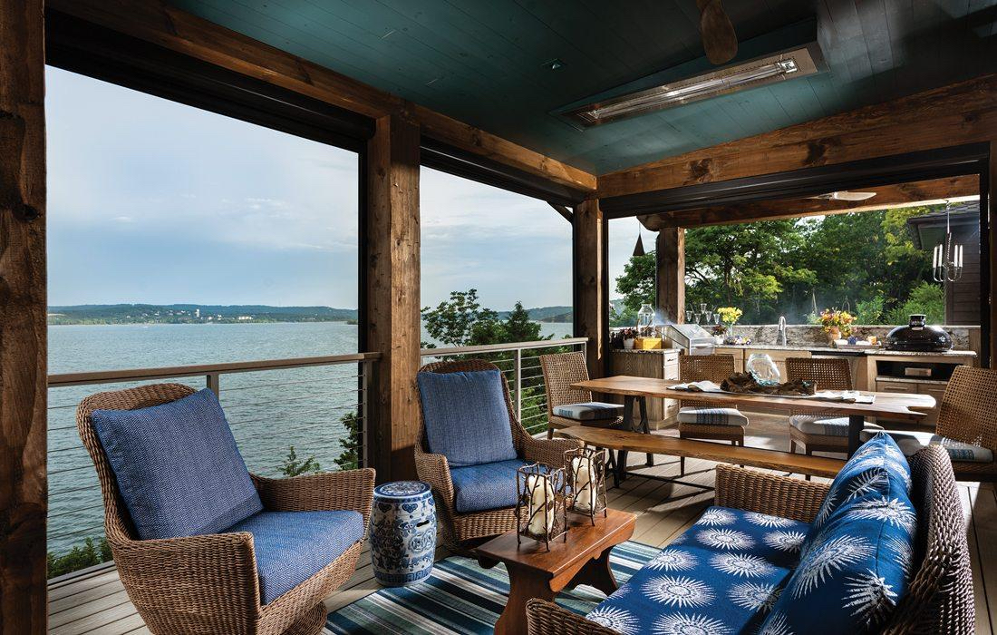
For most lake homeowners, outdoor living areas are every bit as important as the rooms inside the house. A covered porch becomes the family room throughout the summer. In addition, a patio transforms into the preferred dining space, and a fire pit overlooking the water extends evenings well into autumn. Designing these areas should feel more relaxed than furnishing an interior. However, that doesn’t mean they should be approached casually. The most successful outdoor spaces are thoughtfully planned. They balance comfort, durability, and a strong connection to both the home’s architecture and its natural surroundings.
One of the defining shifts in outdoor design for 2026 is a move away from overly coordinated patio sets and decorative excess. Instead, the trend favors layered, highly functional spaces that feel collected over time. Designers are encouraging homeowners to invest in high-quality materials that withstand sun exposure, moisture, and seasonal changes. At the same time, these choices should maintain a visual dialogue with the home’s interior. Repeating similar colors, textures, and architectural details outdoors creates a seamless transition for entertaining. This is particularly true in lake homes where expansive glass doors often blur the line between inside and out.
Whether your property overlooks the quiet coves of the Adirondacks, the rolling hills surrounding Lake Travis, the Great Lakes shoreline, or the granite landscapes of Lake Tahoe, the best outdoor spaces respond to their setting rather than compete with it. These six outdoor décor ideas reflect the trends designers are embracing in 2026. They help create sophisticated, welcoming retreats built for lakeside living.
Let Your Home’s Architecture Shape the Outdoor Design
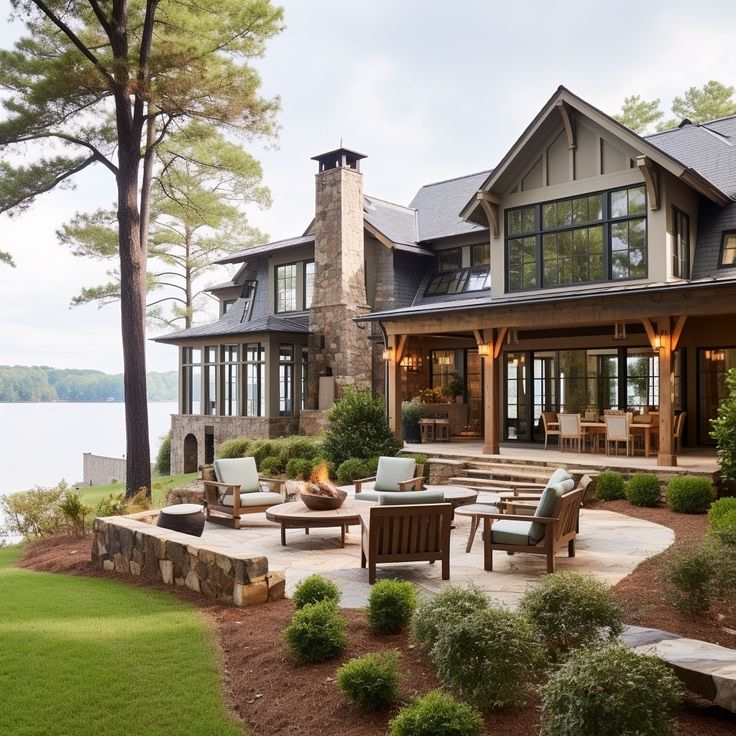
The most beautiful outdoor spaces don’t look like they were added as an afterthought. Instead, they feel like a natural continuation of the home itself. Rather than introducing a completely different design language outdoors, landscape architects are borrowing cues from the home’s architecture. They repeat exterior materials, rooflines, color palettes, and detailing throughout patios, porches, and gardens.
A contemporary cedar-clad retreat overlooking a Pacific Northwest lake calls for streamlined furnishings, blackened steel accents, and restrained plantings. At the same time, an Adirondack camp is better complemented by weathered timber, native stone, and generous porch seating. Likewise, shingle-style homes surrounding the Great Lakes or in New England benefit from understated furnishings and classic materials. This is far better than resort-inspired hardscaping that feels disconnected from the landscape.
Maintaining consistency between indoors and out also strengthens entertaining spaces. Similar flooring tones, upholstery colors, lighting finishes, and natural materials allow the house to flow seamlessly. This is especially valuable when doors remain open throughout the warmer months.
Best suited for:
Upper East, Northern Great Lakes, Pacific Northwest, and California’s Lake Tahoe region.
How to implement it:
- Repeat stone, wood, or metal finishes already used on the home’s exterior.
- Carry your interior color palette outdoors through cushions and accessories.
- Select lighting and planters that complement your home’s architectural style rather than competing with it.
- Allow the surrounding landscape—not trends—to influence design decisions.
Divide Large Outdoor Spaces into Purposeful Living Zones
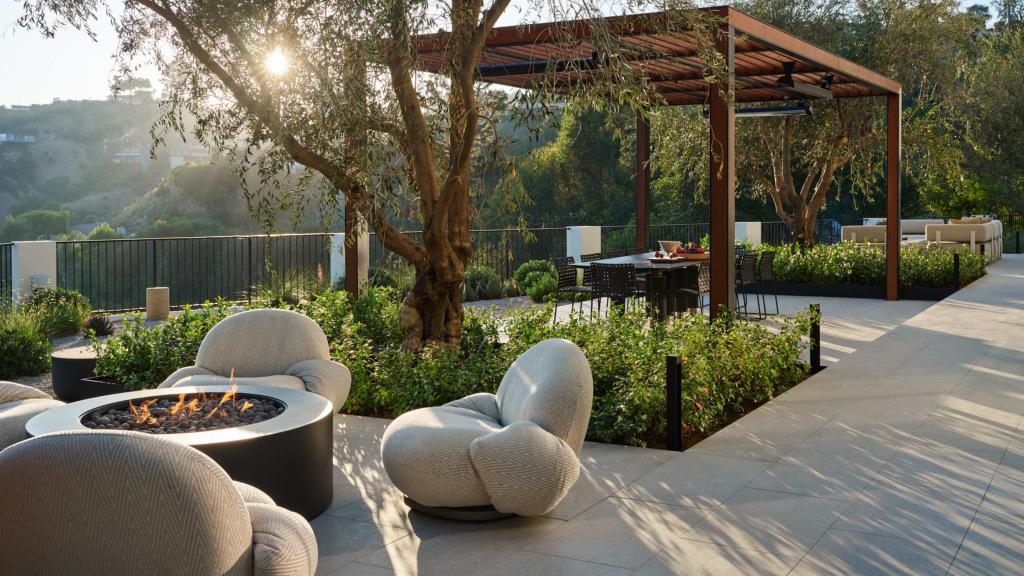
Large patios and expansive lawns can easily feel underused without thoughtful organization. One of the strongest outdoor design trends for 2026 is arranging exterior spaces much like an open-concept interior. This is done by creating distinct destinations for relaxing, dining, cooking, and gathering.
Instead of placing one oversized seating group in the center of a patio, designers are creating multiple, human-scaled spaces that encourage movement throughout the property. A covered porch might serve as the primary living room. Likewise, a nearby terrace becomes the dining area, and a fire pit overlooking the shoreline creates a natural destination for evening conversations. Pergolas, outdoor rugs, planters, and changes in paving materials subtly define each space without interrupting lake views.
This concept works equally well in smaller footprints. A modest lakeside deck can accommodate a café table for morning coffee. At the same time, a compact porch might include two lounge chairs paired with a multifunctional ottoman that serves as seating, a cocktail table, or concealed storage for blankets during changing weather. Designing around how your family actually lives—whether that’s sunrise yoga, reading by the water, hosting holiday cookouts, or enjoying quiet evenings—creates outdoor rooms that truly function as an extension of the home.
Best suited for:
Mid-Atlantic lake communities, Southeast reservoirs, Texas Highland Lakes, and California lake properties.
How to implement it:
- Define conversation and dining areas with outdoor rugs.
- Create visual separation using large planters or landscape lighting.
- Position furniture to maximize both conversation and lake views.
- Include flexible furnishings that adapt to gatherings of different sizes.
Invest in Flexible Furnishings That Work Harder
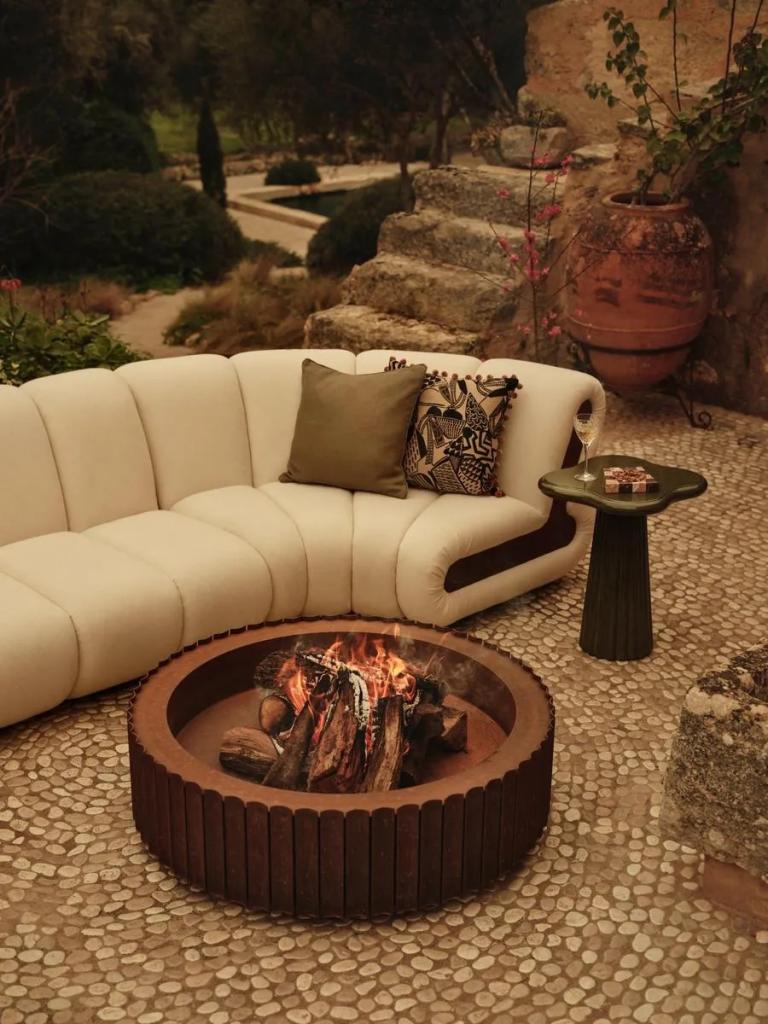
Outdoor furniture in 2026 is expected to do more than provide a place to sit. Designers are prioritizing versatile pieces that adapt to changing needs throughout the day while minimizing clutter—a practical approach for both sprawling lake estates and compact waterfront cottages. A storage coffee table can discreetly house throws, outdoor games, serving trays, or lanterns when an afternoon storm rolls in. Upholstered ottomans topped with a tray easily transition from footrests to cocktail tables or additional seating when guests arrive. Modular sectionals allow homeowners to rearrange seating for intimate family evenings or larger holiday gatherings. They do so without purchasing additional furniture.
This trend is especially valuable where outdoor square footage is limited. Rather than filling every corner with furniture, choose pieces that reflect how you actually use the space. If mornings begin with coffee overlooking the water, a comfortable pair of lounge chairs or a woven bistro set may be more useful than an oversized sectional. If entertaining is your priority, stackable dining chairs and movable side tables offer flexibility without overwhelming the patio.
Quality remains the guiding principle. Marine-grade fabrics, powder-coated aluminum, sustainably harvested teak, and handcrafted ceramics cost more initially. However, they reward lake homeowners with years of durability, even in fluctuating temperatures, humidity, and intense summer sun.
Best suited for:
Mid-Atlantic, Southeast, Texas lake communities, and the Pacific Northwest.
How to implement it
- Invest in storage coffee tables or benches.
- Use ottomans that double as seating and side tables.
- Select lightweight dining chairs that can easily be rearranged.
- Choose performance fabrics designed to withstand moisture and UV exposure.
Work With Nature’s Palette, Not Against It
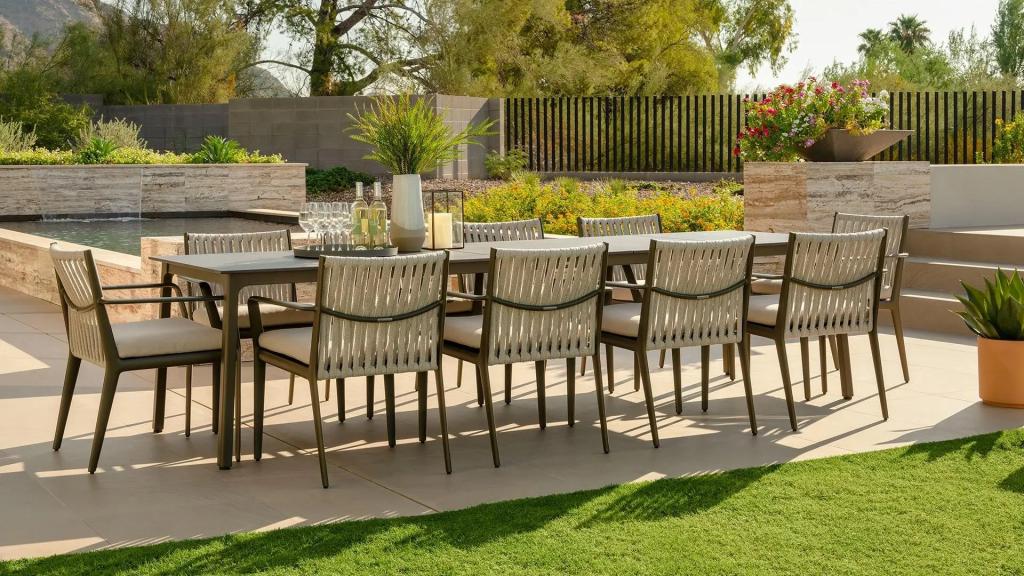
The most sophisticated lake homes rarely compete with the scenery. Instead, designers are drawing color inspiration directly from the landscape itself. Soft stone grays, driftwood browns, warm sand, muted sage, weathered greens, deep navy, and creamy linen tones create outdoor spaces that feel timeless. This is true regardless of location.
Rather than introducing bold, trendy colors across every accessory, today’s designers use restrained palettes that let seasonal changes become part of the décor. Autumn foliage, flowering native plants, blue water, and winter snowfall naturally provide visual contrast throughout the year.
Texture becomes equally important. Woven wicker, natural teak, linen-look performance fabrics, concrete, and hand-thrown pottery create visual interest without relying on bright colors. The result is an outdoor room that feels calm, refined, and deeply connected to its surroundings. This approach is particularly effective where panoramic water views deserve to remain the focal point.
Best suited for:
Upper East, Northern Great Lakes, California lake regions, and the Pacific Northwest.
How to implement it
- Build your palette around local stone, water, and surrounding vegetation.
- Layer textures instead of introducing numerous accent colors.
- Use muted outdoor textiles that complement interior finishes.
- Add seasonal color with containers rather than permanent furnishings.
Design for Every Season by Layering Shade, Shelter, and Lighting
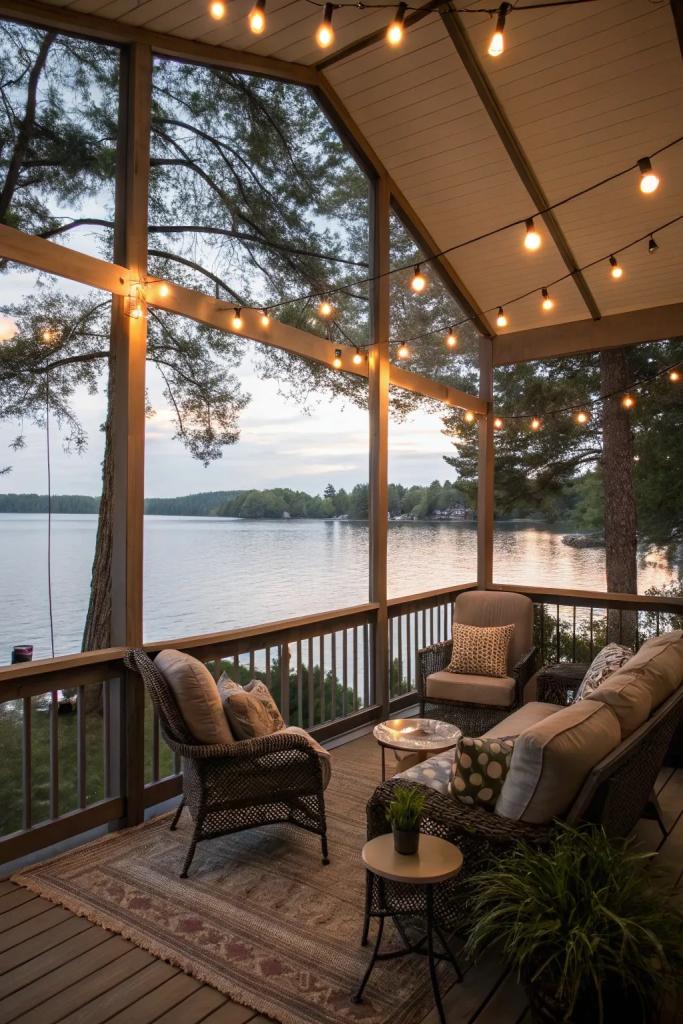
Lake living doesn’t end when the sun goes down—or when the weather becomes less predictable. One of the defining outdoor design trends of 2026 is creating spaces that remain comfortable from early spring through late autumn by layering protection from both sun and changing weather conditions.
Covered porches, pergolas with retractable canopies, motorized screens, and large umbrellas make patios more usable during hot afternoons, while outdoor fireplaces, radiant heaters, and fire pits extend evenings well into cooler months. Equally important is layered lighting. Rather than relying solely on overhead fixtures, designers combine architectural sconces, pathway lighting, uplighting for mature trees, portable rechargeable lamps, and candlelight to create warmth after sunset.
Considering the elements from the beginning of a project also helps furnishings last longer. Choosing durable materials, providing adequate shade, and protecting upholstery from excessive moisture reduces long-term maintenance while making outdoor rooms significantly more comfortable.
Best suited for:
Southeast, Mid-Atlantic, Texas, and California lake regions.
How to implement it
- Incorporate covered seating whenever possible.
- Add layered lighting for dining, pathways, and landscaping.
- Use outdoor curtains or retractable screens for privacy and sun control.
- Include a fire feature to extend the entertaining season.
Blend Entertaining Spaces Into the Landscape
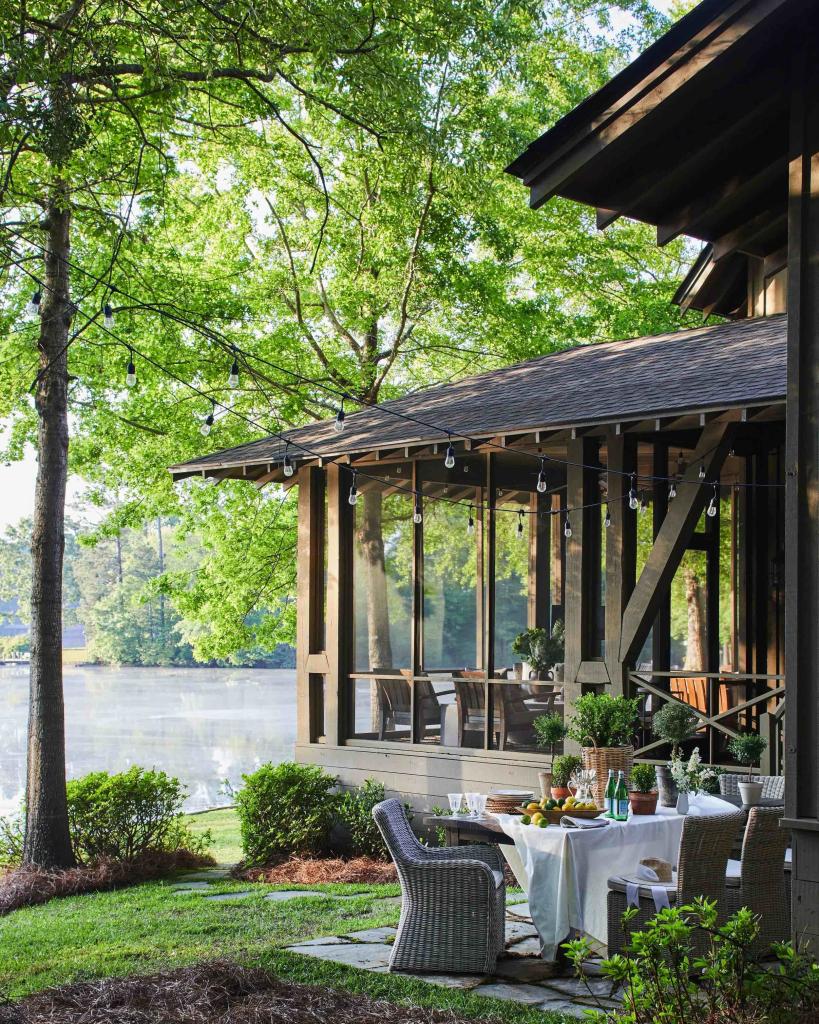
Today’s outdoor entertaining spaces are becoming less about showcasing elaborate outdoor kitchens and more about integrating cooking, dining, and relaxation into the surrounding landscape. Rather than dominating the backyard, these spaces are designed to feel rooted in their surroundings.
Native grasses soften the transition between patios and the shoreline, while layered perennial gardens provide seasonal interest and help stabilize waterfronts. Natural stone walkways guide guests between gathering areas, and oversized containers planted with regional species reinforce a sense of place. Outdoor kitchens are becoming more streamlined as well, often featuring concealed storage, durable stone countertops, and finishes that echo the home’s architecture rather than drawing attention to themselves.
For environmentally conscious lake homeowners, incorporating native plants also supports pollinators, reduces irrigation needs, and minimizes erosion along sensitive shorelines—an increasingly important consideration in many waterfront communities.
When architecture, landscape, and entertaining areas are designed as one cohesive environment, the result feels effortless rather than overly planned.
Best suited for:
Northern Great Lakes, Southeast, Pacific Northwest, Texas Highland Lakes, and California.
How to implement it
- Surround patios with native grasses and flowering perennials.
- Use locally sourced stone for walkways and retaining walls.
- Keep outdoor kitchens architecturally understated.
- Preserve mature trees and natural views whenever possible.
The best outdoor spaces aren’t defined by the number of amenities they contain but by how naturally they support the pace of lakeside living. Whether you’re furnishing a compact dockside deck on Lake Martin or refreshing a family retreat in the Adirondacks, thoughtful design begins with understanding both your home’s architecture and the surrounding landscape. Rather than chasing fleeting trends, these design strategies offer a lasting framework for making the most of one of your property’s greatest assets: life outside by the water. For more design tips to enhance your lake life, visit Lake Homes Lifestyles.