

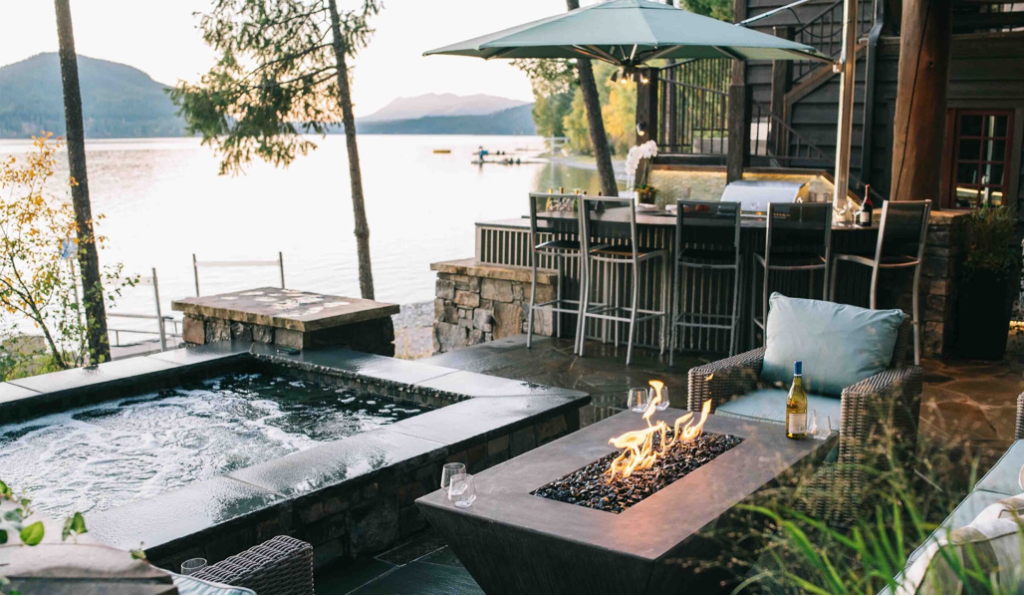
A well-designed patio cover does more than provide relief from the afternoon sun—it transforms an outdoor space into a true extension of the home. For lake homeowners, that distinction is particularly important. Whether your property overlooks a quiet cove in the Northern Great Lakes or a forest-framed shoreline in the Pacific Northwest, outdoor living spaces are often the primary gathering areas for family and guests.
In 2026, patio cover design is increasingly focused on flexibility, durability, and the creation of outdoor rooms that function across multiple seasons. Today’s homeowners are looking beyond simple shade structures and investing in solutions that improve comfort, withstand changing weather conditions, and support entertaining. Modern patio covers can help define separate zones for dining and lounging, provide shelter from passing showers, reduce heat gain on adjacent interiors, and even extend the usability of outdoor spaces well into spring and fall. The best solution depends on regional climate, lakefront exposure, and how you use your property. A covered dining pavilion that works beautifully on a windy Great Lakes shoreline may not be the right fit for a humid Southeastern lake retreat. Likewise, movable shade systems often outperform permanent structures in smaller lakefront settings where preserving views is a priority.
The following six patio cover concepts represent some of the most effective and enduring options for lake homes in 2026, balancing aesthetics, practicality, and long-term value. Many reflect the growing trend toward creating outdoor living rooms that can be enjoyed regardless of weather conditions.
Motorized Louvered Pergolas
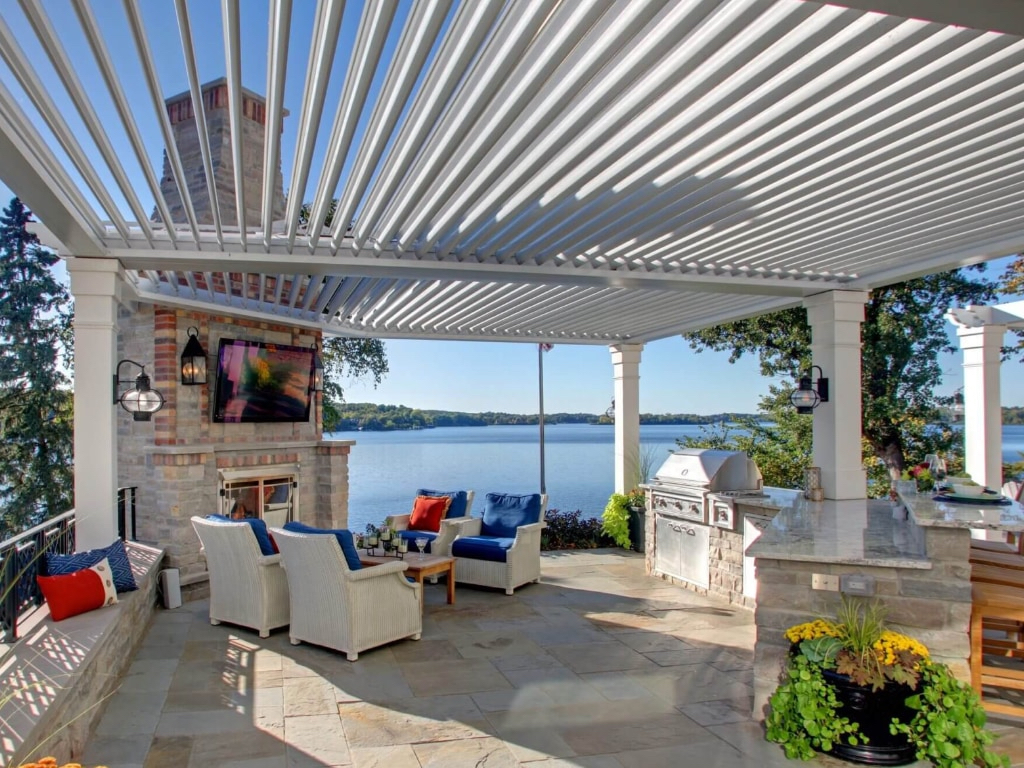
Motorized louvered pergolas have become one of the defining outdoor-living upgrades of the decade. Unlike traditional pergolas, adjustable aluminum louvers open and close at the touch of a button, allowing homeowners to manage sunlight, airflow, and rain protection throughout the day.
For lake homes, this adaptability is especially valuable. The morning sun can be welcomed at breakfast, while the roof can be closed during an afternoon storm or intense summer heat. Many systems now incorporate integrated drainage, lighting, heaters, and ceiling fans. Architectural Digest notes that these structures effectively transform patios into outdoor rooms while maintaining flexibility.
Best regions: California lake regions, Texas lake country, Mid-Atlantic lakes, Southeast reservoirs.
How to implement: Use powder-coated aluminum finishes in charcoal, bronze, or soft black. Pair with outdoor sectionals and dining furniture beneath a single structure to create a unified entertaining zone.
Timber-Frame Covered Porches
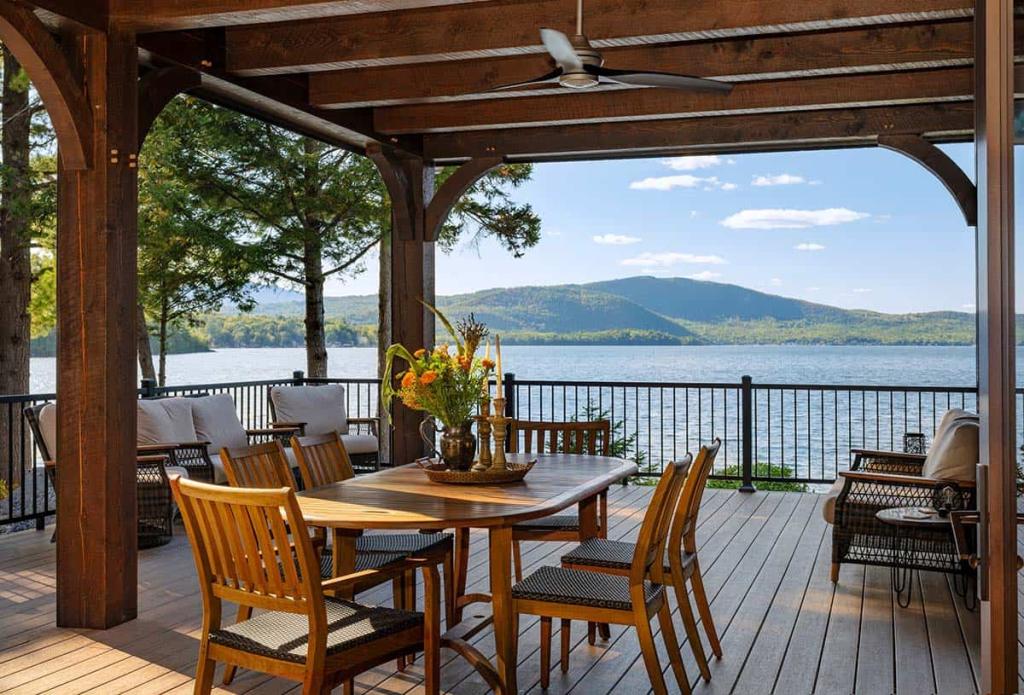
Heavy timber structures continue to resonate with lake homeowners because they feel substantial, authentic, and tied to the landscape. Exposed rafters, tongue-and-groove ceilings, and natural wood species create architectural character while providing reliable weather protection.
This approach works particularly well where outdoor spaces are used across multiple seasons. The roof structure can accommodate recessed lighting, fans, radiant heaters, and even fireplaces.
Best regions: Northern Great Lakes Region, Upper East lake communities, Pacific Northwest lakes, mountain-adjacent lake properties.
How to implement: Consider cedar, Douglas fir, or white oak beams. Incorporate a vaulted ceiling and large-scale furnishings to establish a true outdoor living room overlooking the water.
Retractable Canopy Pergolas
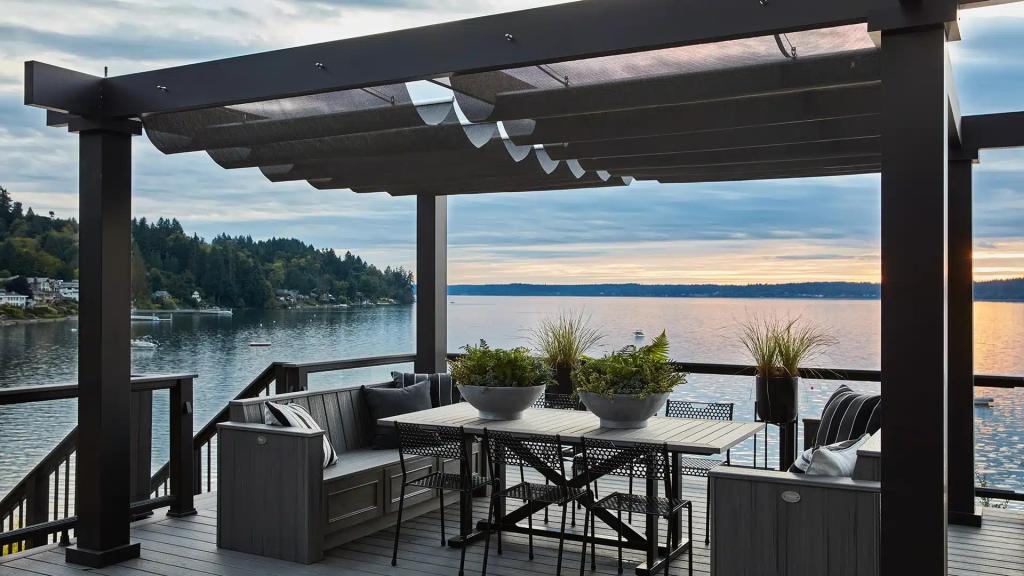
Retractable canopies offer a softer alternative to permanent roofs while preserving openness and lake views. Fabric panels slide open or closed depending on weather conditions, creating a resort-inspired atmosphere that feels lighter than a traditional covered porch.
This trend aligns with growing homeowner interest in adaptable outdoor environments that can quickly shift between full sun and shade. Retractable systems are also less visually dominant than solid-roof structures.
Best regions: California lake regions, Southeast lakes, Texas lake properties, Mid-Atlantic waterfront homes.
How to implement: Select performance fabrics designed for UV exposure and moisture resistance. Neutral tones such as sand, ivory, and warm gray tend to complement both modern and traditional lake architecture.
Freestanding Lakefront Pavilions
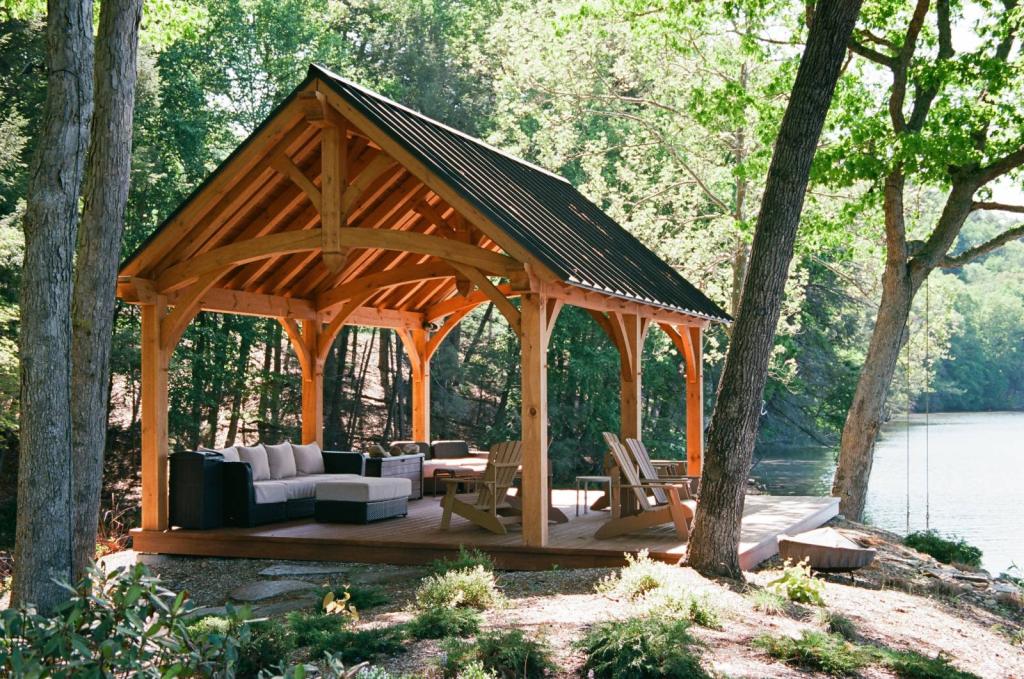
Rather than attaching a cover directly to the house, many lake homeowners are creating separate lakefront entertaining zones. A freestanding pavilion placed closer to the shoreline allows uninterrupted views while establishing a dedicated gathering space.
The concept is particularly useful on larger lots where homeowners want multiple outdoor destinations. Dining, cocktails, and evening fireside gatherings can all occur closer to the water.
Best regions: Upper East lakes, Northern Great Lakes, Pacific Northwest lakes, California lakes with expansive lots.
How to implement: Position the structure to frame the best view. Add outdoor curtains, integrated lighting, and weather-resistant furnishings to create a destination that feels distinct from the main house.
Architectural Shade Sails
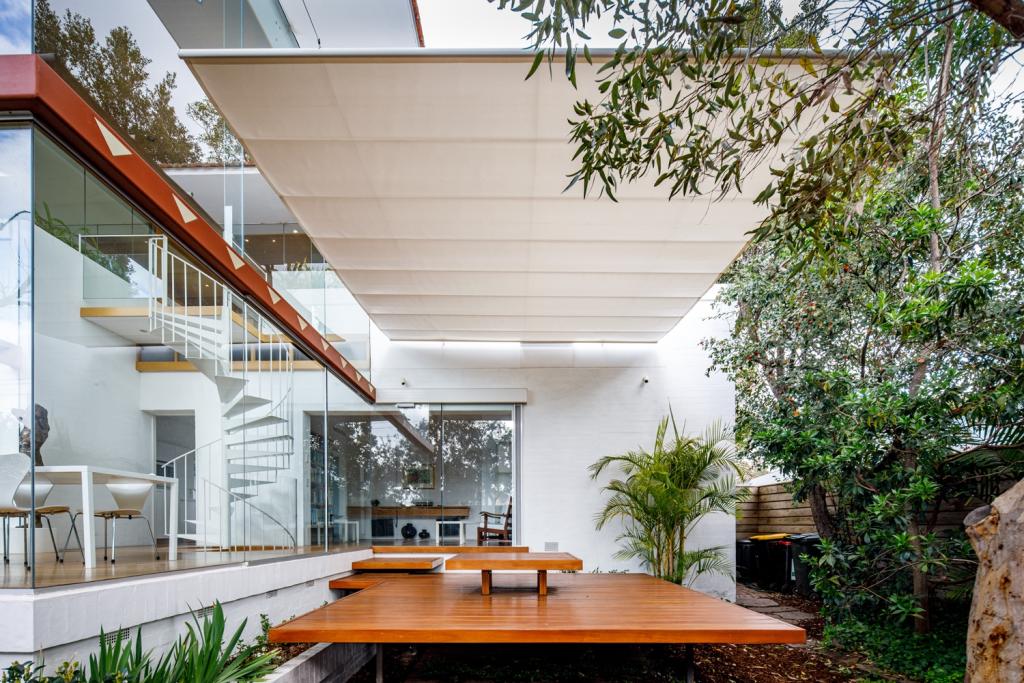
For contemporary lake homes, shade sails remain one of the most efficient ways to provide substantial coverage with minimal visual weight. Their sculptural appearance complements modern architecture while preserving openness and airflow.
Advances in UV-resistant fabrics and marine-grade hardware have made shade sails increasingly durable and sophisticated. They are especially effective where preserving views and maximizing breezes are priorities.
Best regions: Texas lakes, California lake regions, Southeast lakes, arid western waterfronts.
How to implement: Use overlapping triangular sails to define dining and lounging zones separately. Stainless-steel hardware and engineered posts are essential in windy waterfront locations.
Retractable Screened-In Outdoor Living Rooms
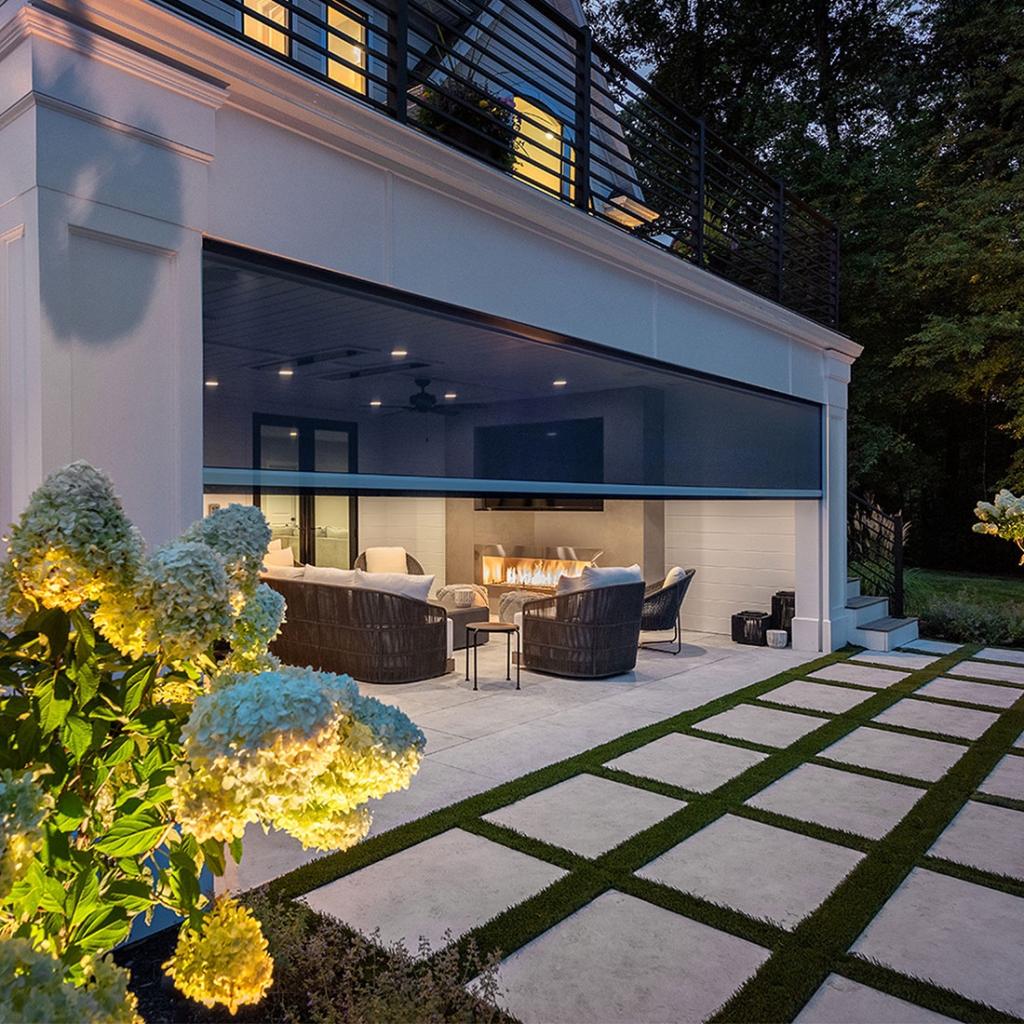
In many lake environments, insects can significantly affect outdoor enjoyment. Screened porches are experiencing renewed interest because they offer protection without sacrificing views or ventilation.
Modern versions often feature retractable screens, large openings, outdoor kitchens, fireplaces, and television walls. The result is a space that functions much like an interior family room while remaining connected to the landscape.
Best regions: Southeast lakes, Mid-Atlantic waterfronts, Upper East lake communities, humid portions of the Great Lakes region.
How to implement: Use large-scale screen panels to maximize sightlines. Furnish the space as you would an interior room with layered seating, performance fabrics, and weather-resistant rugs. Designers increasingly emphasize making these spaces feel like fully furnished outdoor rooms rather than transitional porches.
The most successful patio covers for lake homes strike a balance between shelter and connection to the landscape. As lake-home design continues to prioritize flexible living and year-round enjoyment, patio covers are evolving from simple shade solutions into architectural features that define how homeowners experience their property. Thoughtfully selected, they can increase comfort, enhance functionality, and enable outdoor entertaining across a wider range of weather conditions without diminishing the views that drew you to the lake in the first place. For more design tips to enhance your lake life, visit Lake Homes Lifestyles.