

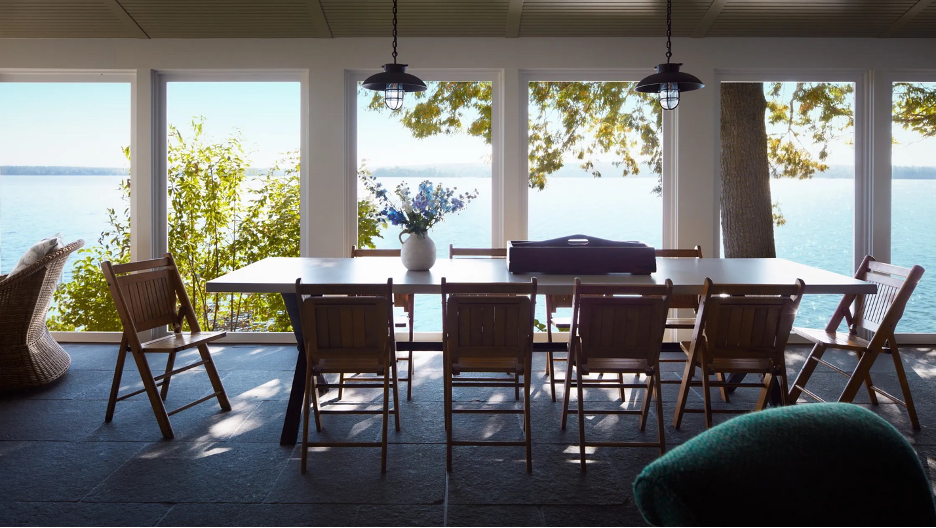
As temperatures climb and daylight stretches into long, golden evenings, lake homes take on a different life—one that favors openness, ease, and a closer relationship to the outdoors. A thoughtful summer refresh isn’t about overhauling your entire space; it’s about making intentional adjustments that reflect how you actually live during the season. At the lake, that often means erasing the boundary between inside and out. It also means choosing materials that can withstand humidity and sun. In addition, adopting a palette that feels responsive to water, sky, and landscape is key. Whether your property sits along the wooded shores of the Upper East, the expansive lakes of Texas, or the rugged coastlines of the Pacific Northwest, summer decor should feel grounded in place. Importantly, it should not feel overly thematic.
This season’s approach leans practical but elevated: breathable textiles, durable finishes, and flexible entertaining zones that support everything from quiet mornings to full-house weekends. You might start with a single porch vignette or commit to reworking an entire great room with lighter layers and improved flow. Either way, the goal is the same—create a home that feels cooler, more functional, and visually aligned with the season. Below, six design strategies define summer 2026 for lake properties across the U.S. Each is adaptable to regional conditions and architectural styles.
Lightened, Water-Inspired Color Palettes
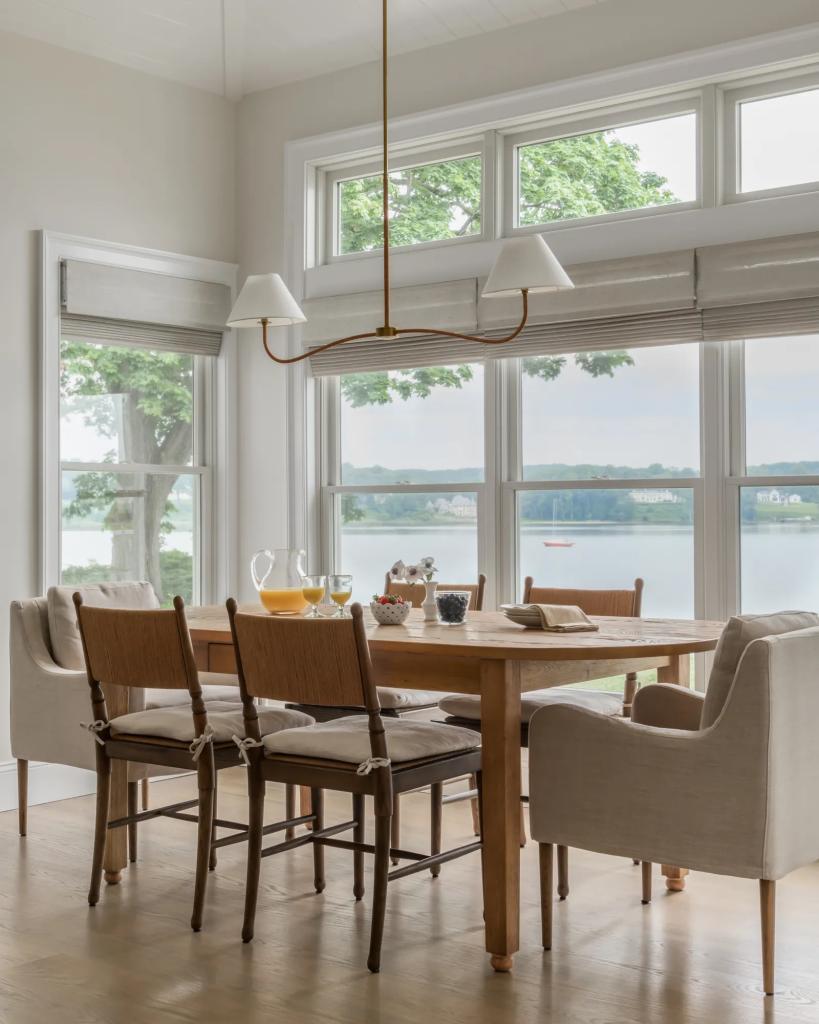
A shift toward softened blues, mineral greens, chalky whites, and sun-faded neutrals reflects a broader move away from stark contrast. This palette mirrors water and sky without becoming literal or overly coastal.
Why it’s trending (2026): Designers are prioritizing tonal layering over bold statements, creating interiors that feel cooler and more expansive—especially important in humid lake climates.
Where it works best:
- Upper East & Mid-Atlantic: muted blues and grays complement traditional architecture
- Northern Great Lakes: cooler palettes enhance natural light during shorter summers
- Pacific Northwest: soft greens and foggy neutrals align with overcast conditions
How to implement:
Repaint walls in warm whites or pale blue-grays. Swap heavy upholstery for linen blends. In addition, introduce subtle contrast through woven rugs or pale wood furniture. On porches, use outdoor cushions in washed tones rather than saturated color blocks.
Performance Fabrics That Don’t Look the Part
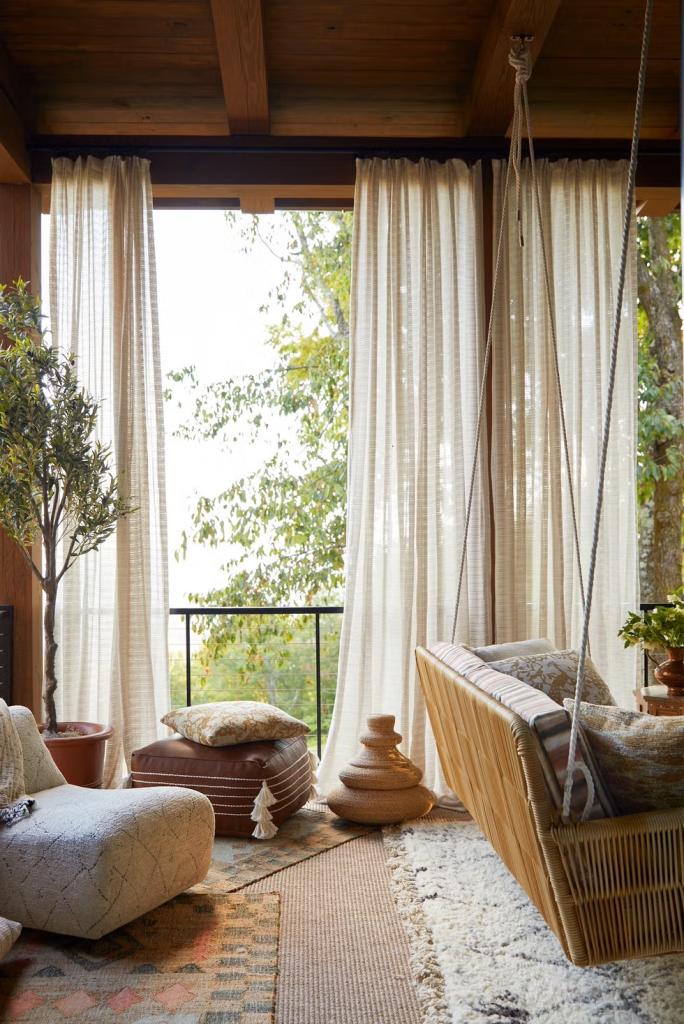
Outdoor textiles have evolved—today’s performance fabrics mimic the look and feel of indoor materials while resisting moisture, mildew, and UV damage.
Why it’s trending: With increased demand for indoor-outdoor living, homeowners want durability without sacrificing aesthetics.
Where it works best:
- Southeast & Texas lakes: high humidity demands mold-resistant materials
- California & Southwest: UV-resistant fabrics prevent fading
- Mid-Atlantic: fluctuating weather benefits from adaptable textiles
How to implement:
Upgrade patio seating with performance-upholstered cushions. Use indoor/outdoor rugs in living spaces with heavy foot traffic. Also, incorporate washable slipcovers in high-use areas. Choose textures like bouclé or brushed canvas for a more residential feel.
Expanded Outdoor Entertaining Zones
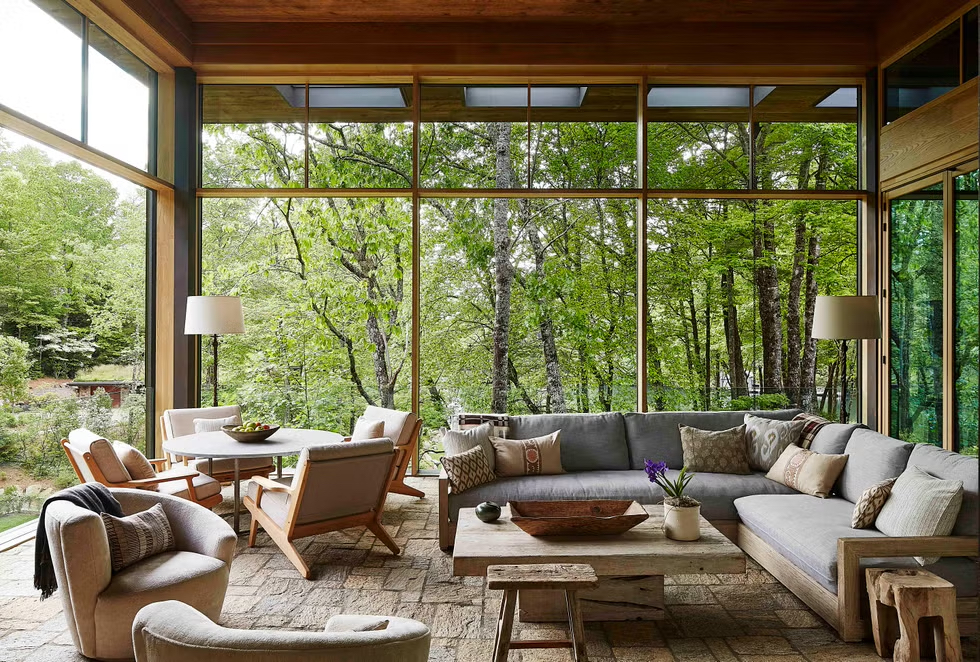
Lake homes are increasingly designed for outdoor use, with patios and porches serving as primary living areas in summer.
Why it’s trending: Entertaining has shifted toward casual, multi-use outdoor environments rather than formal indoor gatherings.
Where it works best:
- Southeast & Texas: large covered porches for shade
- California: seamless indoor-outdoor transitions
- Northern Great Lakes: fire pit zones extend usability into cooler evenings
How to implement:
Create defined zones: a dining area with a durable table, a lounge section with deep seating, and a smaller vignette for morning coffee. Add portable lighting, outdoor speakers, and side tables for flexibility. Ceiling fans are essential in humid regions.
Natural Materials with Regional Relevance
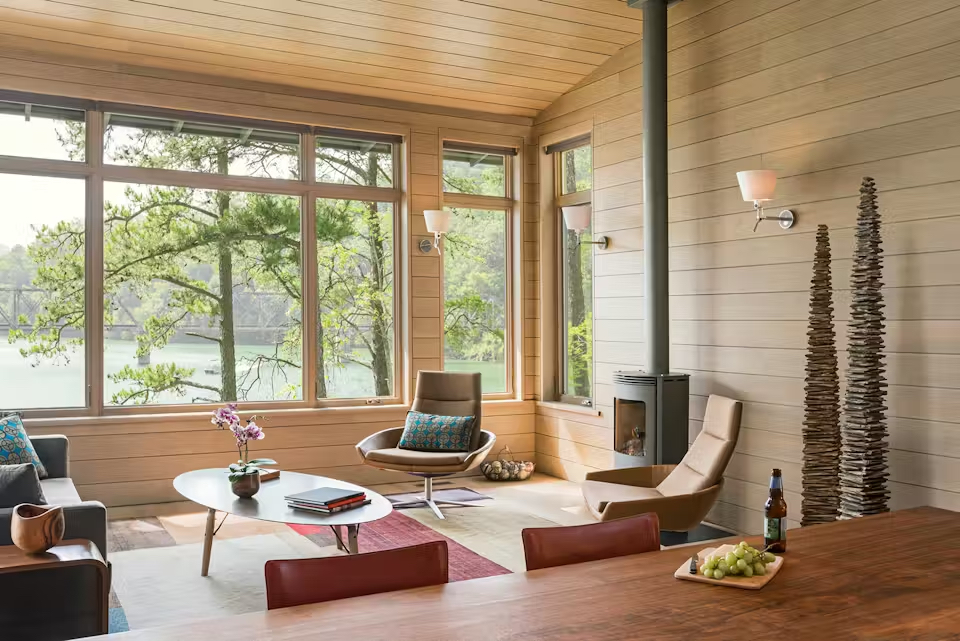
Photo courtesy of Altura Architects via Dwell
There’s a renewed focus on materials that feel authentic to their environment—stone, untreated wood, rattan, and metal finishes that patina over time.
Why it’s trending: Sustainability and longevity are driving design decisions, with homeowners favoring materials that age well rather than require constant upkeep.
Where it works best:
- Pacific Northwest: cedar, stone, and blackened steel
- Upper East: painted wood and classic wicker
- Southeast: low-pitched metal roofs, stained white cedar shingles, warm-toned woods
- Texas lakes: limestone, iron, and warm-toned woods
How to implement:
Replace synthetic finishes with natural ones where possible—wood coffee tables, stone planters, woven lighting. On patios, opt for teak or powder-coated aluminum that weathers gracefully.
Layered Lighting for Long Evenings
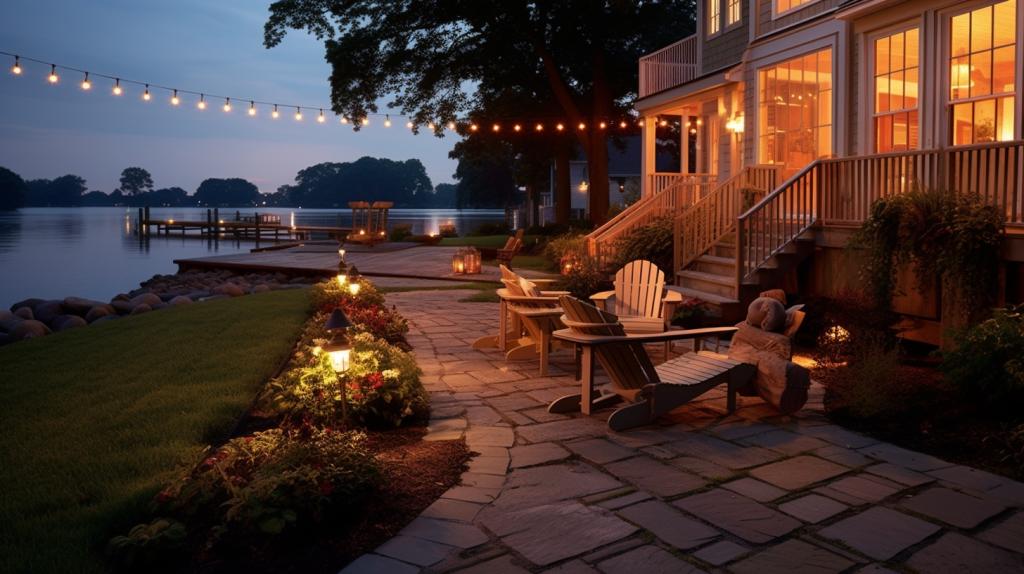
As evenings stretch later, lighting becomes a central design element rather than an afterthought.
Why it’s trending: Homeowners are investing in ambiance, not just visibility—especially outdoors.
Where it works best:
- Northern regions: maximize usable evening hours
- Southeast: soft lighting reduces harsh glare
- California: enhances indoor-outdoor continuity
How to implement:
Combine string lights, lanterns, and low-voltage landscape lighting. Indoors, swap heavy fixtures for lighter silhouettes—woven pendants or ceramic bases. Use dimmers to adjust the mood throughout the evening.
Flexible, Low-Maintenance Styling
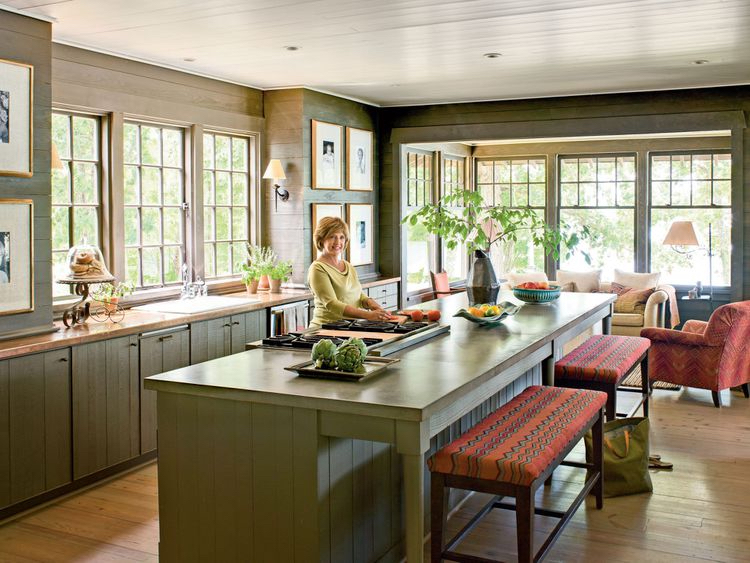
Summer styling is becoming more relaxed and adaptable, with fewer decorative objects and more functional pieces.
Why it’s trending: Homeowners want spaces that are easy to maintain during high-traffic seasons, especially with guests.
Where it works best:
- All regions, particularly high-traffic vacation homes
How to implement:
Edit down accessories and focus on a few impactful pieces—large-scale art, sculptural vases, or grouped ceramics. Use trays to organize surfaces and make cleanup easier. Outdoors, choose stackable or movable furniture that can adapt to different gatherings.
A well-executed summer refresh doesn’t rely on novelty—it’s grounded in how a lake home functions during its busiest, most active season. By prioritizing durability, regional sensitivity, and flexible design, you create spaces that not only look appropriate for summer but perform well throughout it. The most successful lake homes aren’t overly styled; they’re responsive—shifting easily from quiet mornings to full-capacity weekends, from indoor retreat to outdoor gathering space. Thoughtful updates now ensure your home feels just as intentional in August as it does at the start of the season. For more design tips to enhance your lake life, visit Lake Homes Lifestyles.